Cortexa Ground Truth
Nº 30 · Field Guide · · 20 min read
 By Joe Coffman
Tip: once it’s playing, tap any line to jump the audio there.
Shipping AI, Without the Surprises.
The surprises AI work meets after launch are cheaper to handle at kickoff. Nine explainers, from the labels the law wants to the proof a client asks for.
The first Field Guide, AI, Without the Hype1, covered what Artificial Intelligence (AI) is. The second, Building With AI, Without the Guesswork2, covered how to build with it. This third one covers what happens after the work ships, when it meets people who never saw the brief: a regulator, a search page, a shopping assistant, a stranger with bad intentions, and eventually the client's finance team. Nine explainers sit behind these eight chapters. Each opened on a question someone asked out loud, and nearly every one of those questions is cheaper to answer before launch than after. So read this as the list to run through at kickoff. Each chapter names the surprise, shows what the evidence supports, and points back to the explainer that has the detail.


1. What goes in
Two choices shape how an AI feature behaves long before anyone outside sees it: which model runs it, and what that model gets to read. Both reward the same instinct. Start small. The first is size4, and inside one model family the price gap is already five to one: Anthropic lists its smallest Claude model at one dollar per million input tokens and its largest at five12. The second is context7, meaning the instructions, documents, tools and history the model sees when it answers. Anthropic treats that as a finite resource with diminishing marginal returns13. Pour in everything and the answer can get worse.
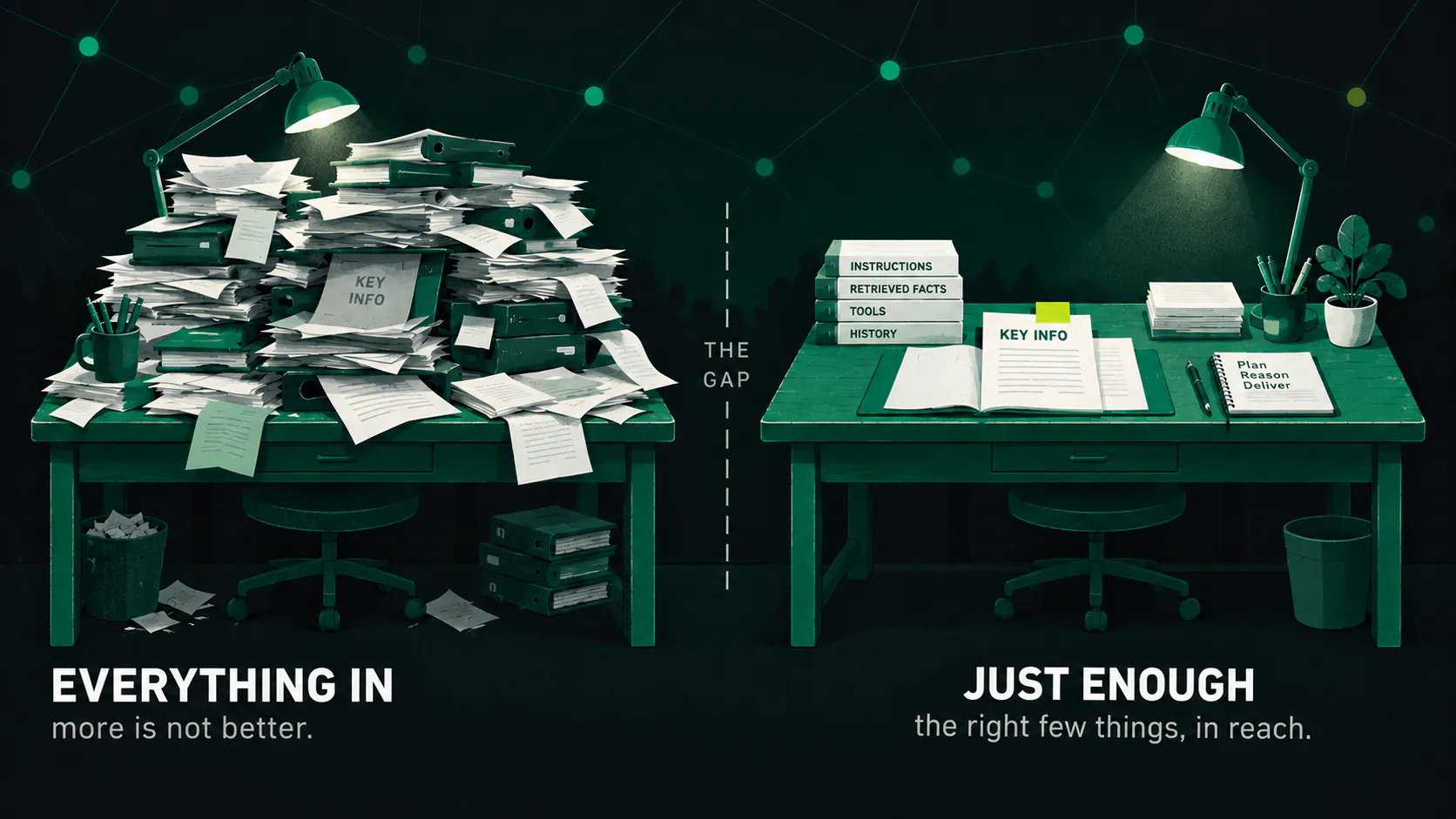
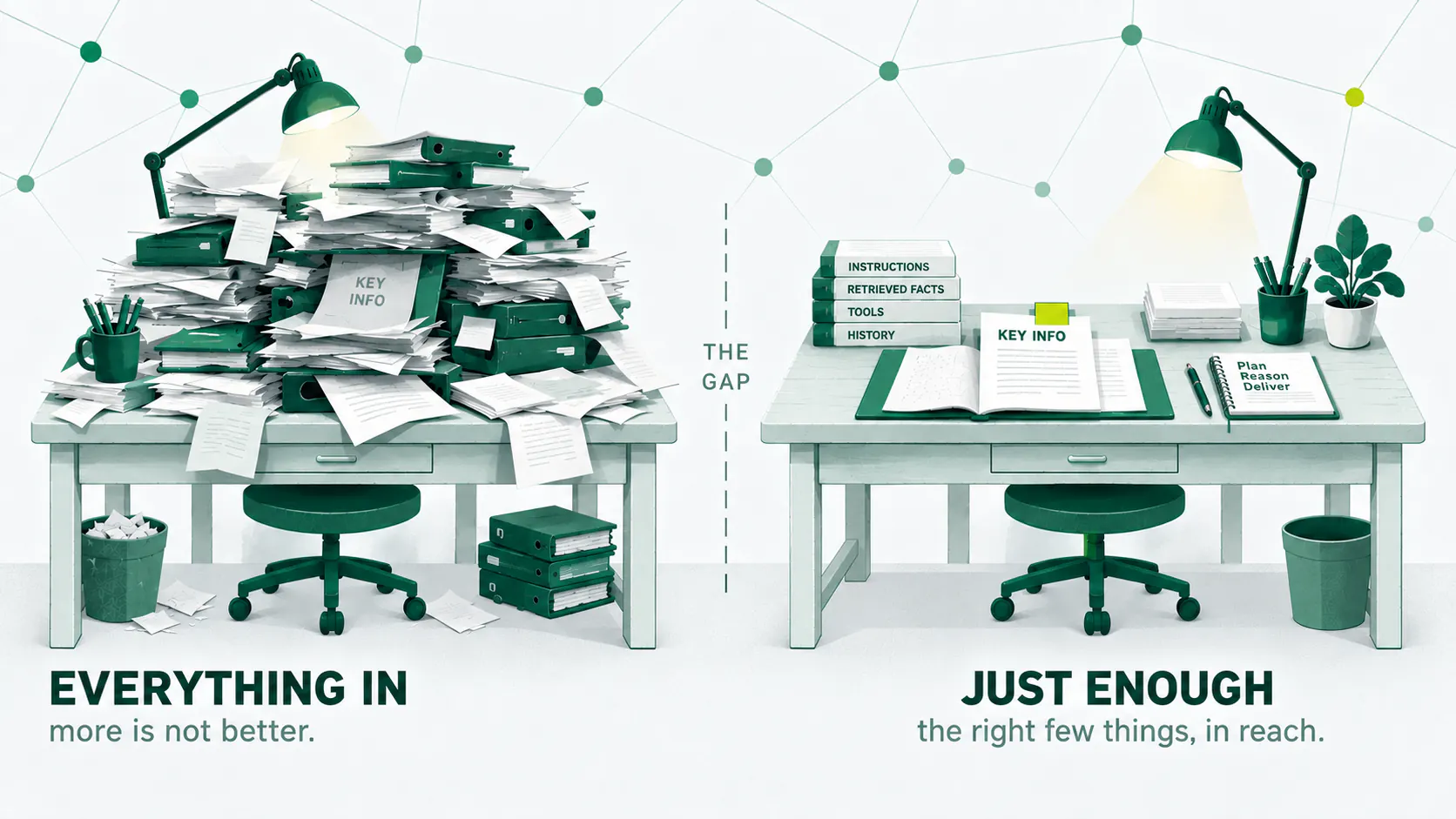
- Small models have closed a surprising amount of ground. The smallest model to clear 60% on a broad knowledge test went from 540 billion parameters in 2022 to 3.8 billion in 2024, a 142-fold reduction14.
- Trying the cheap model first is a proven design. Stanford's FrugalGPT sent each query to cheaper models before escalating, and matched the best single model with up to a 98% cost reduction15.
- Where a fact sits changes whether it gets used. Models handle information at the start and end of a long input better than in the middle, even for explicitly long-context models16. A key fact buried halfway down can be walked straight past.
2. Who gives the orders
An AI feature that reads outside content can be steered by it. Prompt injection11 is the name for instructions planted in that content, and Anthropic describes them as adversarial instructions hidden within the content that AI models process17. The Open Worldwide Application Security Project (OWASP) puts prompt injection18 first on its list of risks for apps built on a Large Language Model (LLM). The reason it works ties back to chapter one. Your instructions, a retrieved web page and a customer's email all arrive in the same stream of text, so a sentence that sounds like an order can be taken as one, whoever wrote it.
01
Mark outside text as data
pages, emails and files are material to read
02
Screen what comes back
check retrieved content for planted instructions before acting
03
Give it the least reach
only the data and tools this one job needs
04
A person approves the action
sending, paying and deleting wait for a human
Plan for one layer failing. The next one is there for exactly that.
- Nobody claims a cure. OpenAI writes that prompt injection is unlikely to ever be fully “solved”19, and OWASP says no reliable prevention mechanism exists today18.
- Defenses cut the odds. None closes them. In Anthropic's own browser-agent testing, an attacker still got through about 1% of the time against its latest model and safeguards, a result the company says still represents meaningful risk17.
- The worst case depends on reach. Simon Willison's lethal trifecta20 is private data, untrusted content and a way to send things out. Take one of the three away and that particular path to stolen data is gone.
3. Saying it was AI
The first surprise from outside is legal. In 2026 three governments wrote AI disclosure into law, and the labeling explainer3 maps all three. The European Union (EU) AI Act's transparency rules apply from August 2, 202621: providers must mark generated content so it is detectable as artificially generated22, and deployers must clearly label22 deepfakes. California's AI Transparency Act reaches generative systems with over 1,000,000 monthly23 users. New York now requires an advertiser who knows an ad contains a synthetic performer24 to conspicuously disclose24 it. None of this replaces counsel on a live campaign.


- Most agencies use these tools; few build them. California's duties to label output and offer a free detector fall on the provider of a system that size, which is usually the tool vendor.
- The fines are modest. New York's runs $1,000 for a first violation and $5,000 for each after, per its synthetic performer law24. The bigger bill is re-cutting an ad after it has already run.
- Key words are still loose. New York leaves “conspicuous” undefined, and the EU's “clearly” will be settled by Commission guidelines21 and early practice.
4. Proving where it came from
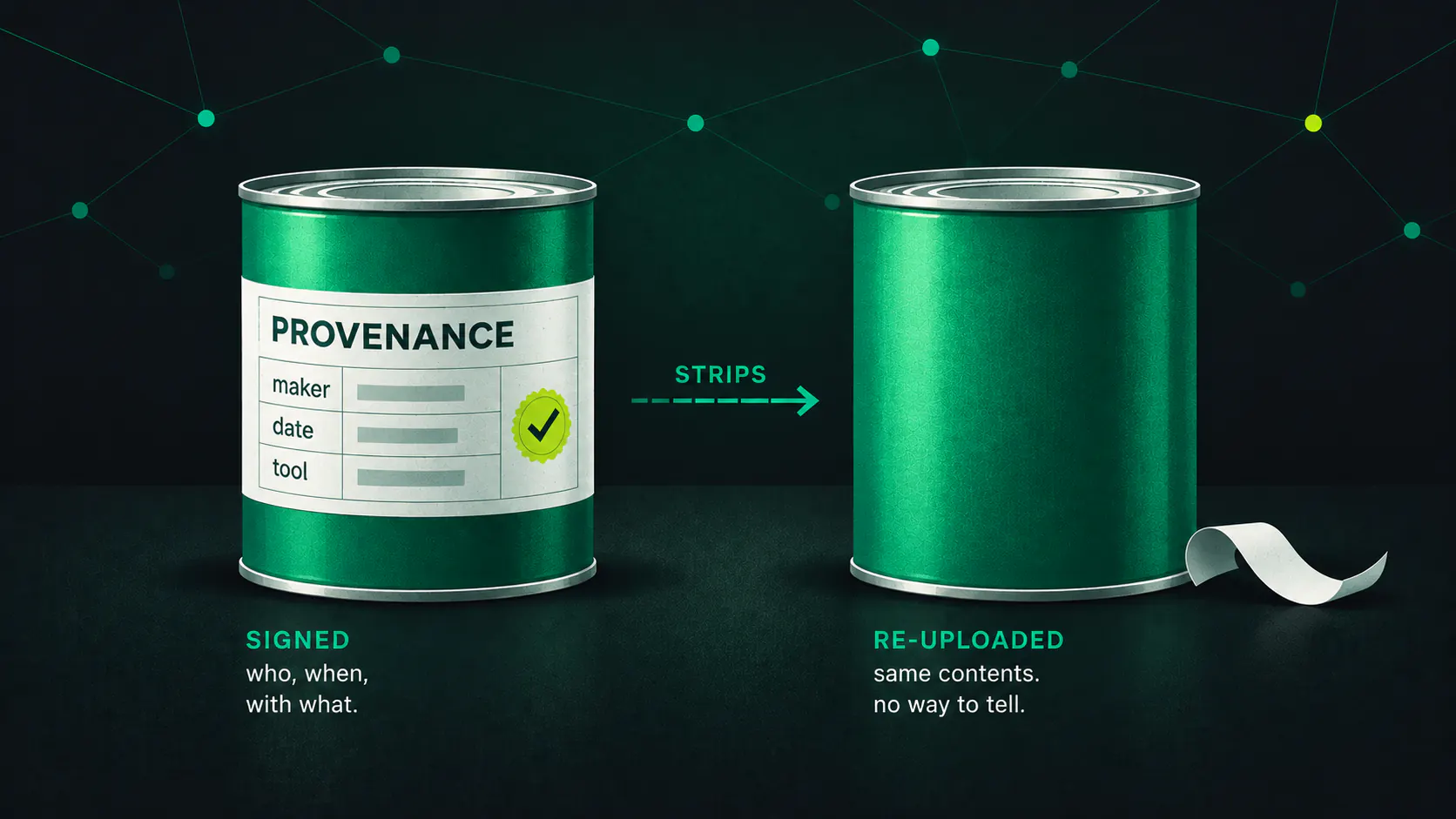
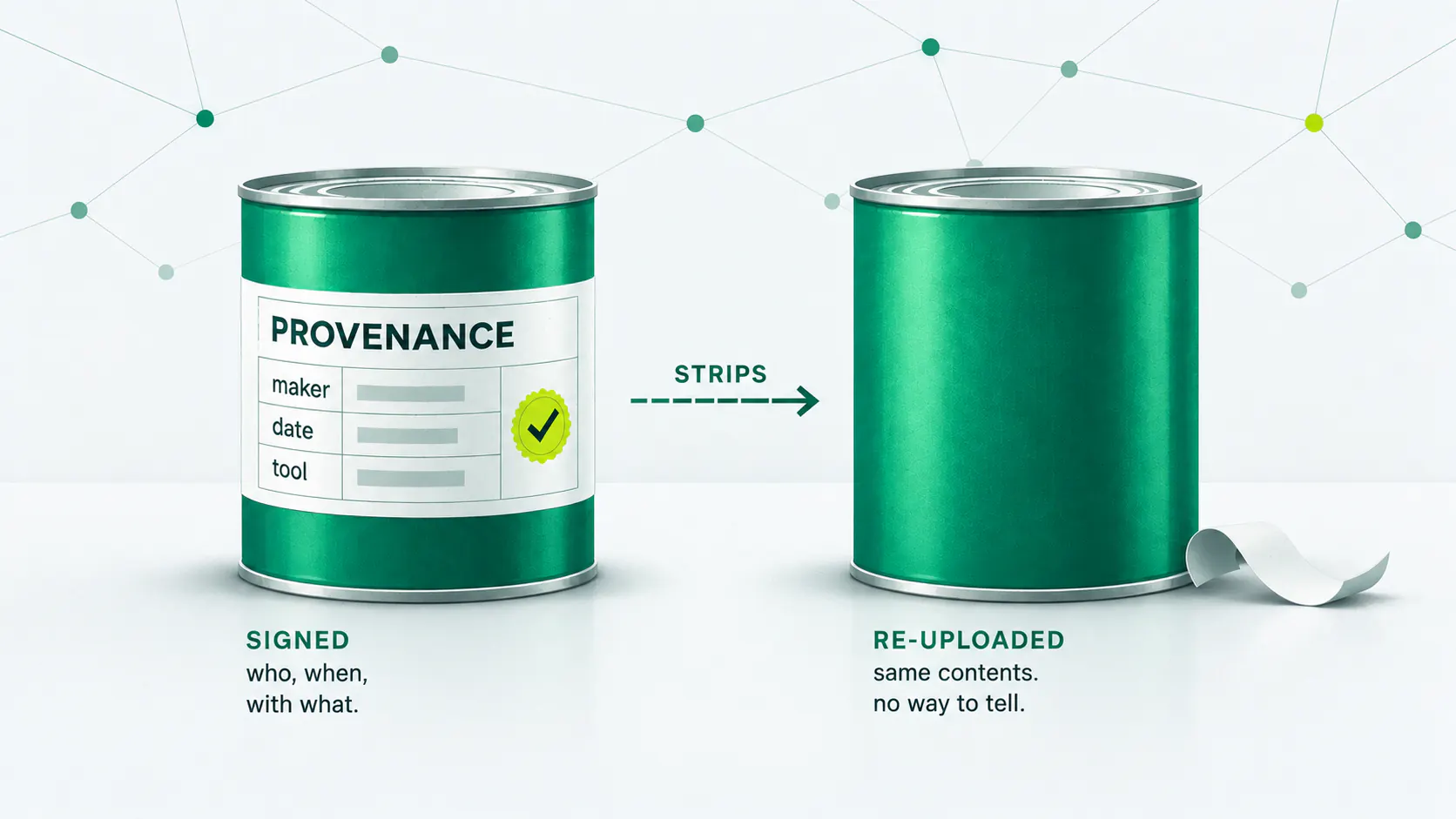
A label tells the audience AI was involved. A content credential5 is the record underneath it: signed metadata in the file saying who made it, when, with what tool, and whether AI generated or altered it. The open standard is the Coalition for Content Provenance and Authenticity (C2PA). The big generators already write provenance by default. OpenAI attaches C2PA Content Credentials to the images its models generate25, and Google embeds a SynthID watermark26 in the images, audio and video its models make.
- A signature makes tampering visible. Change the file and the signed record stops matching, so a checker can flag it.
- Metadata falls off in transit. A screenshot or a re-encoding upload can strip the credential while the picture looks identical. Watermarks written into the pixels are the paired method, and SynthID is built to survive cropping, filters, and compression26.
- The National Institute of Standards and Technology (NIST) treats provenance, watermarking and detection as complementary approaches to content transparency27. Each fails in a different place, which is the argument for using more than one.
5. The face and the voice
Cloning a face or a voice now takes minutes of footage. Whether you may run the result in an ad is a question the software never asks, and California and New York now answer it in statute, as the likeness explainer9 sets out. Both states went after the contract. In California a digital-replica clause is unenforceable when it does not include a reasonably specific description of the intended uses28 and the performer had neither a lawyer nor a union agreement covering replicas. New York voids the same kind of clause29 on the same conditions. What counts as a replica is whether an audience would take it for the person: California asks if it is readily identifiable28, and New York whether a layperson would not be able to readily distinguish29 it from the real one.
01
Is it someone real?
an identifiable person, or nobody at all
02
Living
a release naming the uses, signed with counsel or the union present
03
Deceased
the right passes on; the estate consents or the spot does not run
04
Invented
nothing to license, and in New York a disclosure in the ad
The copy is easy in every case. The signature is what makes it usable.
- Death does not free the likeness. An unauthorized replica of a deceased personality costs the greater of ten thousand dollars ($10,000) or the actual damages suffered30 in California, and the greater of two thousand dollars or the compensatory damages31, plus profits, in New York.
- An invented spokesperson has nobody to license, and it brings a disclosure duty. New York's advertiser must conspicuously disclose24 the synthetic performer in the ad itself.
- This is state law. A national campaign reaches California and New York by default, so the strictest rule your media plan touches is the one to work to.
6. When machines read you first
More and more, the first audience for a client's work is software. On Google, an AI Overview now answers many questions above the links, written from the same pages that rank6. Google says its AI features rely on our core Search ranking systems to retrieve relevant, up-to-date web pages32. A Pew Research Center study found that a search showing a summary led to a click on a traditional result in 8% of visits, against 15% when no summary appeared33. A page can hold first place and still lose the visit.
Shopping is heading the same way. When a shopper asks an assistant what to buy, what gets picked8 depends on what the model can read. OpenAI says ChatGPT's product results are organic and unsponsored35, surfaced when the model perceives it to be relevant to your intent36 and assembled from structured metadata36: the feeds, catalogs and pages it can parse. A product whose data the model cannot read has little chance of making that list, however loud its advertising.
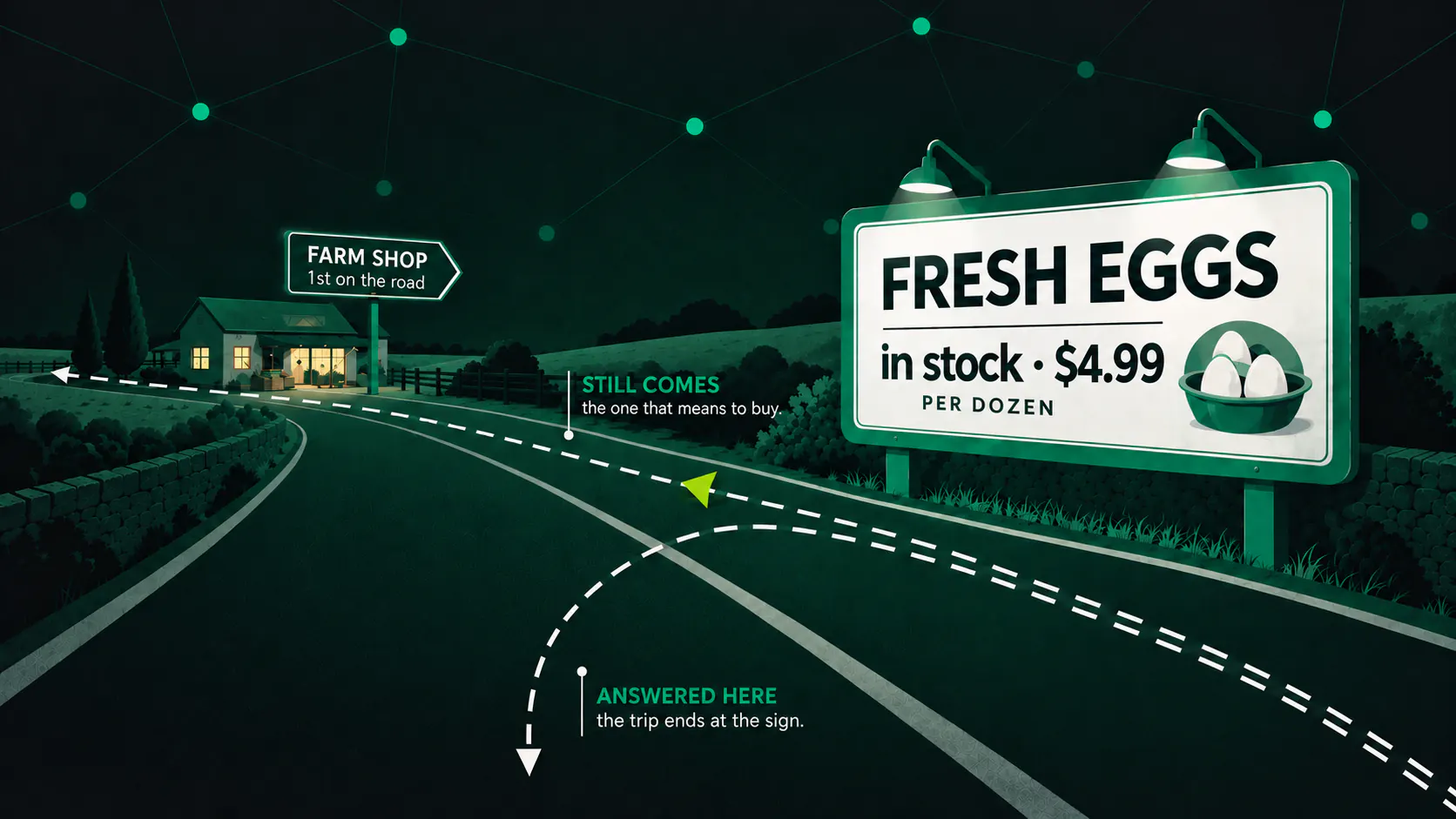
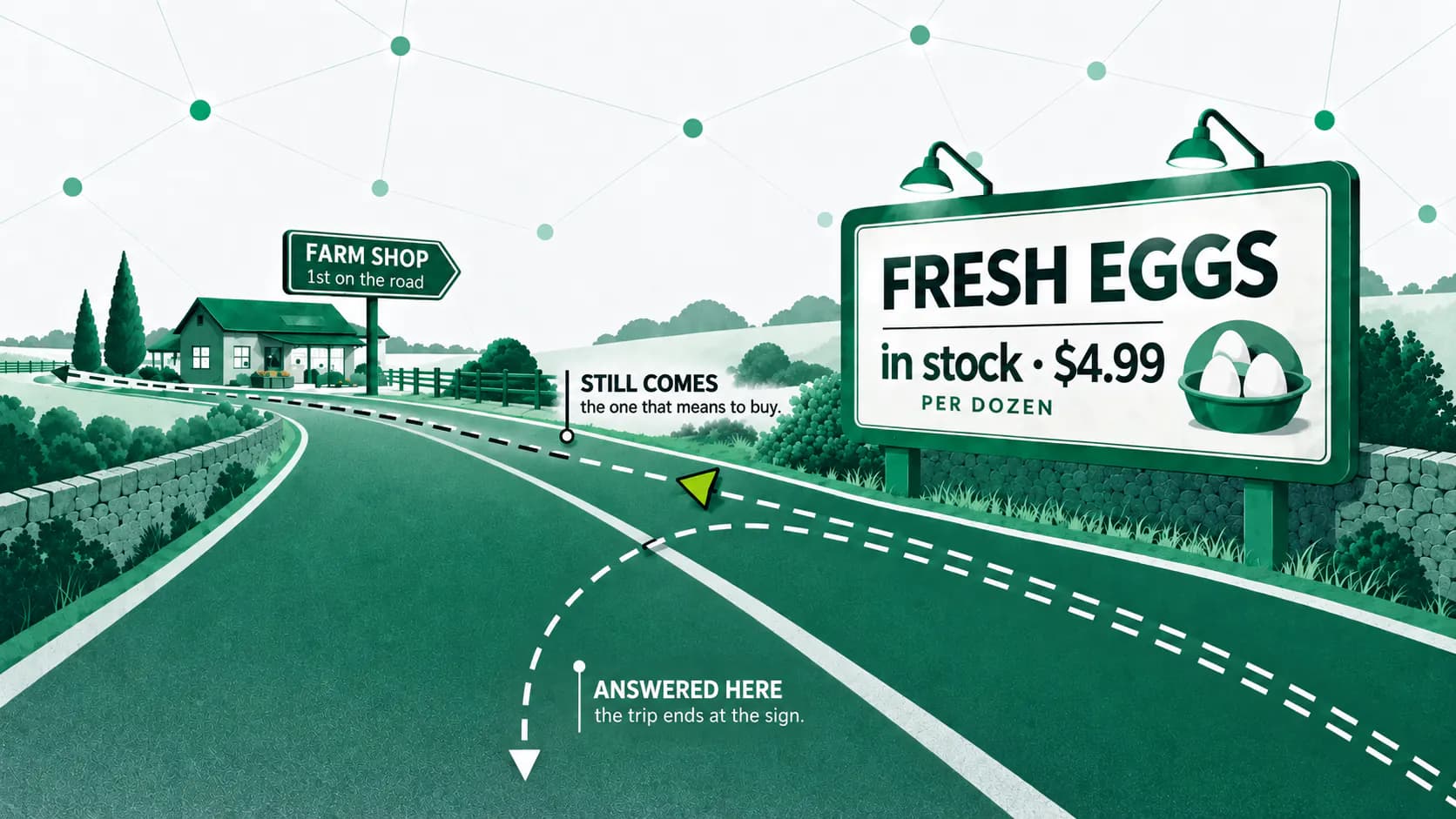
- Google disputes the traffic story. Its Search lead says total organic clicks are relatively stable year-over-year34, without publishing figures. Weigh that against the independent counts before a forecast rests on it.
- Clean product data is the price of entry. OpenAI asks merchants to share your product feed37, and Google added dozens of new data attributes38 to Merchant Center for discovery.
- Paid placement is coming in its own lane. Google is continuing to test ads in AI Mode38, kept apart from the organic results, so plan for a paid track beside the earned one.
7. Proving it paid off
Sooner or later the client asks whether it was worth it. What holds up is a number measured against what came before10, after the running cost comes out, and it is usually smaller than the vendor's slide. When Stanford's AI Index looked at what companies report, firms that saw savings mostly reported cost savings of less than 10%39. Where revenue rose, the most common level of revenue increases is less than 5%39.
01
Record the before
the time and cost of the task today, written down before launch
02
Hold a group back
some work done the old way, for comparison
03
Count every cost
license, integration, review time, and the reruns
04
Move a number they watch
a metric the client already reports on
If you can't trace the gain to the tool after its cost, don't promise it.
- On well-suited work the lift is real. In a Boston Consulting Group (BCG) field experiment, consultants using AI completed tasks 25.1% more quickly40 and produced 40% higher quality results40 than a group working without it.
- On the wrong work it backfires. Given a problem built to sit outside the model's competence, the consultants who leaned on AI did worse40 than those who did not.
- Measurement is a schedule. NIST's risk framework says AI systems should be tested before their deployment and regularly while in operation41.
8. The agency playbook
Seven chapters share one pattern: every surprise in them is cheaper to handle before launch than after. So the playbook moves the questions to the front, in the order the work meets the world. Decide what the model sees and how big it needs to be. Limit what a fooled feature can reach. Settle labels, credentials and consent while the edit is still open. Make the work legible to the machines that read it first. And write down the before, so the result can be shown.
01
What does it see?
the smallest capable model, and only the context it needs
02
What can it reach?
least access, and a person on any send, pay or delete
03
What must it say?
labels, credentials, and a signed release for any real face
04
Who reads it first?
a page and a catalog a machine can parse
05
What was the before?
a baseline recorded on day zero
Change the feature and every question after it opens again.
- Write disclosure and likeness into the statement of work (SOW), with a named approver for each. Flagging the exposure is your job. Deciding is the client's, with their counsel.
- Ask every vendor the same short list: which model runs where, what outside content the feature reads, what it can do if that content fools it, and which steps a person approves.
- Report what still carries intent. Informational sessions will fall. Citations, branded demand and conversions tell the client how the work is doing.
- Book the measurement as part of the job, with a baseline before build and a reading date after launch. It turns “we think it helped” into a number the client can take to their own boss.
Sources
- Cortexa Ground Truth Nº 10 — “AI, Without the Hype — The Cortexa Field Guide”
- Cortexa Ground Truth Nº 20 — “Building With AI, Without the Guesswork.”
- Cortexa Ground Truth Nº 21 — “Labeling AI content just became law.”
- Cortexa Ground Truth Nº 22 — “You rarely need the biggest model.”
- Cortexa Ground Truth Nº 23 — “A content credential is a nutrition label for your media.”
- Cortexa Ground Truth Nº 24 — “You can rank first and still lose the click.”
- Cortexa Ground Truth Nº 25 — “Prompt engineering was step one. Now engineer the context.”
- Cortexa Ground Truth Nº 26 — “When an AI shops, what gets picked?”
- Cortexa Ground Truth Nº 27 — “An AI version of a real person still needs consent.”
- Cortexa Ground Truth Nº 28 — “To prove the AI paid off, measure the baseline.”
- Cortexa Ground Truth Nº 29 — “Prompt injection: who’s giving your AI its orders?”
- Anthropic — Claude model pricing
- Anthropic — “Effective context engineering for AI agents”
- Stanford HAI — 2025 AI Index Report, Technical Performance
- Chen, Zaharia & Zou — “FrugalGPT” (preprint)
- Liu et al. — “Lost in the Middle: How Language Models Use Long Contexts” (preprint)
- Anthropic — “Mitigating the risk of prompt injections in browser use” (November 24, 2025)The 1% attack-success figure is vendor-stated, measured by Anthropic against its own internal adaptive attacker.
- OWASP — LLM01:2026 Prompt Injection (Top 10 for LLM Applications 2026)
- OpenAI — “Continuously hardening ChatGPT Atlas against prompt injection attacks”
- Simon Willison — “The lethal trifecta for AI agents: private data, untrusted content, and external communication”
- European Commission — Quick Facts: Transparency rules for AI systems
- European Commission — Transparency obligations under Article 50 of the AI Act (FAQ)
- California Legislature — SB 942, California AI Transparency Act (bill text)
- New York State Senate — S8420A, synthetic performer disclosure (bill text)
- OpenAI — Advancing content provenance (C2PA Content Credentials)
- Google DeepMind — SynthID
- NIST — Reducing Risks Posed by Synthetic Content (AI 100-4)
- California Legislature — AB 2602 (2024), digital replicas in performer contracts (Labor Code § 927)
- New York State Senate — General Obligations Law § 5-302, digital replicas in contracts
- California Legislature — AB 1836 (2024), digital replicas of deceased personalities (Civil Code § 3344.1)
- New York State Senate — Civil Rights Law § 50-f, deceased performers' digital replicas
- Google Search Central — Optimizing for generative AI features on Google Search
- eMarketer — Google’s AI summaries are ending search sessions, reducing click-through behavior (reporting Pew Research Center)
- Google — Liz Reid, “AI in Search is driving more queries and higher quality clicks”
- OpenAI — “Buy it in ChatGPT: Instant Checkout and the Agentic Commerce Protocol”
- OpenAI Help Center — “Shopping with ChatGPT search”
- OpenAI — “Power product discovery in ChatGPT”
- Google — “New tech and tools for retailers to succeed in an agentic shopping era”
- Stanford HAI — 2025 AI Index Report, Economy
- Ethan Mollick, One Useful Thing — “Centaurs and Cyborgs on the Jagged Frontier” (reporting the Dell’Acqua et al. BCG field experiment)
- NIST — AI Risk Management Framework (AI RMF 1.0), Core: the MEASURE function
Up next · 1 of 3 in Field Guide


More in Ground Truth
- Explainer5 min read
What “agentic AI” actually means plainly.
Agentic AI isn't smarter answers — it's software that takes actions toward a goal. Here's what's real, and why it still needs a human in the loop.
- Explainer5 min read
AI doesn’t lie — it guesses confidently.
Why Artificial Intelligence (AI) “hallucinates,” in plain English: it isn’t lying — it predicts likely words, and a confident guess can still be wrong.


