Cortexa Ground Truth

Tip: once it’s playing, tap any line to jump the audio there.
You rarely need the biggest model.
For narrow, high-volume work, a smaller model does most of the job at a fraction of the cost. Save the frontier for the hard part.
“Should we just use the most powerful Artificial Intelligence (AI) model?” It sounds like the cautious choice. For most of the work an agency runs, it is the expensive one. A smaller model handles narrow, repeatable jobs at a sliver of the price, and the frontier earns its keep only where the task is genuinely hard.
What makes one model bigger than another?
These are all large language models (LLMs), and “size” points at two things at once: how many parameters a model carries (its raw capacity), and what it costs to run per word. A bigger model knows more and reasons further. It also charges more for every token2 it reads and writes. The gap inside a single family is easy to see. Anthropic lists Claude Haiku, its smallest model, at one dollar per million input tokens, and Claude Opus, its largest, at five3. Same words, five times the price.
Have the smaller models caught up?
They have closed a surprising amount of ground. On the Massive Multitask Language Understanding benchmark (MMLU), a broad test of general knowledge, the smallest model to clear 60% in 2022 was PaLM, at 540 billion parameters. By 2024 Microsoft's Phi-3-mini hit the same mark with 3.8 billion, a 142-fold reduction4. The price of a fixed level of capability dropped just as sharply. Stanford's AI Index tracked the cost of GPT-3.5-level performance from twenty dollars per million tokens in late 2022 to seven cents by late 2024, more than a 280-fold fall in about eighteen months1.
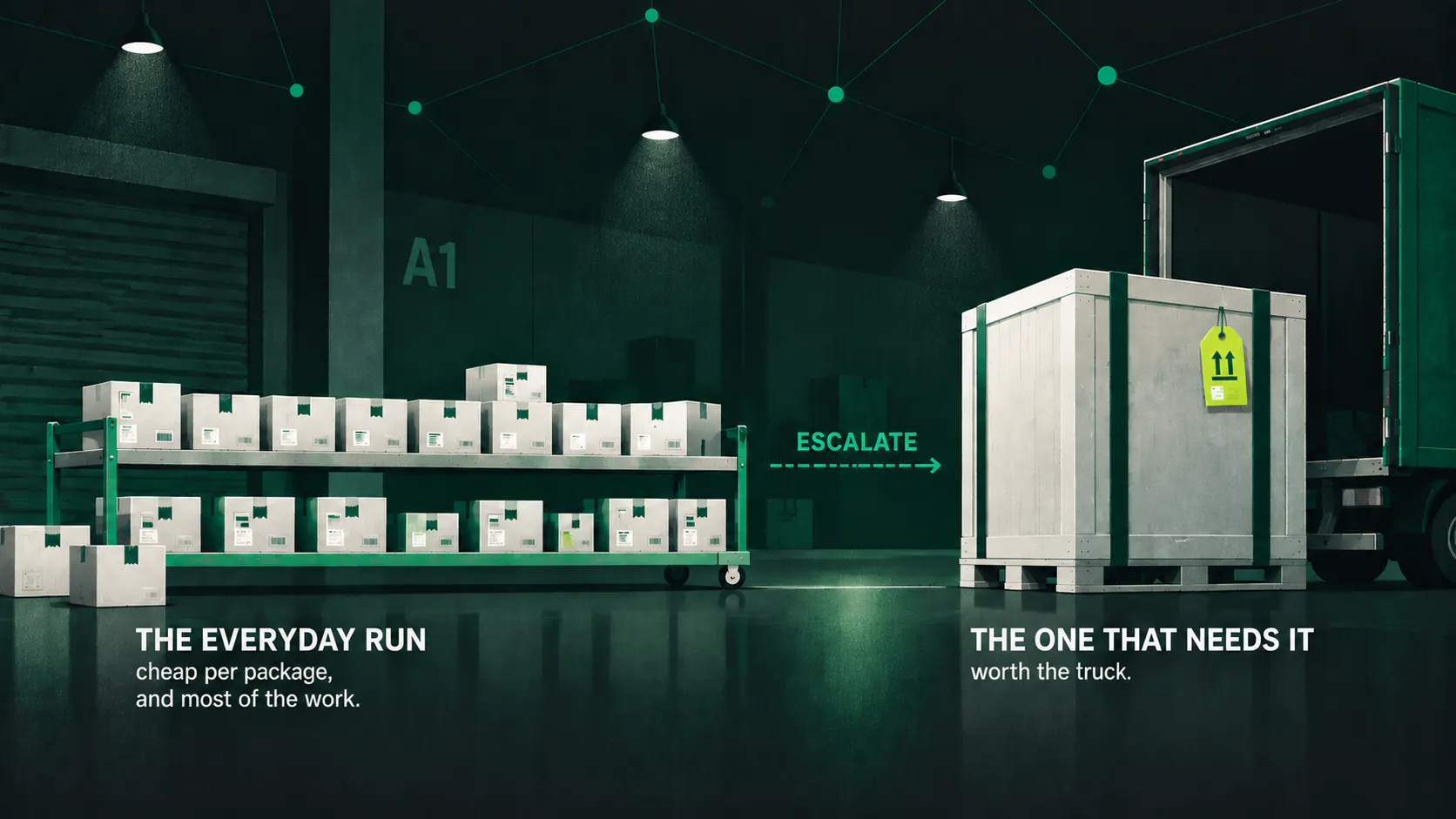
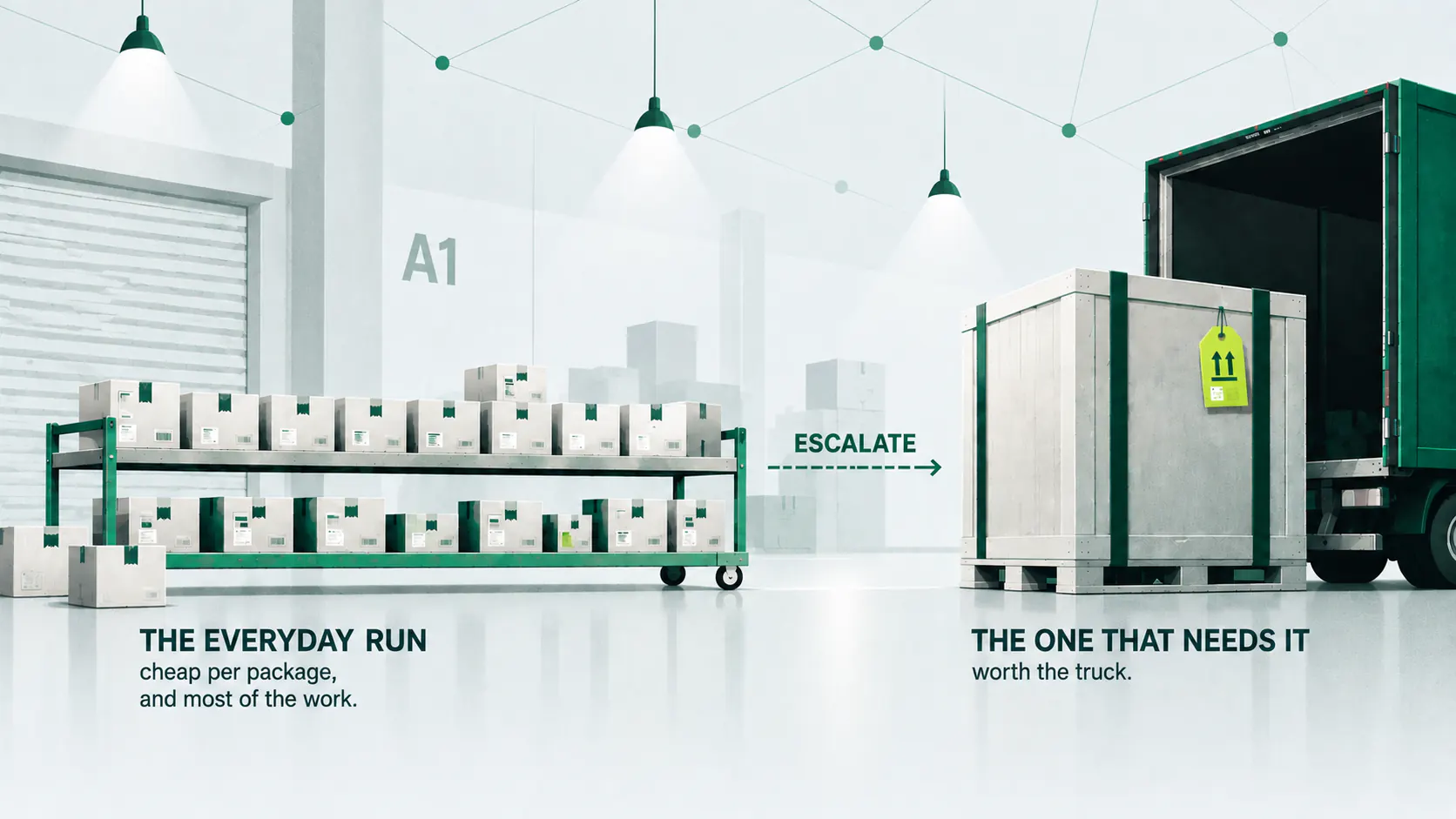
Name the task
one narrow job, or open-ended reasoning?
Start with the small model
cheap and fast, and good enough for most repeatable work
Check it on your data
measure on real client examples, not the vendor demo
Escalate the hard cases
route only the genuinely tricky queries up to the frontier
Send the routine work to the cheap model; keep the frontier for what needs it.
What's Real?
- The cheap model wins the narrow, repeating work. Sort a support ticket, tag a photo, pull fields off a form, draft a first pass. NVIDIA's research group argues small models are sufficiently powerful, inherently more suitable, and necessarily more economical for many invocations5 in exactly this kind of pipeline.
- The frontier still wins the hard part. Long chains of reasoning, open-ended judgment, the strange edge case a client will notice first. Paying for that capability where it changes the outcome is money well spent.
- Mixing models is the normal design, not a hedge. The same NVIDIA paper calls heterogeneous systems that invoke several different models5 the natural choice. A Stanford method, FrugalGPT, matched the best single model with up to a 98% cost reduction6 by trying cheaper models first and escalating only when it had to.
- You only learn “good enough” by testing. A benchmark headline is a starting point. Whether a small model clears the bar on your client's real work is an evals7 question, and it is answered on your own examples.
The “so what” — for anyone serving tech clients
- Price the pipeline, not the demo. When you scope AI into a client's workflow, size each step on its own. The model that reads ten thousand product descriptions a day need not be the one that writes the launch strategy. At volume, that difference is most of the bill.
- Ask your vendors which model runs where. “We use AI” is not an answer. A partner who can say the small model handles the routine calls and the frontier takes the judgment calls is a partner who has thought about your cost.
- Don't overpay for reasoning either. Putting a heavy reasoning model8 on a simple lookup is the same mistake wearing a different hat. Match the tool to the task, every time.
Sources
- Stanford HAI — 2025 AI Index Report, Research and Development
- Cortexa Ground Truth Nº 5 — “What a ‘token’ is, and why it’s on your invoice”
- Anthropic — Claude model pricing
- Stanford HAI — 2025 AI Index Report, Technical Performance
- NVIDIA Research — “Small Language Models are the Future of Agentic AI” (preprint)
- Chen, Zaharia & Zou — “FrugalGPT” (preprint)
- Cortexa Ground Truth Nº 8 — “Evals, in plain English”
- Cortexa Ground Truth Nº 15 — “Reasoning models show their work”
Next Reads
- Field Guide
A new site gets cited on its name, and almost nothing
Instrumented measurement on a site that didn't exist in June. Asked by name, it's cited 97% of the time. Asked about its topics: zero of 1,664.
- Explainer
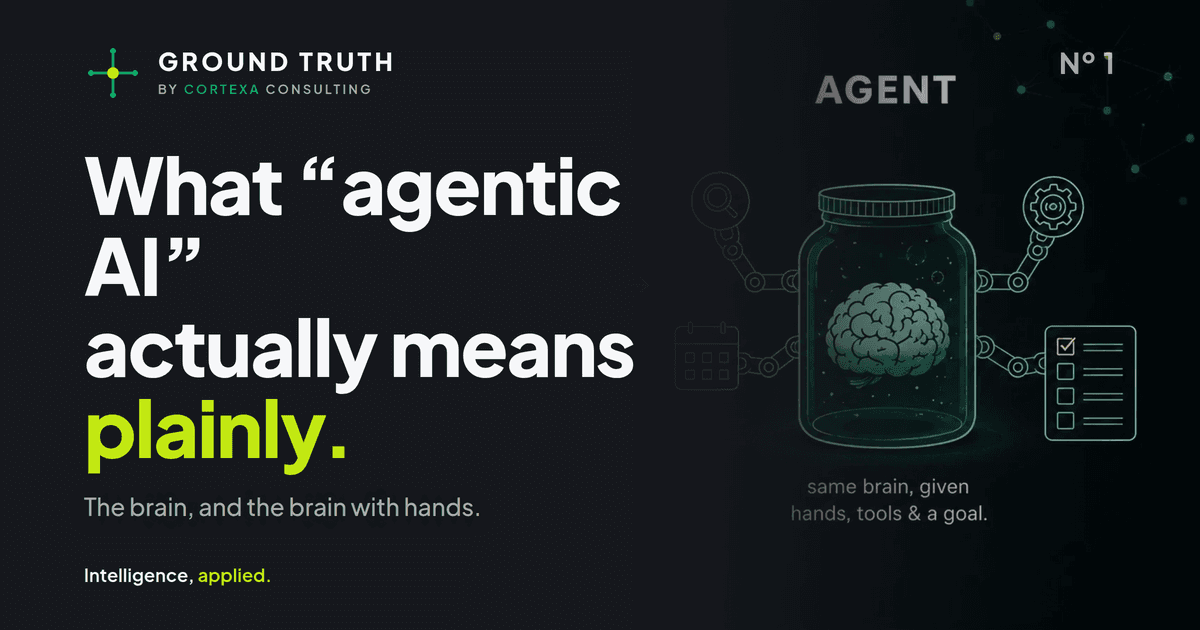
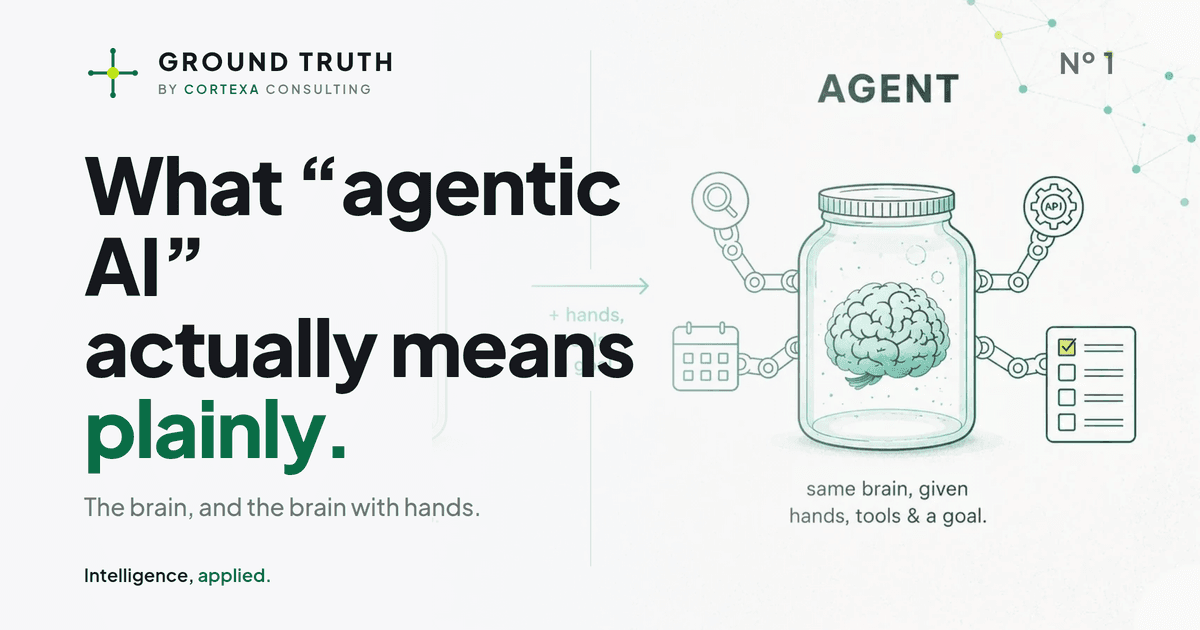
What “agentic AI” actually means
Agentic AI isn't smarter answers — it's software that takes actions toward a goal. Here's what's real, and why it still needs a human in the loop.