Cortexa Ground Truth

Tip: once it’s playing, tap any line to jump the audio there.
You can rank first and still lose the click.
An AI summary answers the question above your links, so a page can hold its ranking and still lose the click. Same SEO, new results-page format.
“Our rankings are holding. So where did the traffic go?” Every agency running a content program is fielding that one right now. The chart shows organic visits sliding for months while the keywords sit exactly where they always sat. It reads like the search engine optimization (SEO) quietly broke, so the instinct is to go fix it. Usually nothing is broken. What changed sits above the links: Google now prints an Artificial Intelligence (AI) Overview at the top of the results page, and it answers the question before the reader ever reaches your listing.
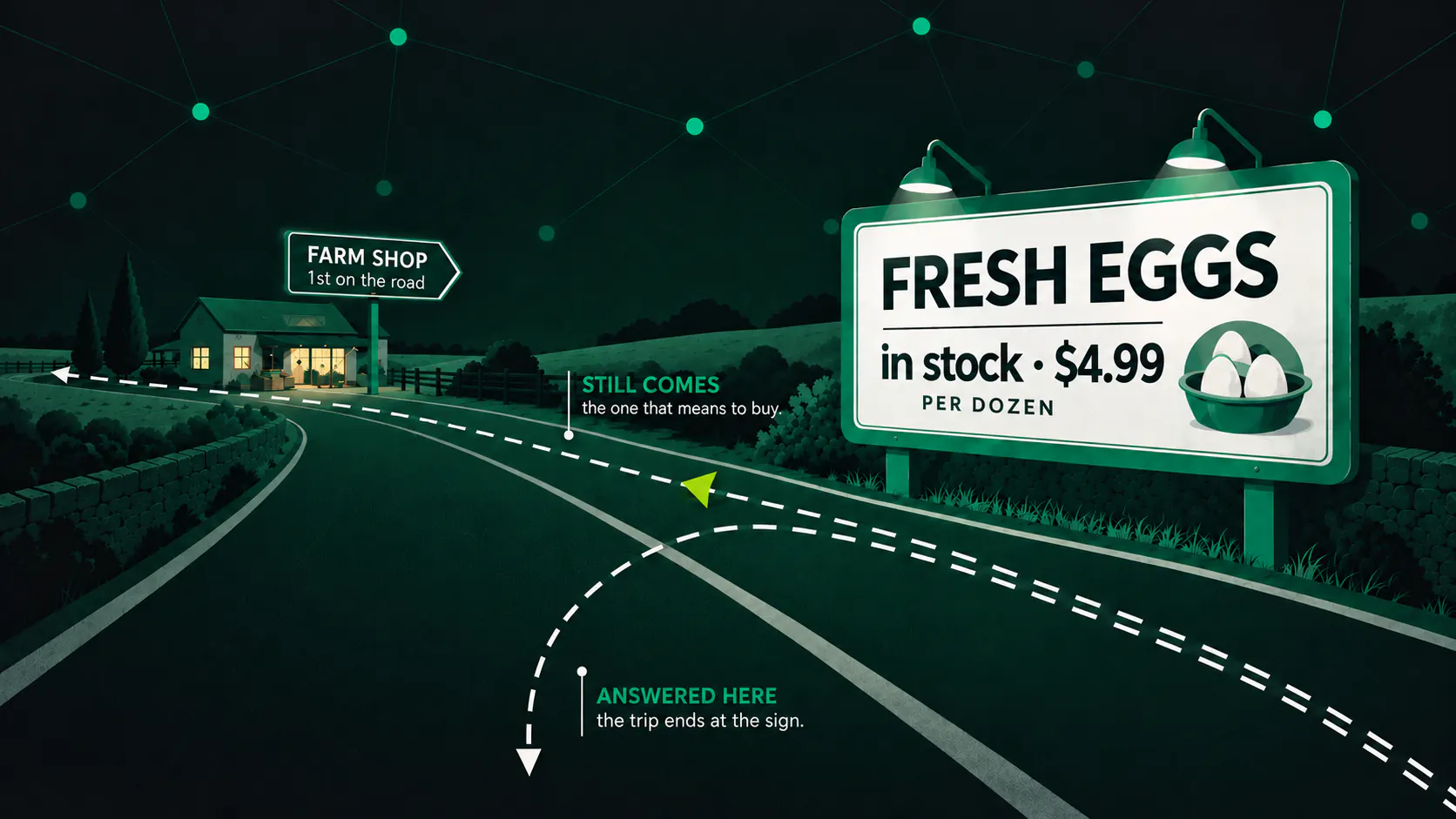
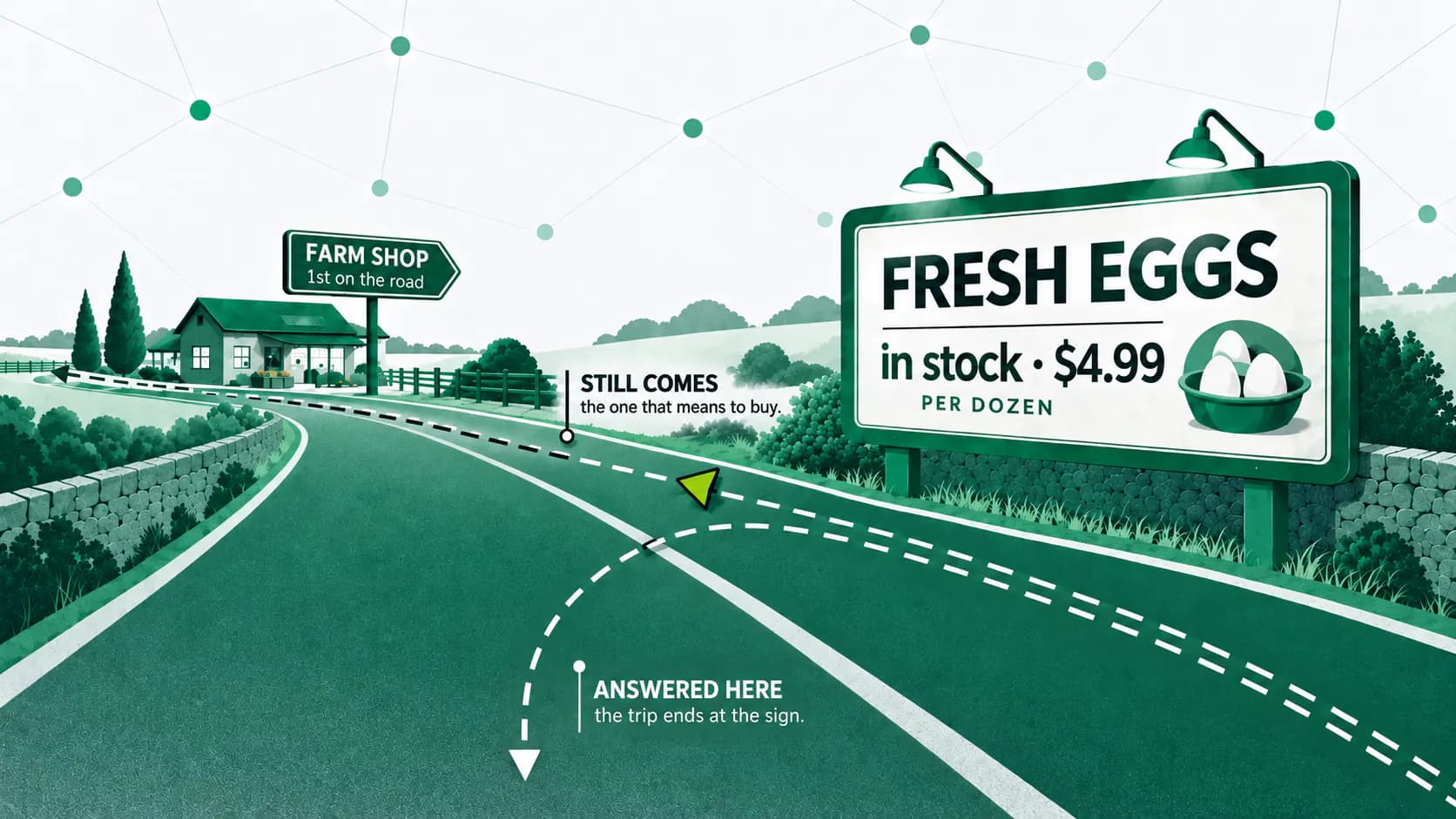
Why did the traffic fall while the ranking held?
For years the deal was simple: rank near the top, earn the click. An AI Overview rewrites the top of the page. Before the ten blue links, the reader now sees a written answer the engine assembled by reading the same pages ranked below it. Picture a library where the librarian has started reading the answer aloud at the front desk. Your book is still on the shelf. It is still first in the catalog, and it is still the one she is reading from. Most people never walk back to get it. Google is plain about the mechanism. Its AI features lean on retrieval, relying on our core Search ranking systems to retrieve relevant, up-to-date web pages5, then summarize them in place. The RAG brief6 covered that mechanism running over your own documents. Here it runs over the open web, and the summary lands above your result. Your page can rank first and even be the source it quoted. The reader no longer has to make the walk.
Where does the click go?
Ask
someone types an informational question
Answer on the page
an AI Overview drafts a reply above the links, from the pages that rank
Read and stop
most readers get what they need; the visit ends on Google
The click that’s left
the higher-intent visit still comes through: a brand, or a purchase a summary can’t finish
Informational questions get answered in place; the pages the summary quotes are back in play next time.
What's Real?
- The click really does drop when the summary shows. A Pew Research Center study of 68,879 Google searches found that a search with an AI Overview led to a click on a traditional result in 8% of visits, against 15% when no summary appeared1. Readers also ended the session on the results page more often, 26% of the time versus 16%1. Close to half the clicks, gone to a box at the top.
- Rank stopped protecting traffic. eMarketer puts the referral traffic lost to AI Overviews at as much as 25%2 for affected sites. The position on the page can hold while the visits it used to send quietly fall away.
- Whole categories are going zero-click. For news, the share of Google searches ending with no click to a news site rose from 56% to nearly 69% in the year after AI Overviews launched in the US3. The answer increasingly lives on the results page. The walk to the source is the step people skip.
- Google disputes the framing, and shows no numbers. Its Search lead says total organic clicks are relatively stable year-over-year4 and skew to higher quality4. The post carried no figures at all, while the Pew and Similarweb counts above point the other way. Weigh the claim. Don't bank a client's forecast on it.
The “so what” — for anyone serving tech clients
- Reset the scoreboard before the client panics at the graph. Informational sessions will keep sliding even when the work is sound, so lead the report with what still signals intent: branded search, conversions, assisted revenue, and citations inside the AI answers. A falling sessions line beside a steady pipeline is the honest picture. Have that conversation early.
- Move budget to the queries a summary can't close. AI Overviews concentrate on informational questions, so the click holds up on the branded and transactional searches, and on the deeper content a buyer studies before deciding. Fund the pages that live past the point where a short answer is enough.
- Win the citation, because the answer box is the new front page. When the engine does answer, being the page it quotes is the slot that matters, the same discipline from being worth quoting7: answer the question in the first line, and show the primary you got it from. It earns the mention, and the mention is what a reader follows when they want more than the summary.
Sources
- eMarketer — Google’s AI summaries are ending search sessions, reducing click-through behavior (reporting Pew Research Center)
- eMarketer — Google AI Overviews decrease referral traffic as much as 25%
- Digiday — AI platforms are driving more traffic, but not enough to offset “zero-click” search (Similarweb data)
- Google — Liz Reid, “AI in Search is driving more queries and higher quality clicks”
- Google Search Central — Optimizing for generative AI features on Google Search
- Cortexa Ground Truth Nº 3 — “RAG is just giving AI an open book”
- Cortexa Ground Truth Nº 16 — “To be cited by AI, be worth quoting”
Next Reads
- Explainer
What “agentic AI” actually means
Agentic AI isn't smarter answers — it's software that takes actions toward a goal. Here's what's real, and why it still needs a human in the loop.
- Explainer
AI doesn’t lie — it guesses
Why Artificial Intelligence (AI) “hallucinates,” in plain English: it isn’t lying — it predicts likely words, and a confident guess can still be wrong.