By Cortexa Consulting
Ground Truth
What's real in AI — in five minutes, not five hours. The honest, evidence-led read for the people who have to explain AI to clients. No hype, every claim sourced.
Cortexa Ground Truth articles
- Explainer5 min read
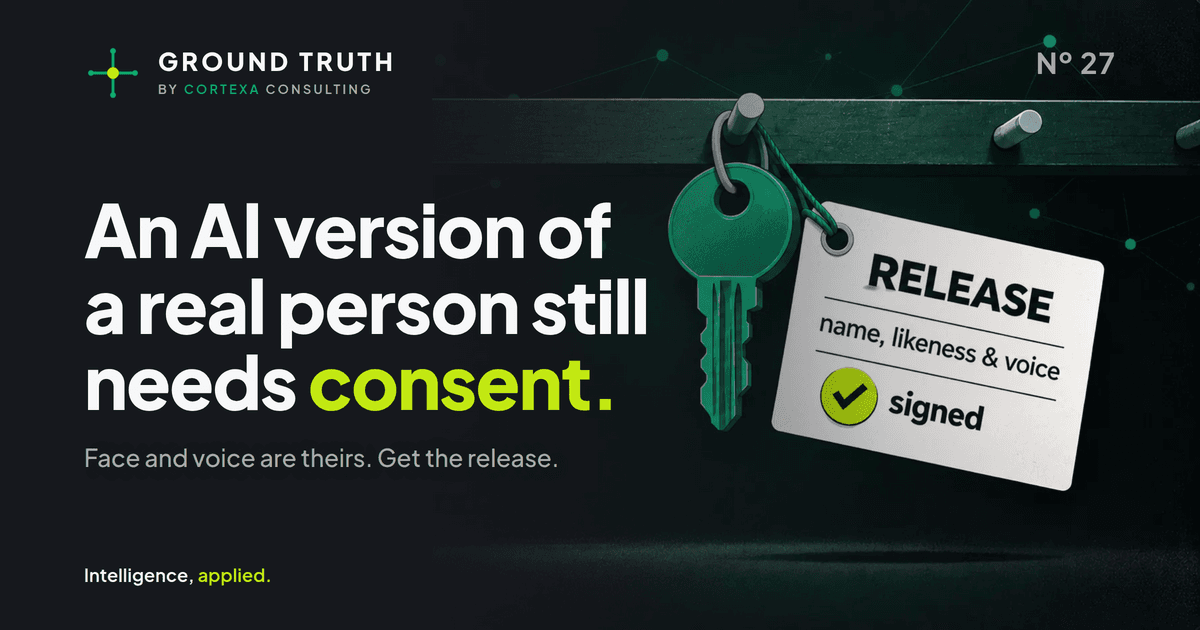
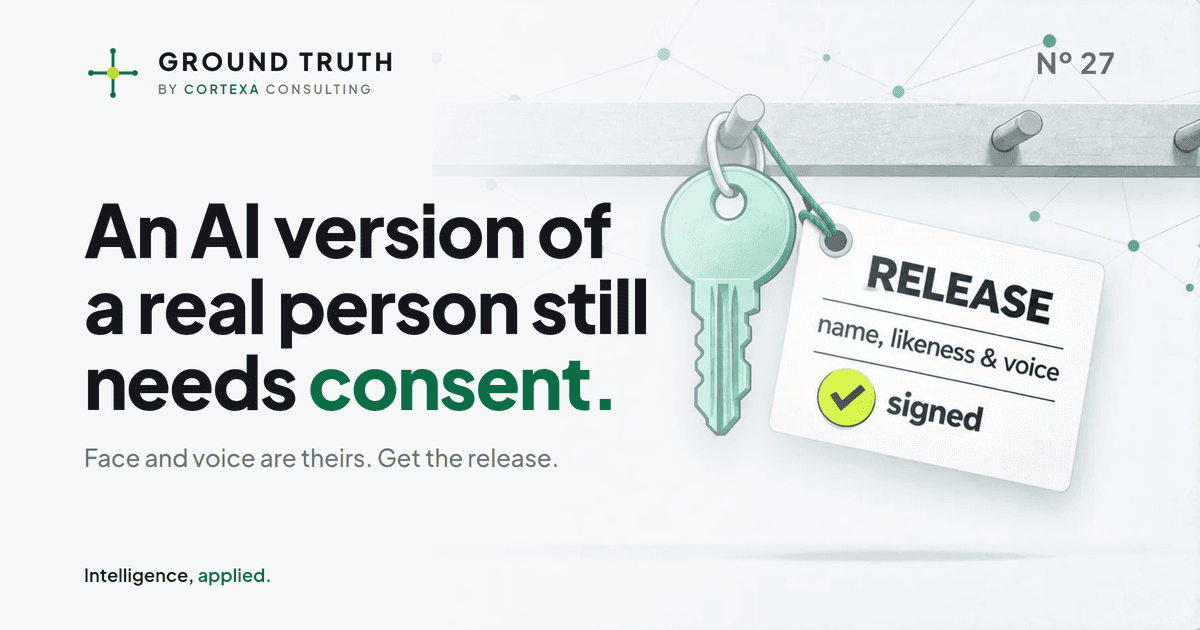
An AI version of a real person still needs consent.
Cloning a face or a voice is easy now. Using one in an ad needs the person's signed consent, and in California and New York that is the law.
- Explainer5 min read
When an AI shops, what gets picked?
When a shopper asks an AI what to buy, the pick turns on relevance and clean product data the model can read. Here is what earns the spot.
- Explainer5 min read
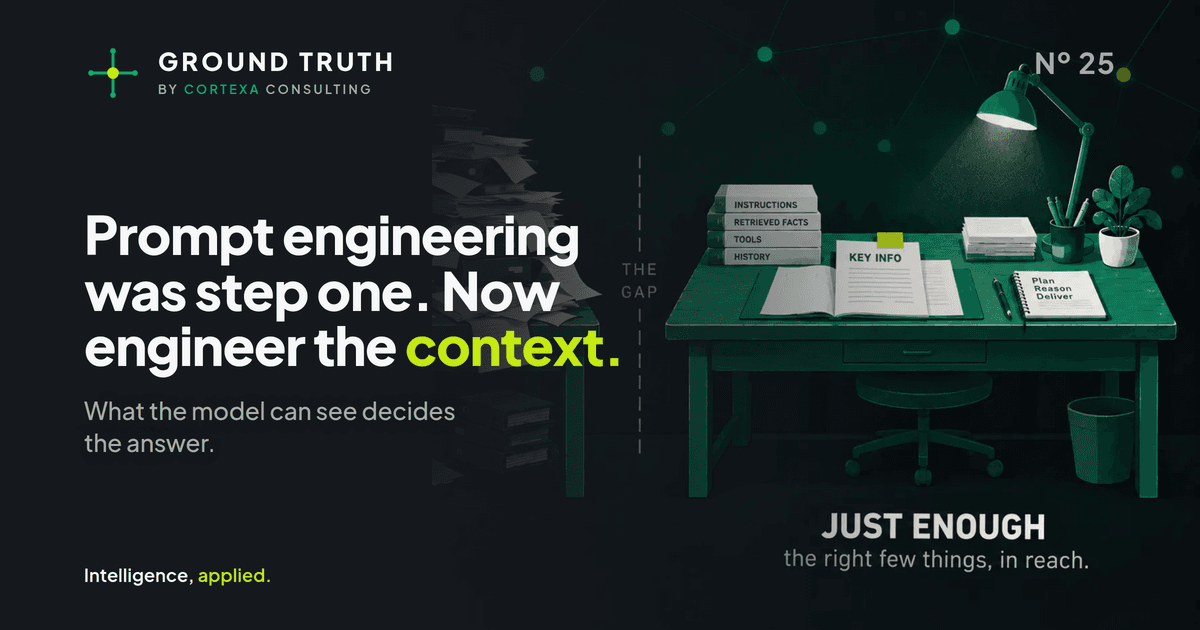
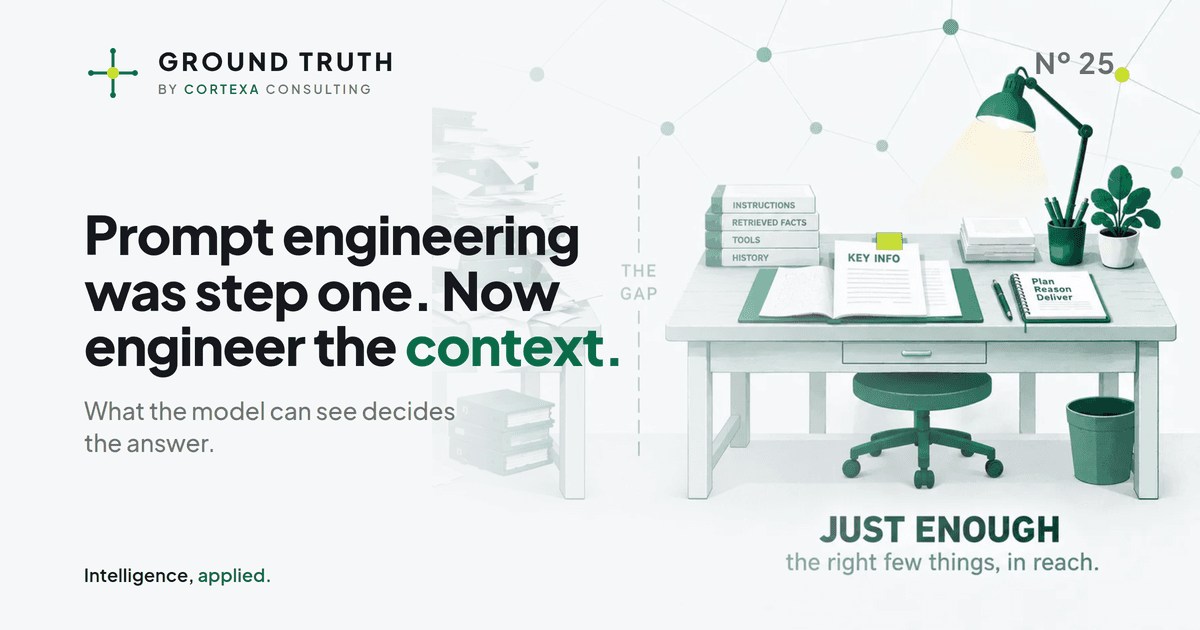
Prompt engineering was step one. Now engineer the context.
Prompt engineering was about wording the question. Context engineering is about everything the model can see when it answers.
- Explainer5 min read
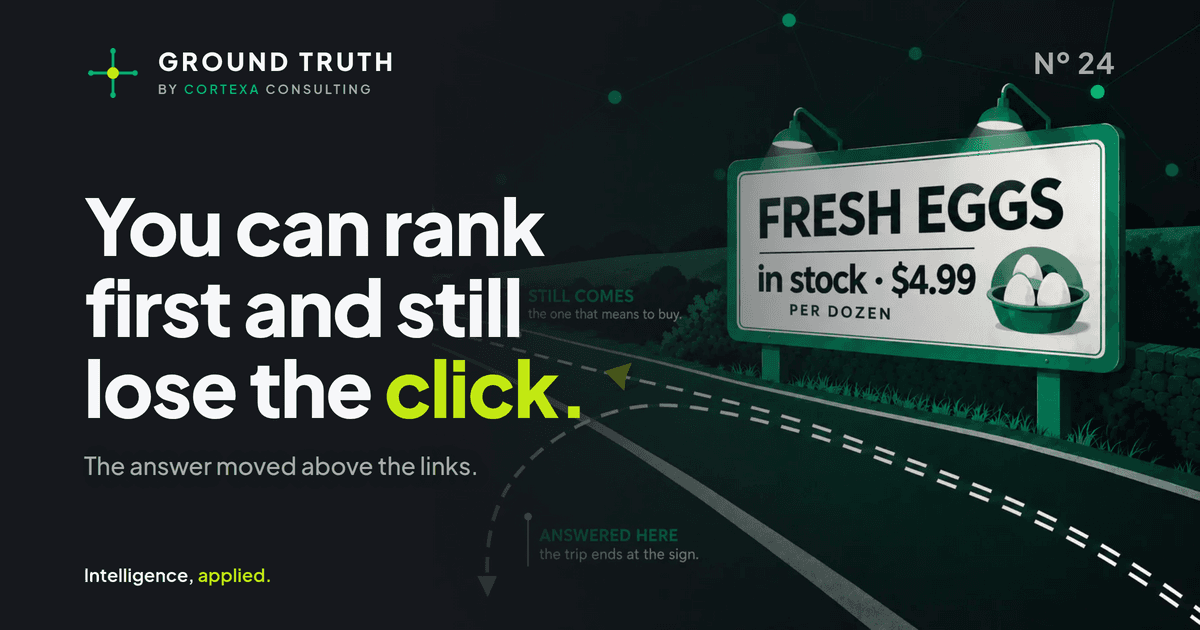
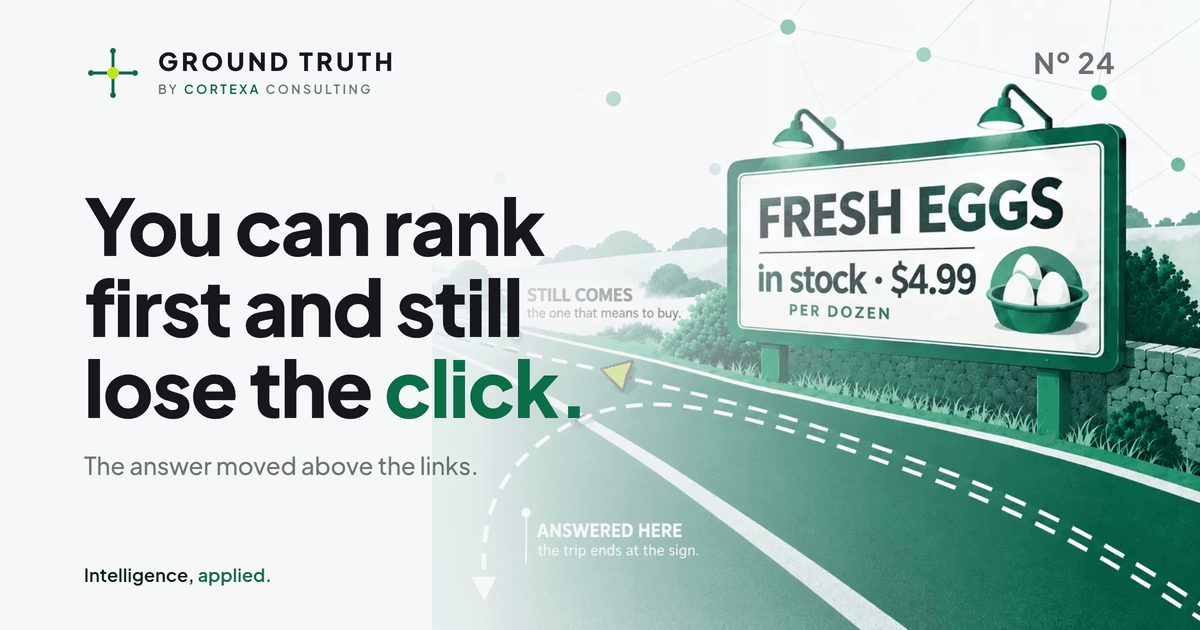
You can rank first and still lose the click.
An AI summary answers the question above your links, so a page can hold its ranking and still lose the click. Same SEO, new results-page format.
- Explainer5 min read
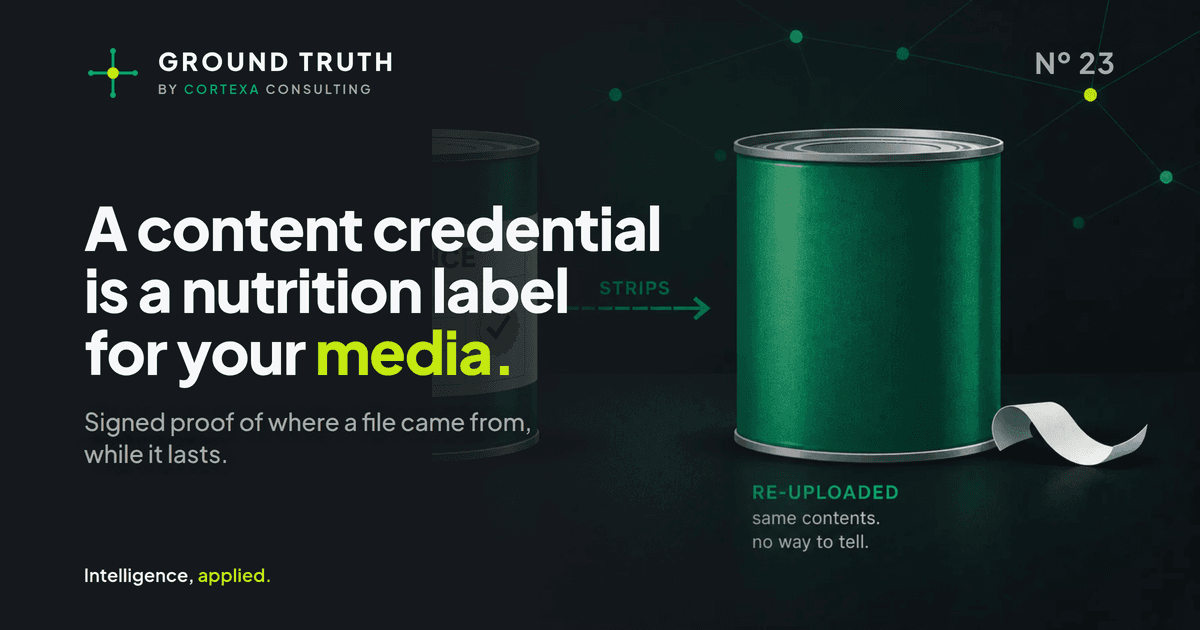
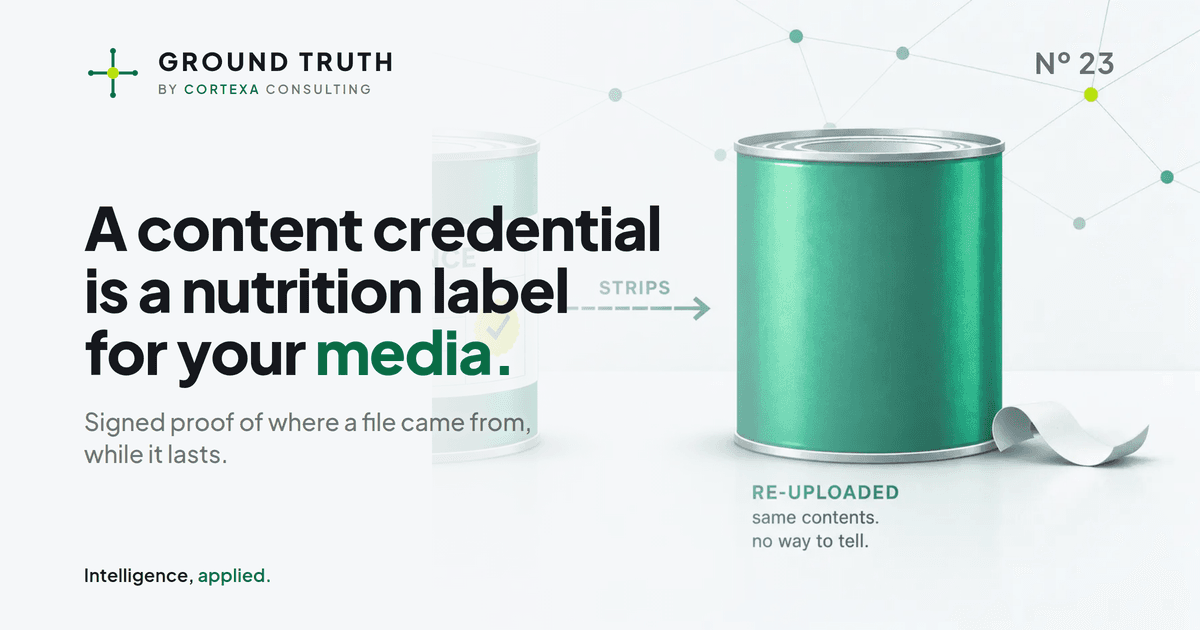
A content credential is a nutrition label for your media.
A content credential is signed metadata that rides with a file: who made it, when, and whether AI had a hand. Useful for as long as it survives.
- Explainer5 min read
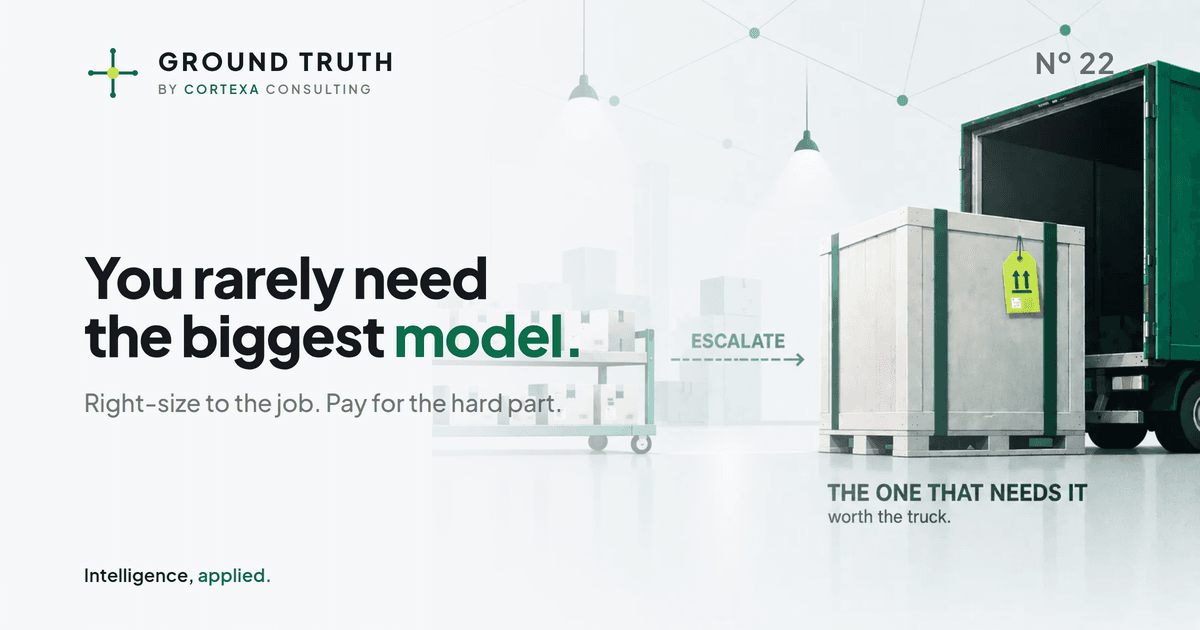
You rarely need the biggest model.
For narrow, high-volume work, a smaller model does most of the job at a fraction of the cost. Save the frontier for the hard part.
- Explainer5 min read
Labeling AI content just became law.
Three 2026 laws in the EU, California and New York now require labeling some AI-generated content. Whether yours needs one depends on what, and where.
- Field Guide20 min read
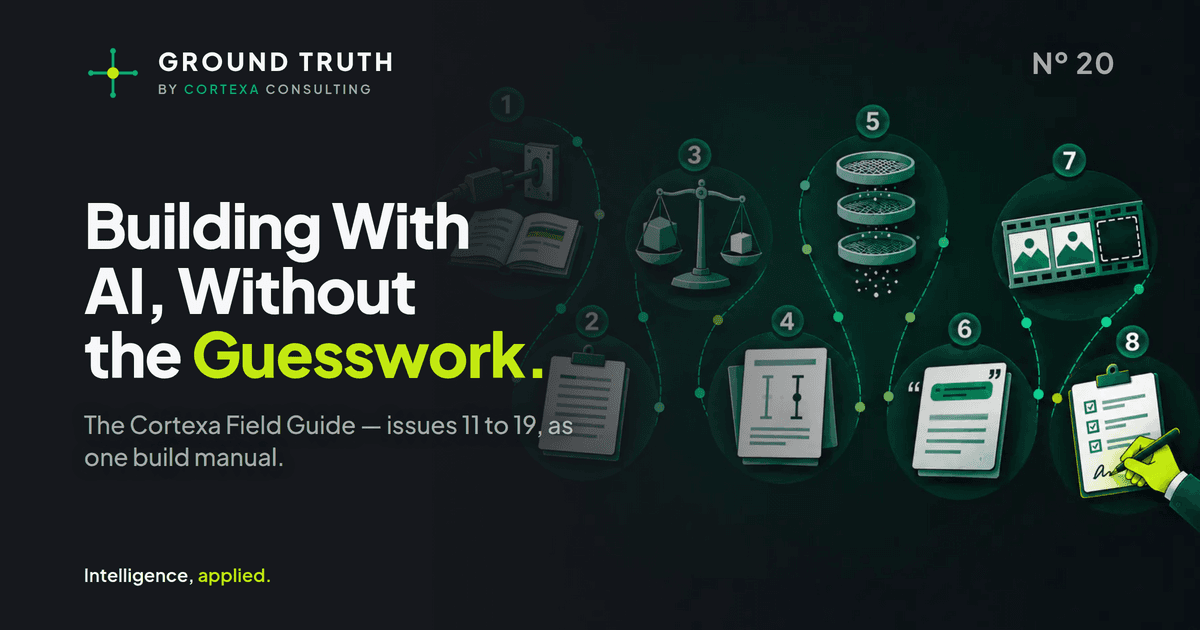
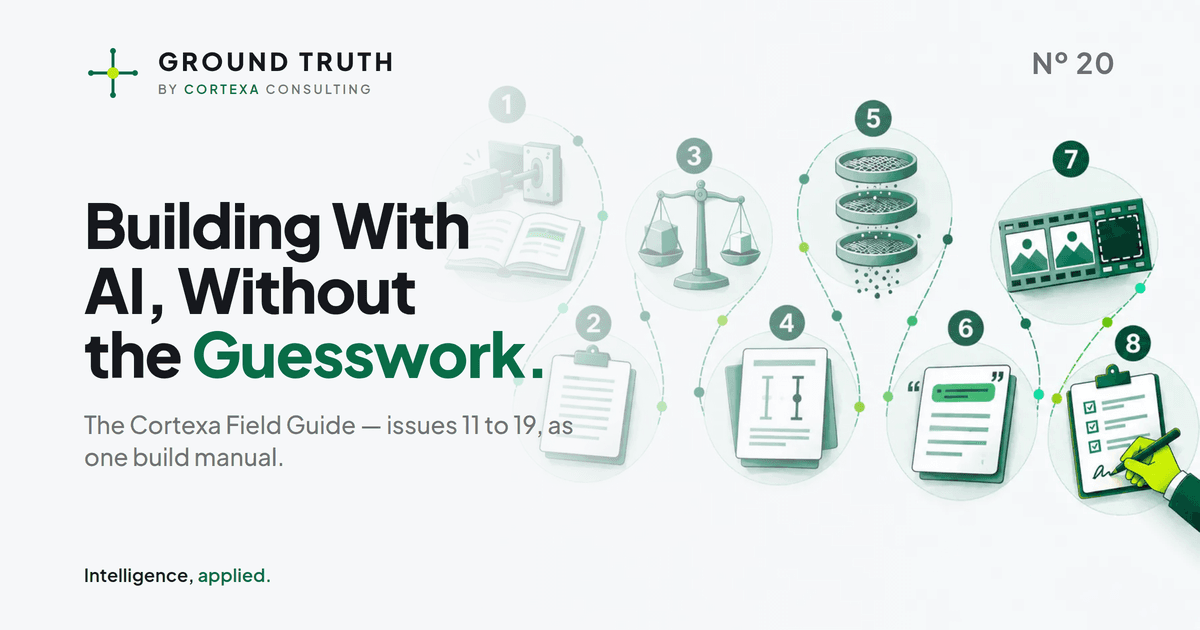
Building With AI, Without the Guesswork.
Nine explainers, one build manual: how AI reaches your tools, what the model choice costs, and what to check before a client's name goes on it.
- Explainer5 min read
AI video is ready for the storyboard, not the shoot.
AI can generate a cinematic clip with sound in minutes. That's a fast way to show an idea, and a risky way to ship a finished ad.
- Explainer5 min read
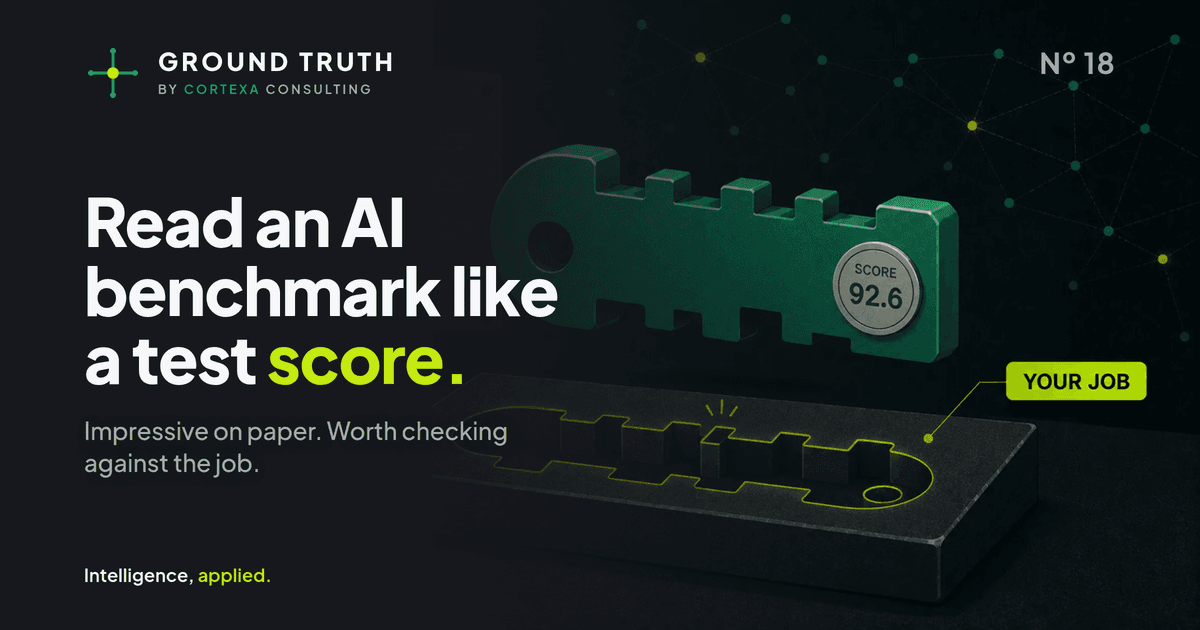
Read an AI benchmark like a test score.
A benchmark score says how a model did on one fixed test, under one set of choices. It doesn't say how it will do on your client's job.
- Explainer5 min read
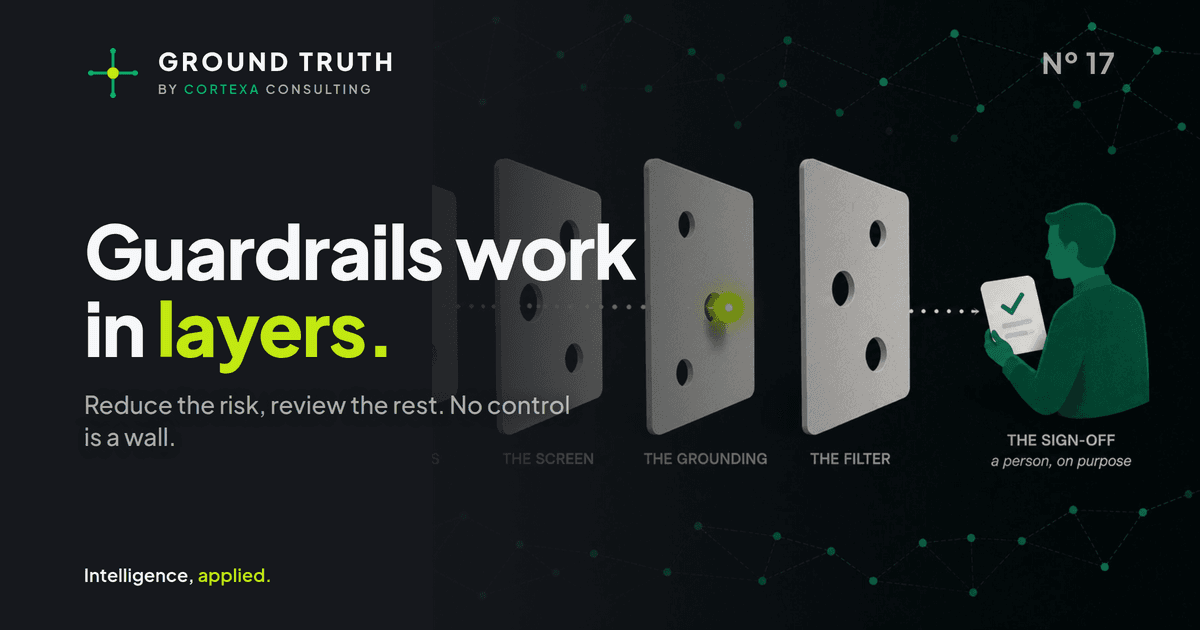
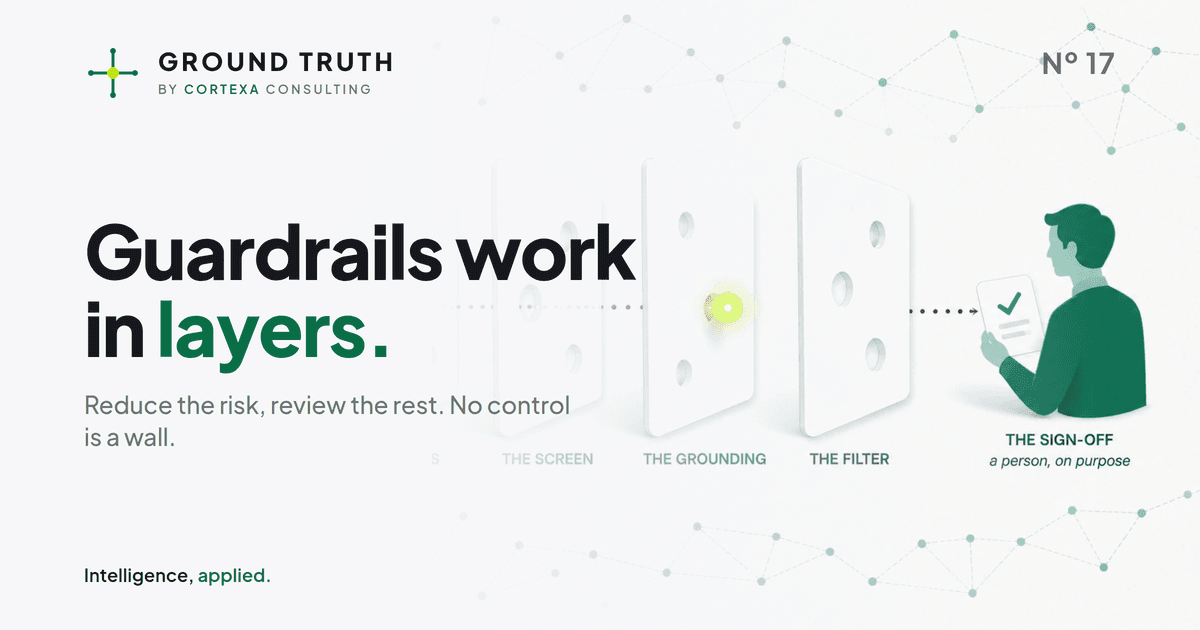
Guardrails work in layers.
No single control makes an AI guaranteed brand-safe. The honest answer is layers: steer it, screen it, filter it, and keep a person on the last mile.
- Explainer5 min read
To be cited by AI, be worth quoting.
AI assistants answer by pulling live web pages and quoting them. The way to get cited is to be the clearest, best-sourced page on the question.
- Explainer5 min read
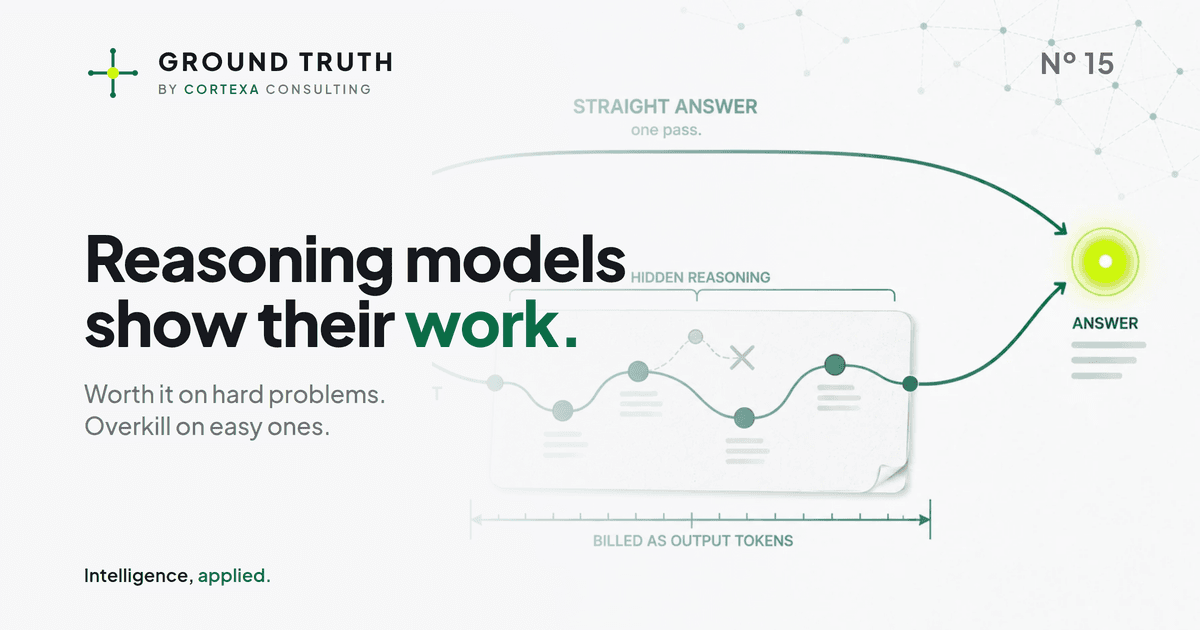
Reasoning models show their work.
A reasoning model works the problem out before answering. That thinking costs time and tokens: worth it on genuinely hard tasks, wasted on easy ones.
- Explainer5 min read
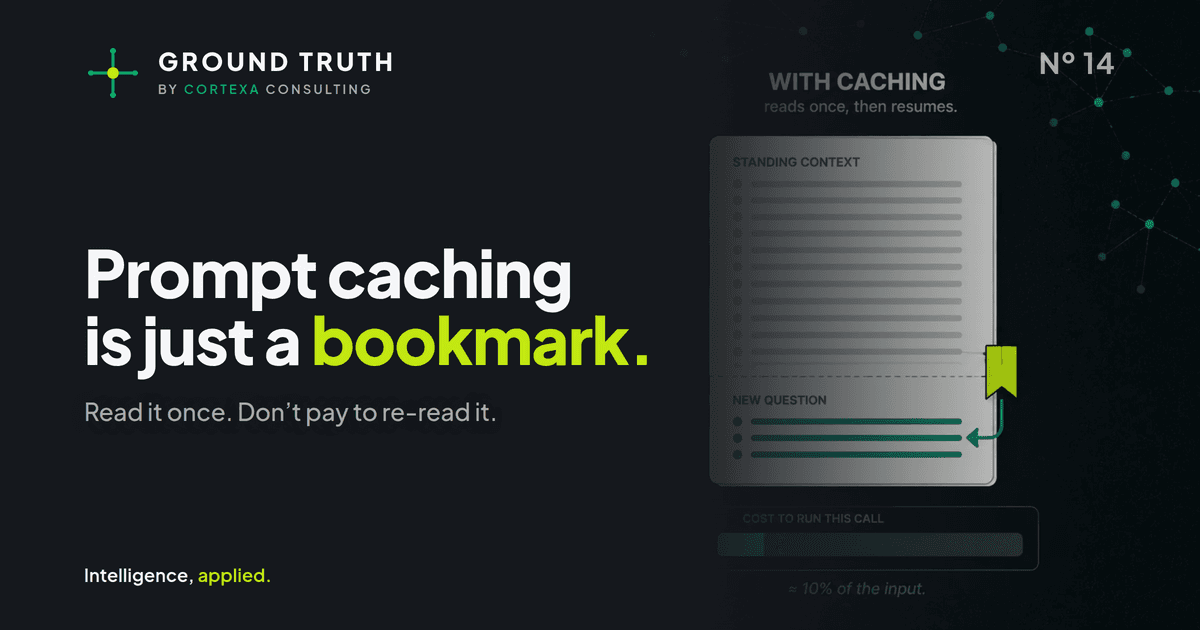
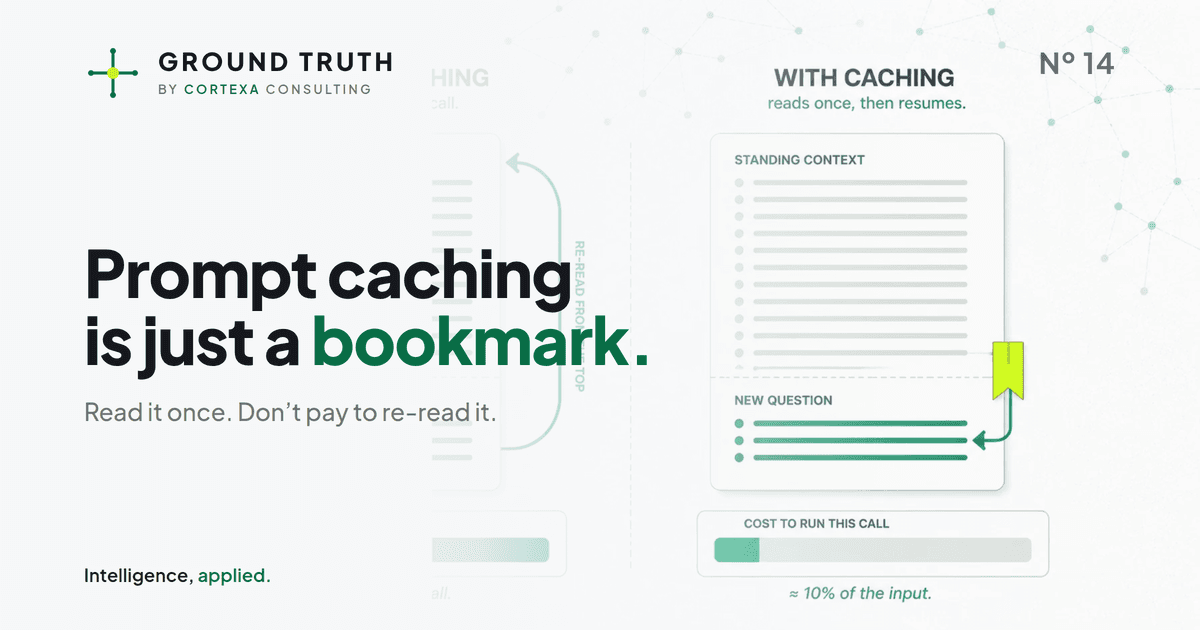
Prompt caching is just a bookmark.
Models re-read your whole prompt on every call, and bill you each time. Prompt caching reads the repeated part once, then resumes for a fraction.
- Explainer5 min read
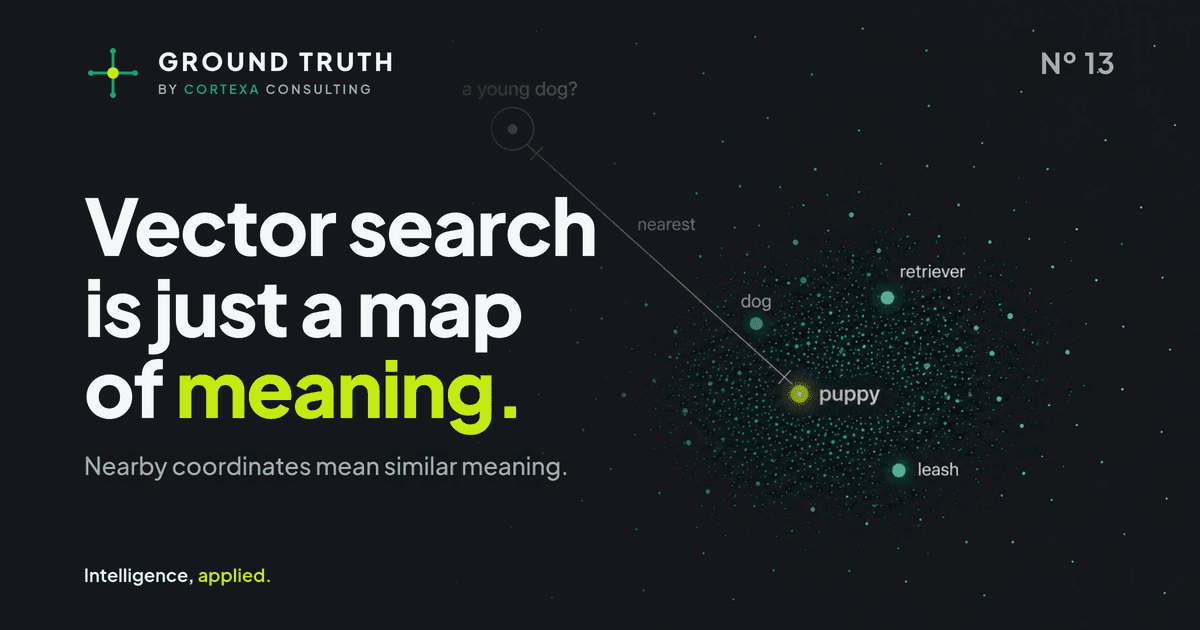
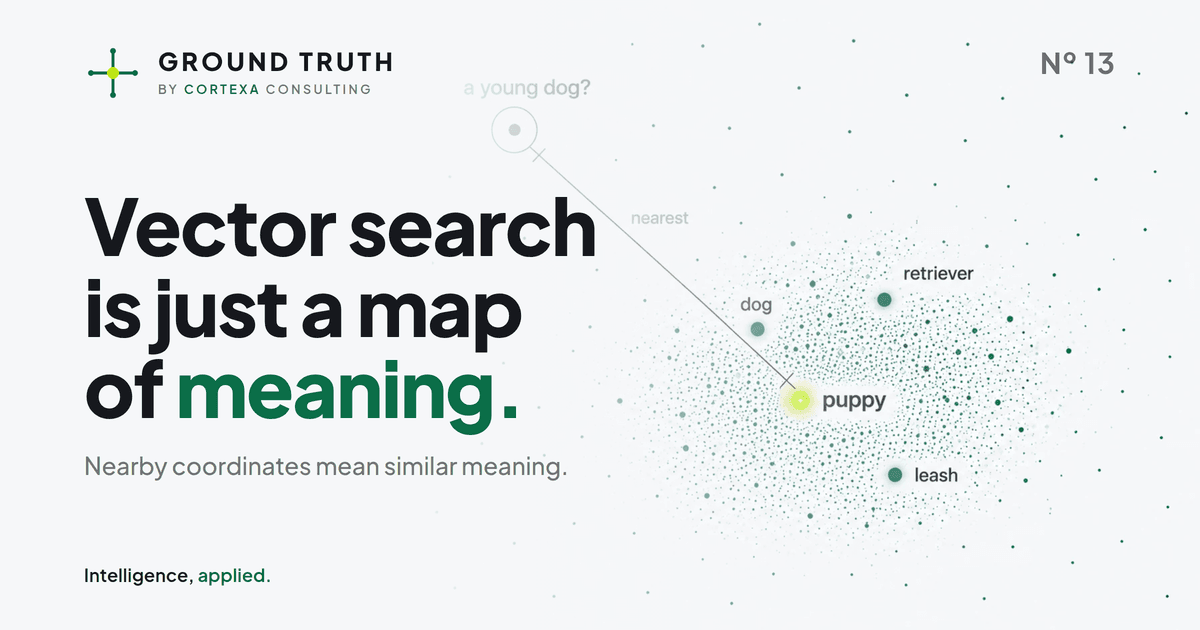
Vector search is just a map of meaning.
“Nearby means similar.” Embeddings turn text into coordinates, and a vector database finds the closest ones — the quiet engine behind RAG's open book.
- Explainer5 min read
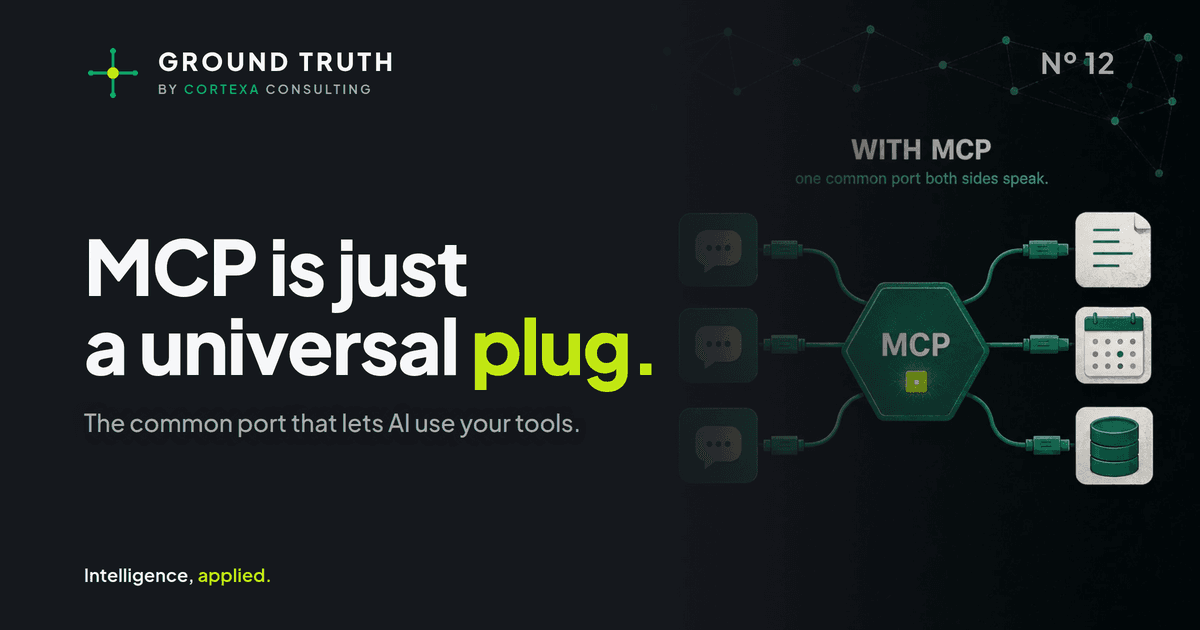
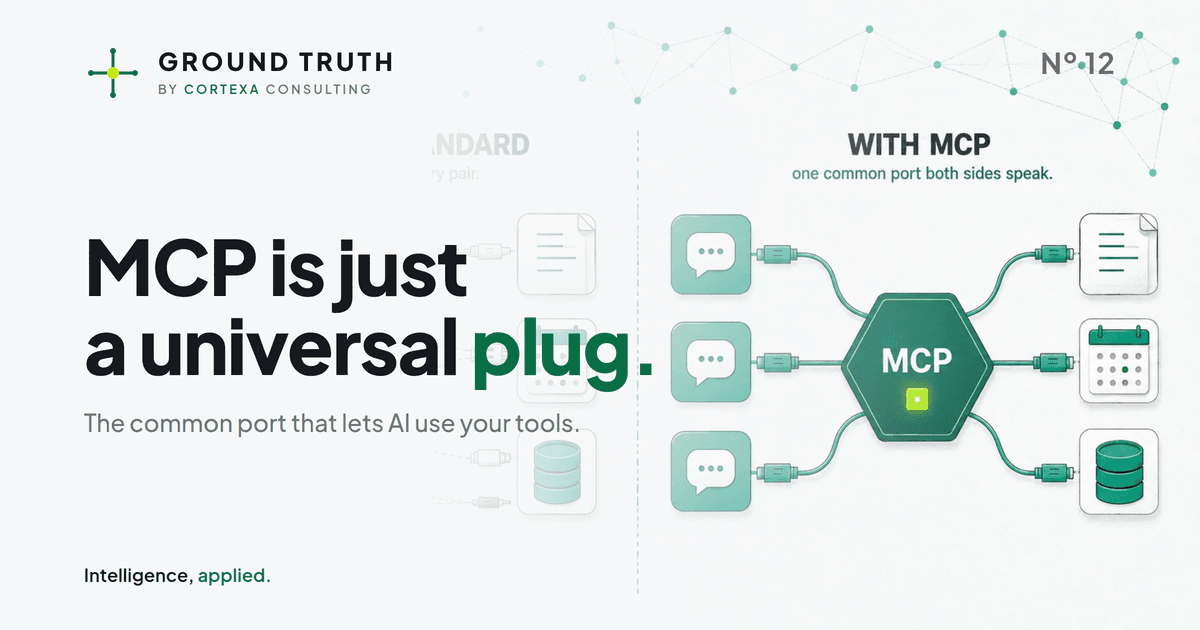
MCP is just a universal plug.
“Can the AI use our tools?” The Model Context Protocol (MCP) is the common plug that lets it — one standard port, not a custom wire for every app.
- Explainer5 min read
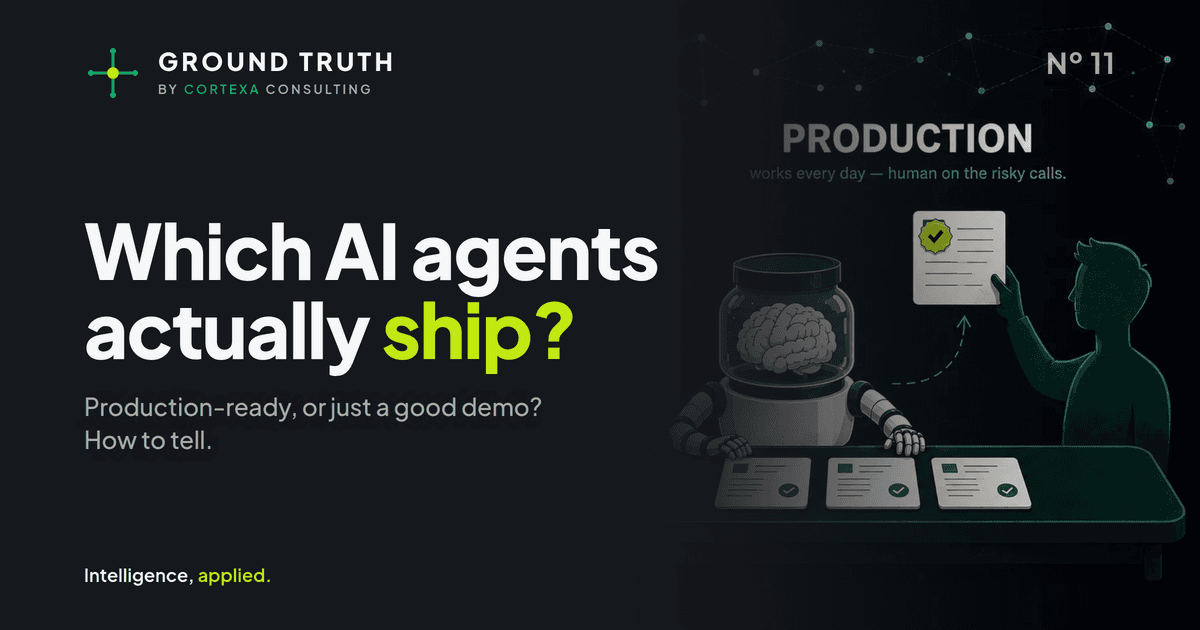
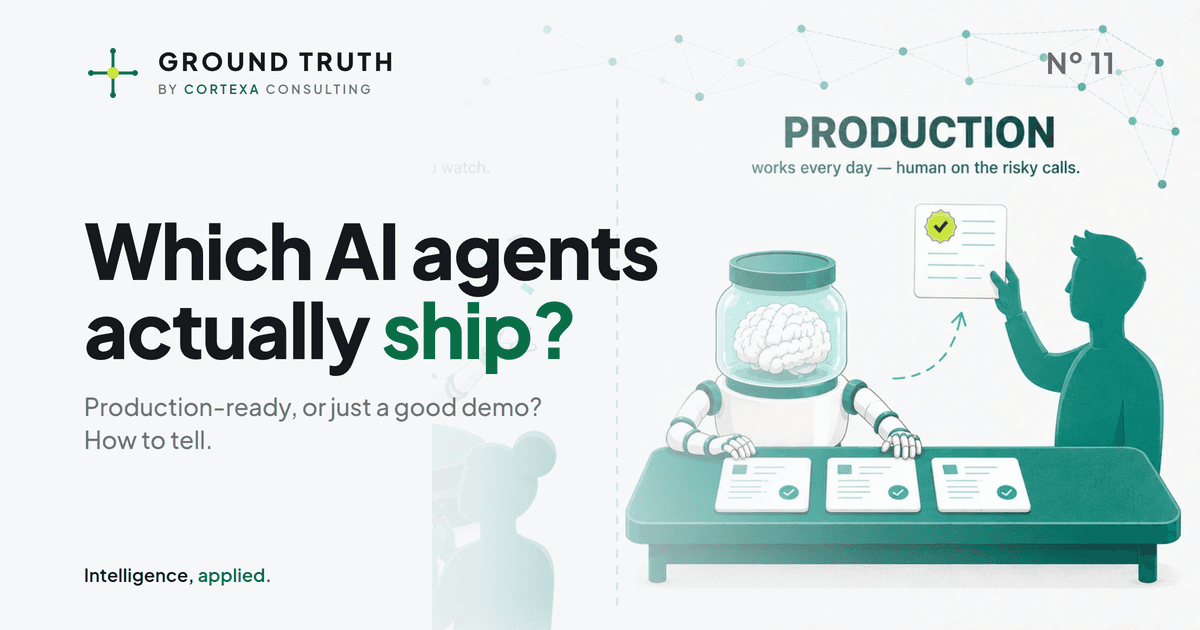
Which AI agents actually ship?
Plenty of AI agents dazzle in a demo; far fewer survive real work. Here's how to tell a production-ready agent from a supervised experiment.
- Field Guide18 min read
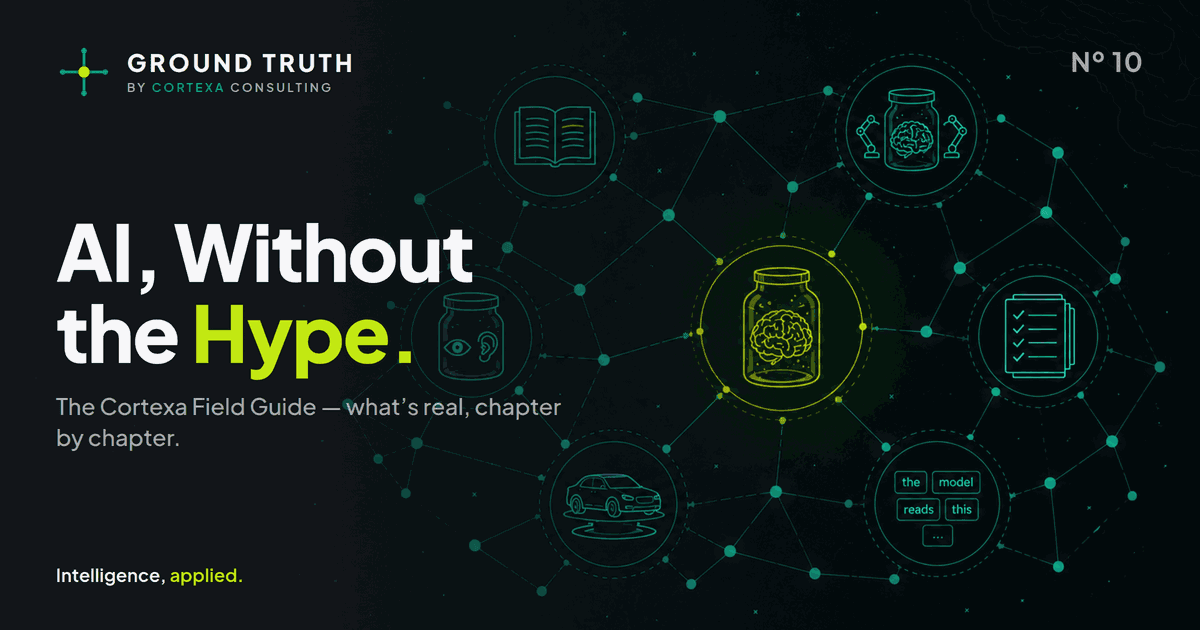
AI, Without the Hype — The Cortexa Field Guide.
Nine explainers, one decision tool: when a client asks about AI, here's what's real, what to scope, and the honest version — chapter by chapter.
- Explainer5 min read
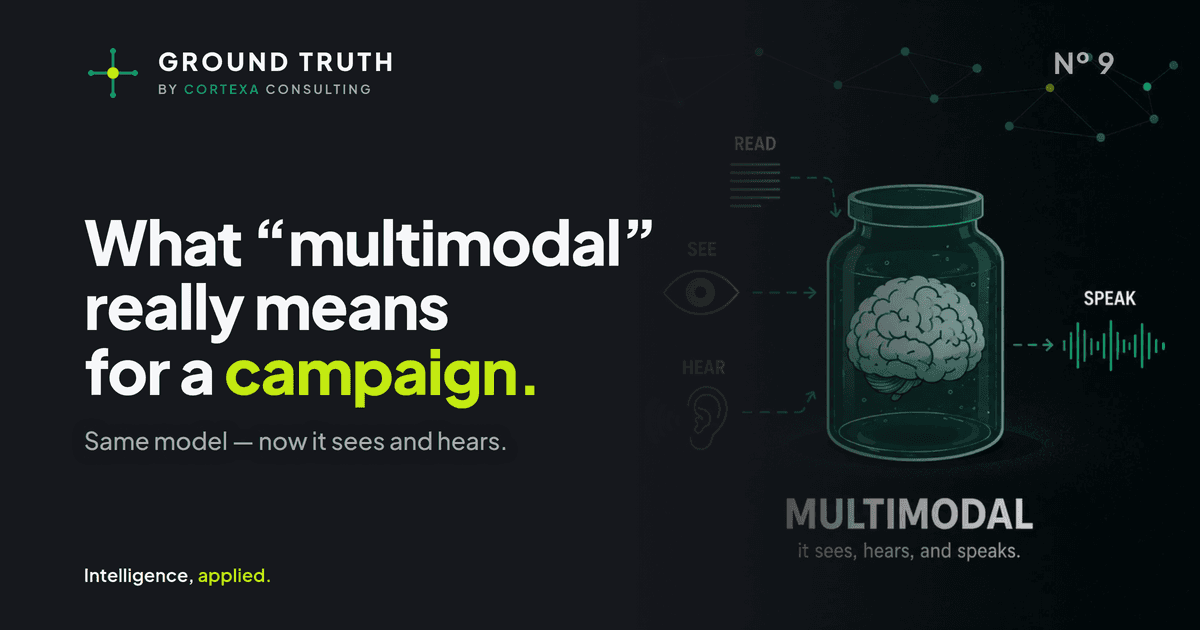
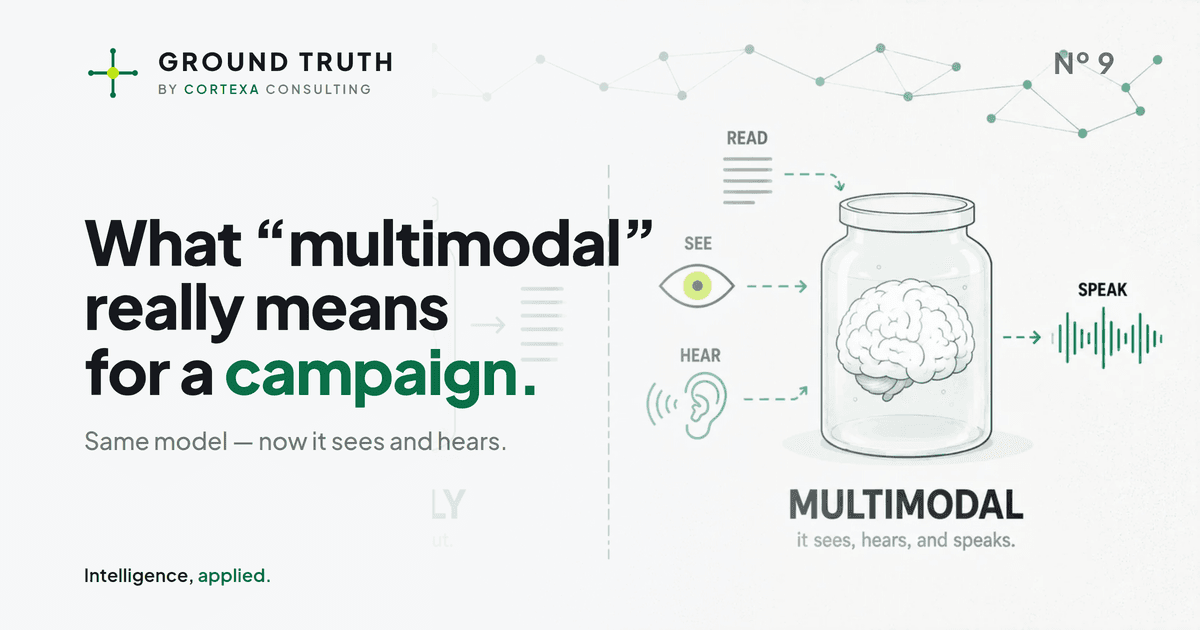
What “multimodal” really means for a campaign.
Multimodal AI works in more than text — it sees images and hears audio. Here's where that genuinely helps a campaign, and where it's still a party trick.
- Explainer5 min read
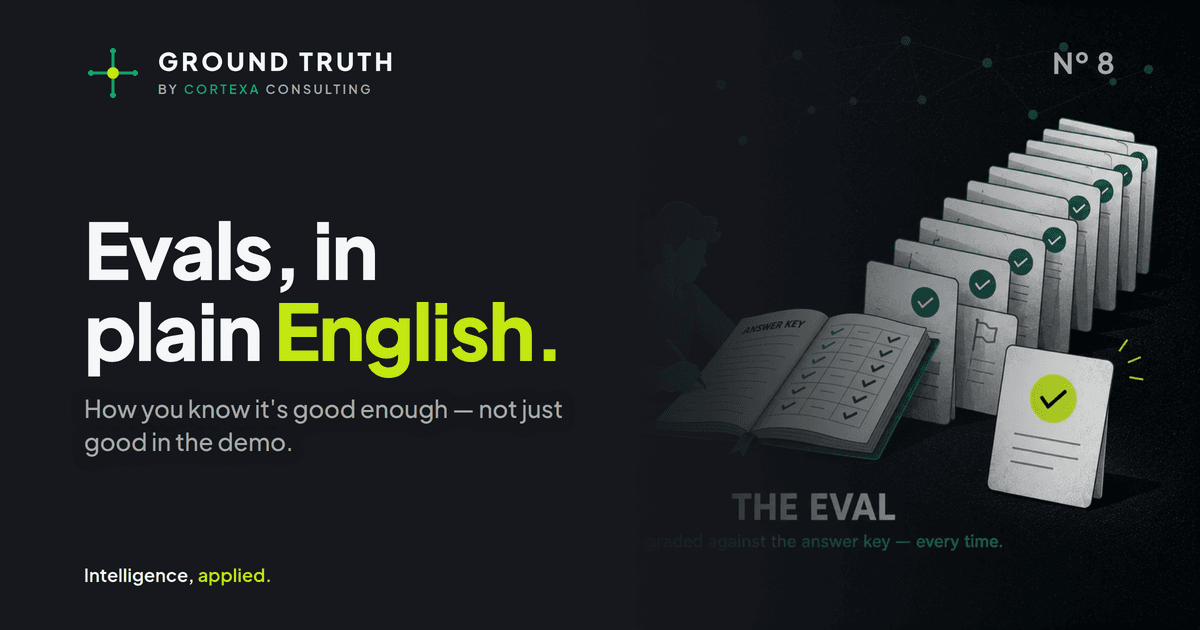
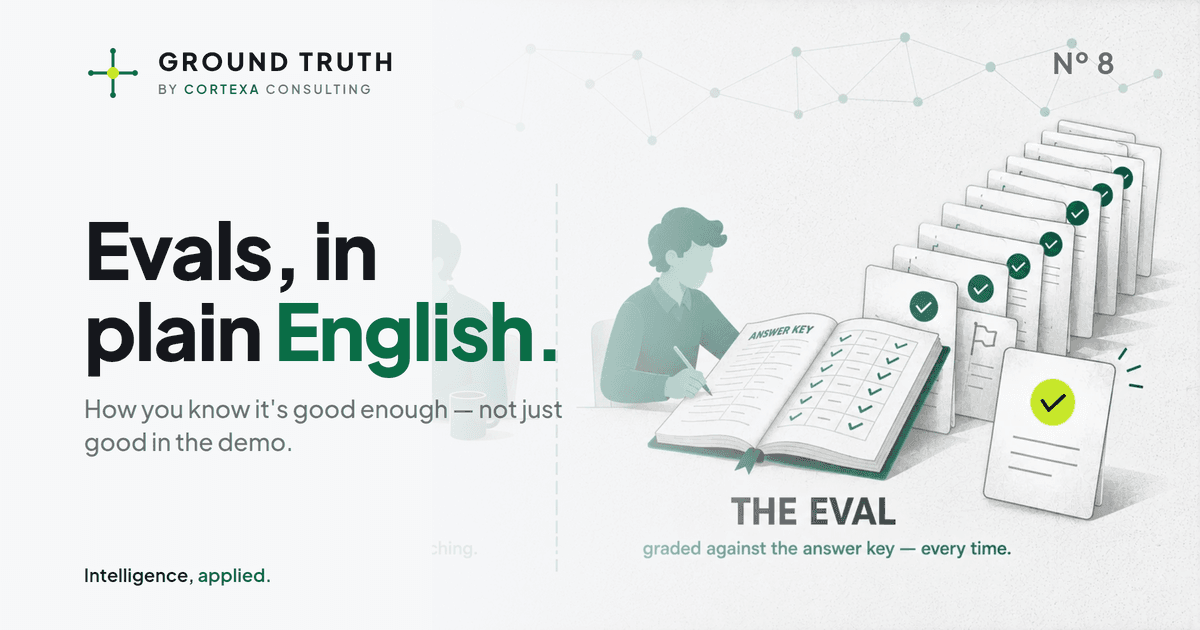
Evals, in plain English.
An eval is the test you run before an Artificial Intelligence (AI) feature ships — and every time after. It's how good gets measured, not eyeballed.
- Explainer5 min read
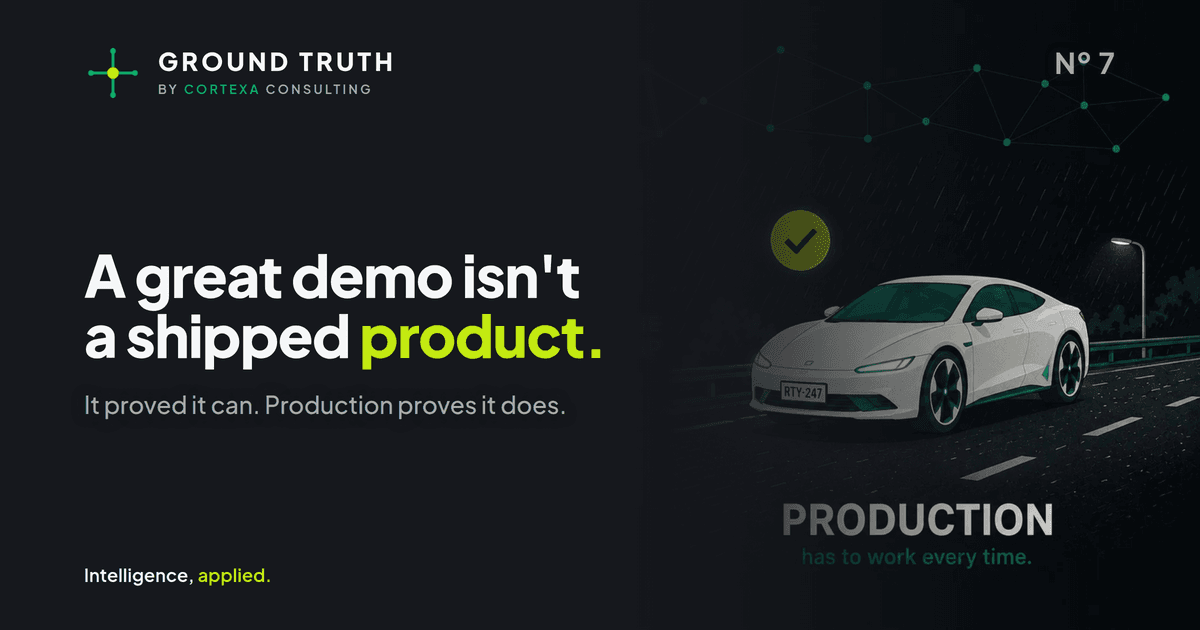
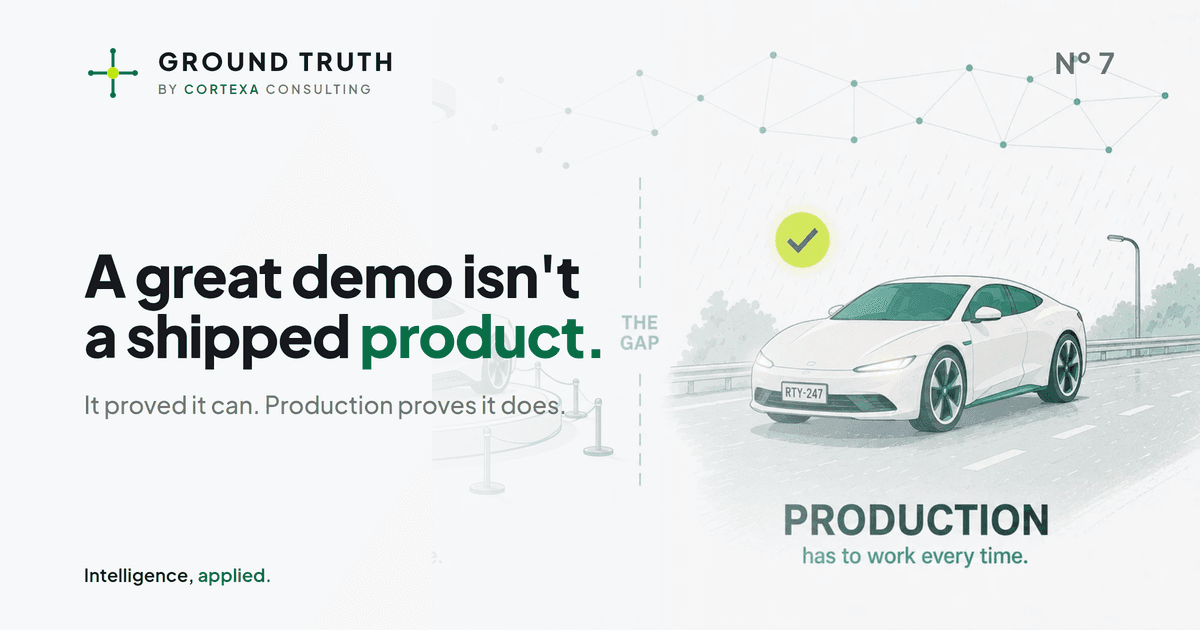
A great demo isn't a shipped product.
A demo proves Artificial Intelligence (AI) can work once. Production means it works every time — safely, at scale. That gap is where most projects stall.
- Explainer5 min read
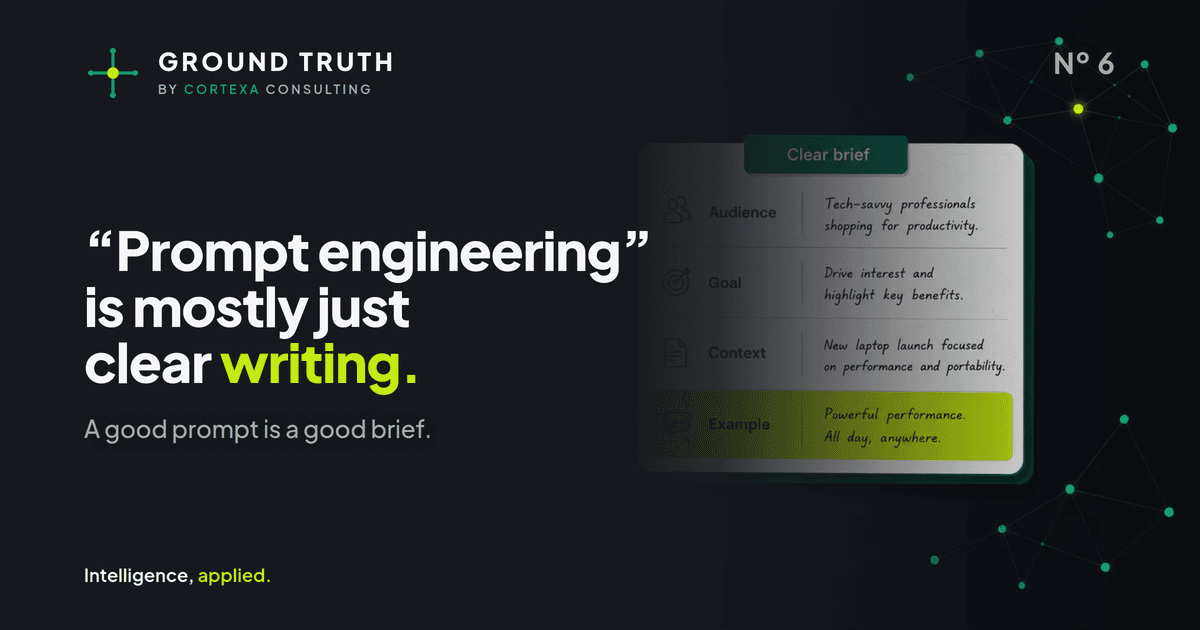
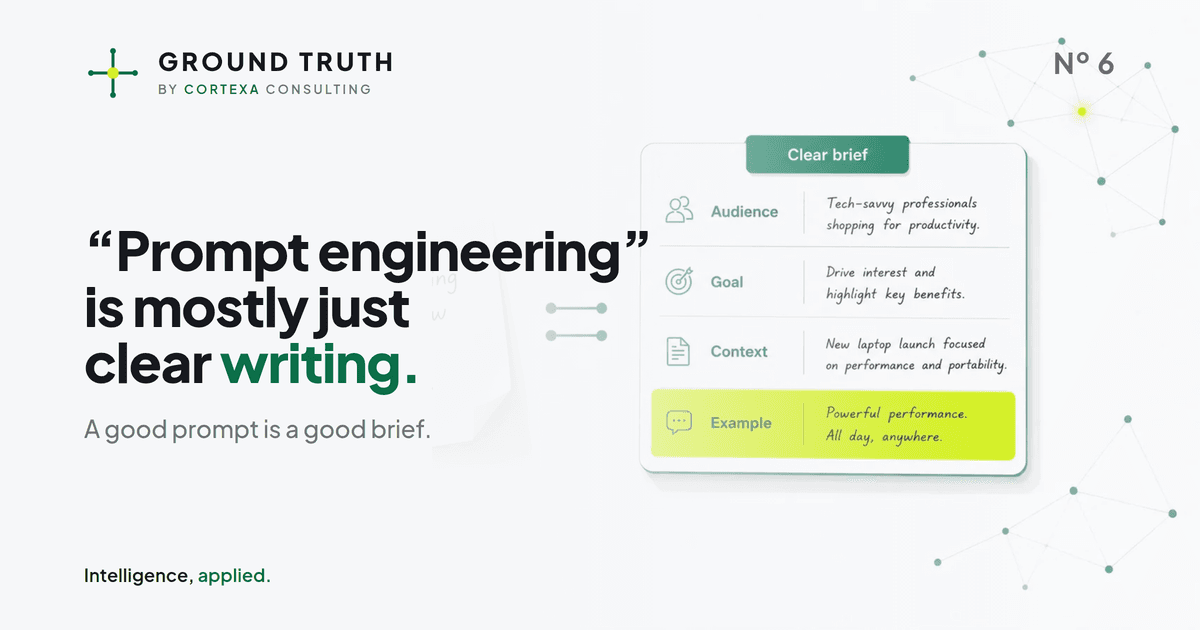
“Prompt engineering” is mostly just clear writing.
“Prompt engineering” isn't secret magic words — it's a clear brief. Be specific, give context, show examples: the skill your best writers already have.
- Signal2 min read
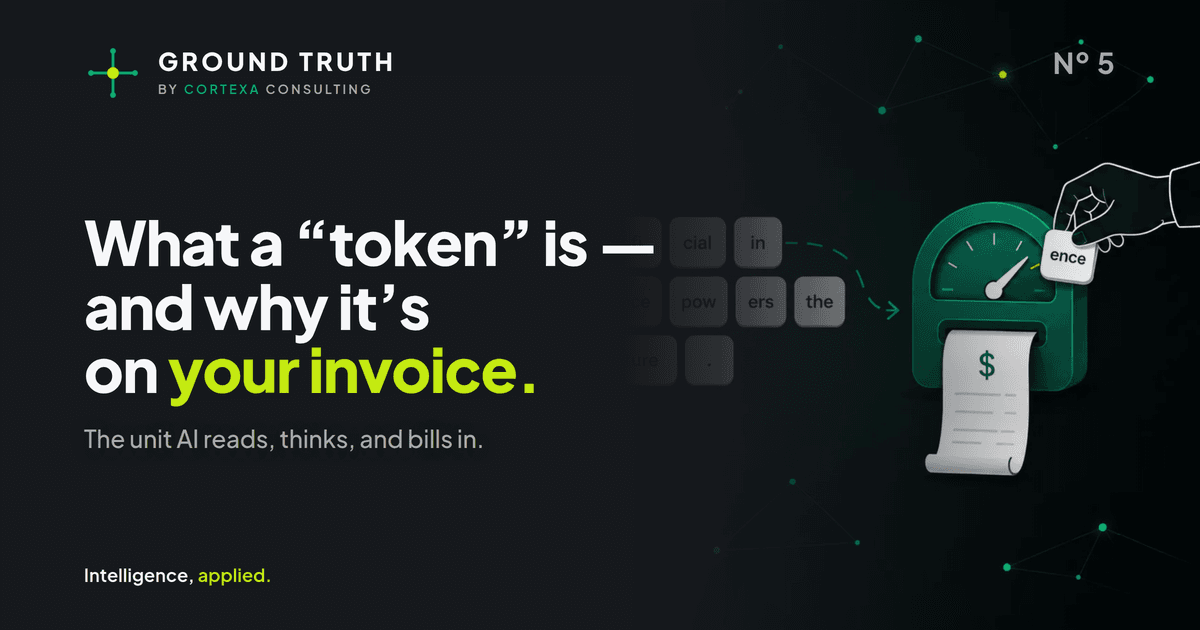
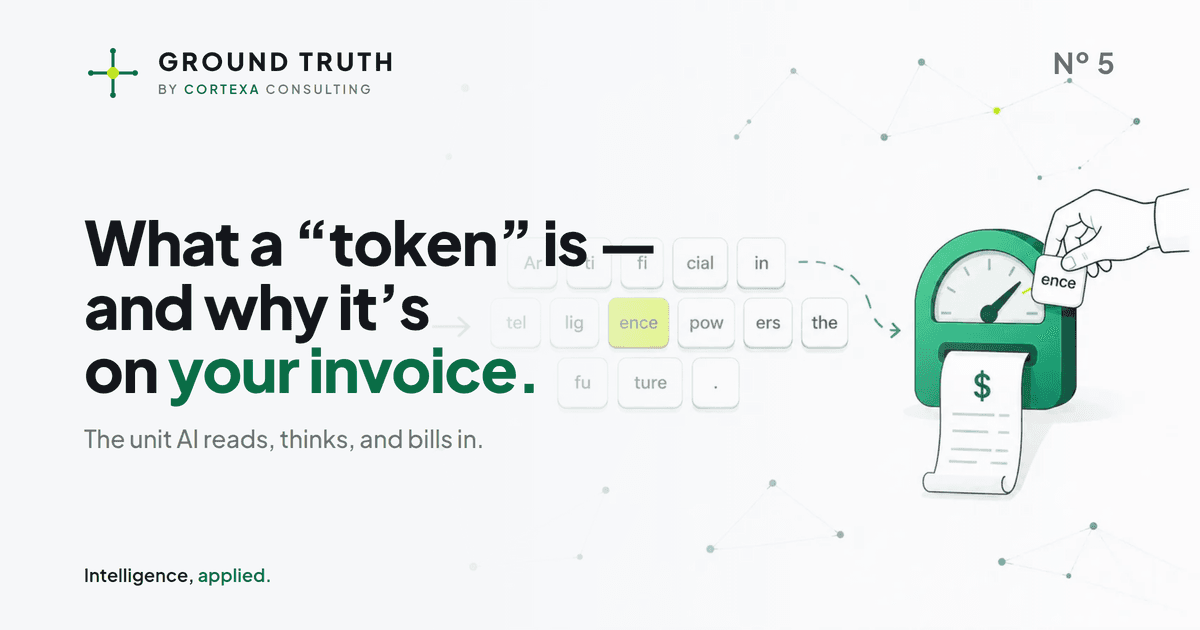
What a “token” is, and why it's on your invoice.
A “token” is the small chunk of text AI reads and writes — about ¾ of a word. It's what the model's memory is measured in, and what you're billed for.
- Explainer5 min read
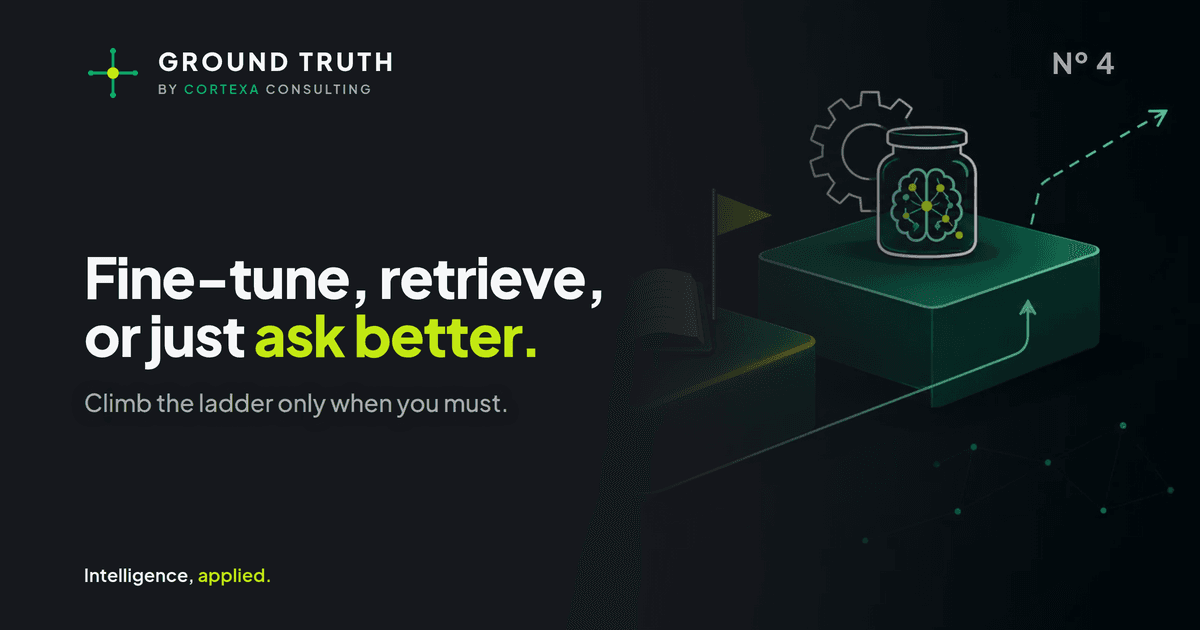
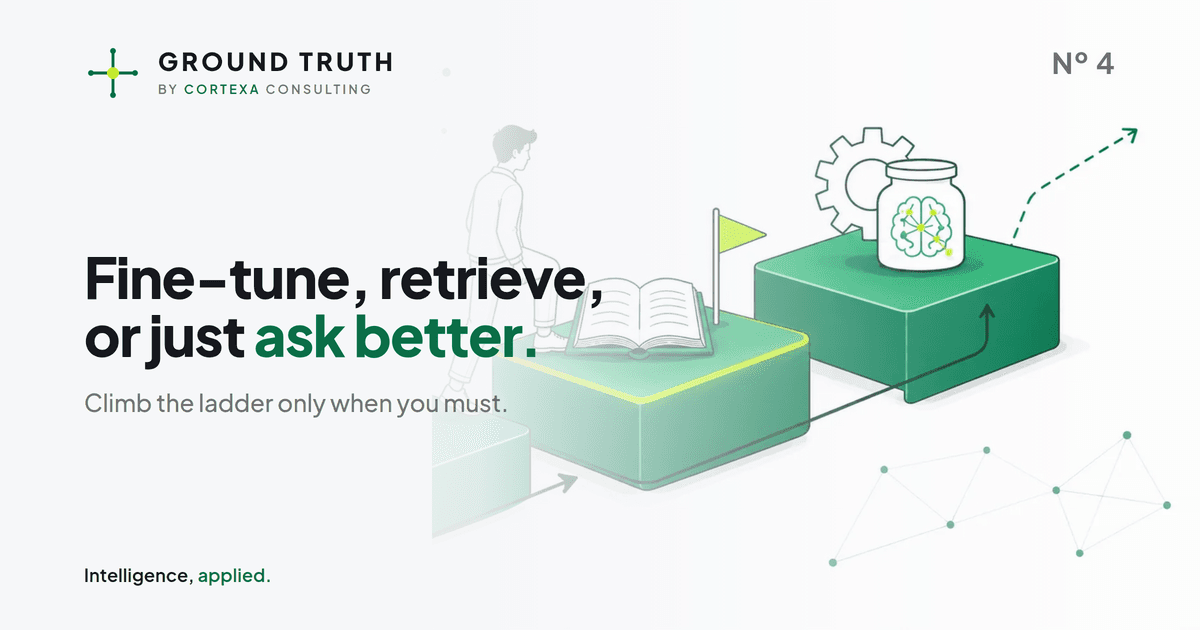
Fine-tune, retrieve, or just ask better.
Most “train it on our data” asks don't need training. A simple ladder — prompt, then ground (RAG), then fine-tune — tells you which one you actually need.
- Explainer5 min read
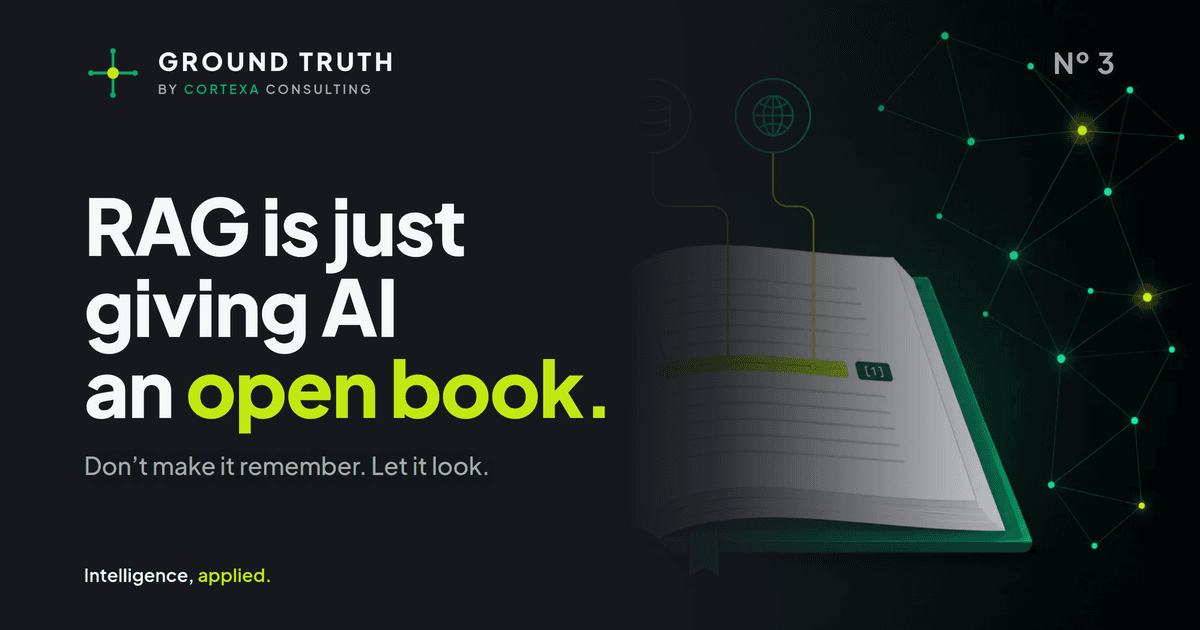
RAG is just giving AI an open book.
RAG in simple terms: don't hope the AI remembers — hand it the right documents and let it answer from the source, open-book style.
- Explainer5 min read
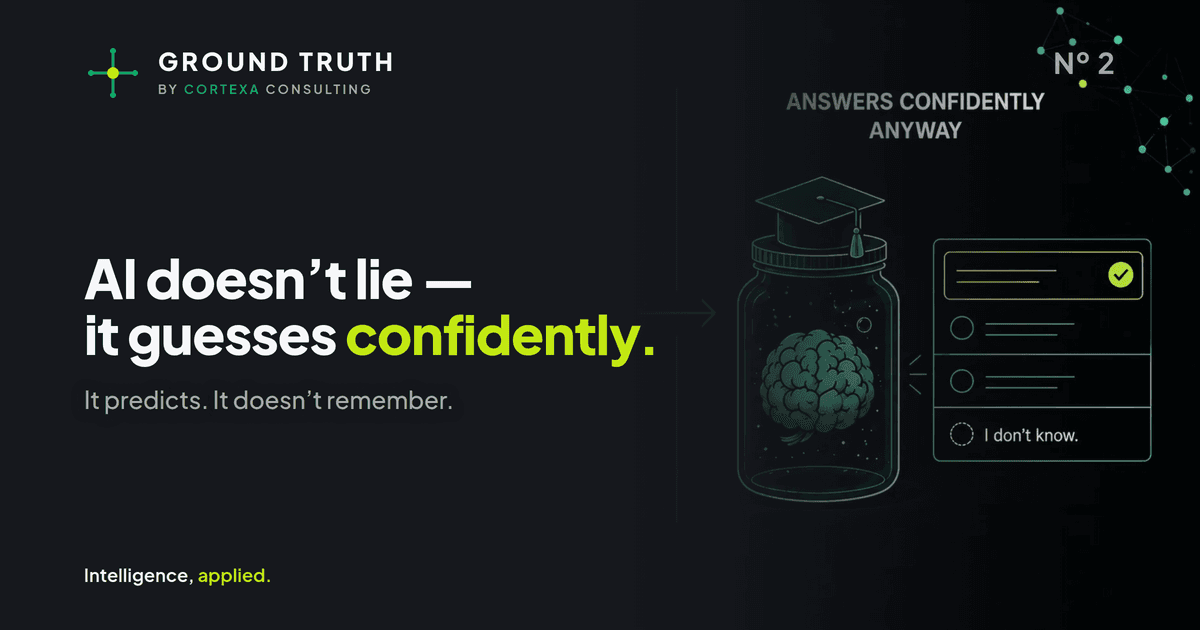
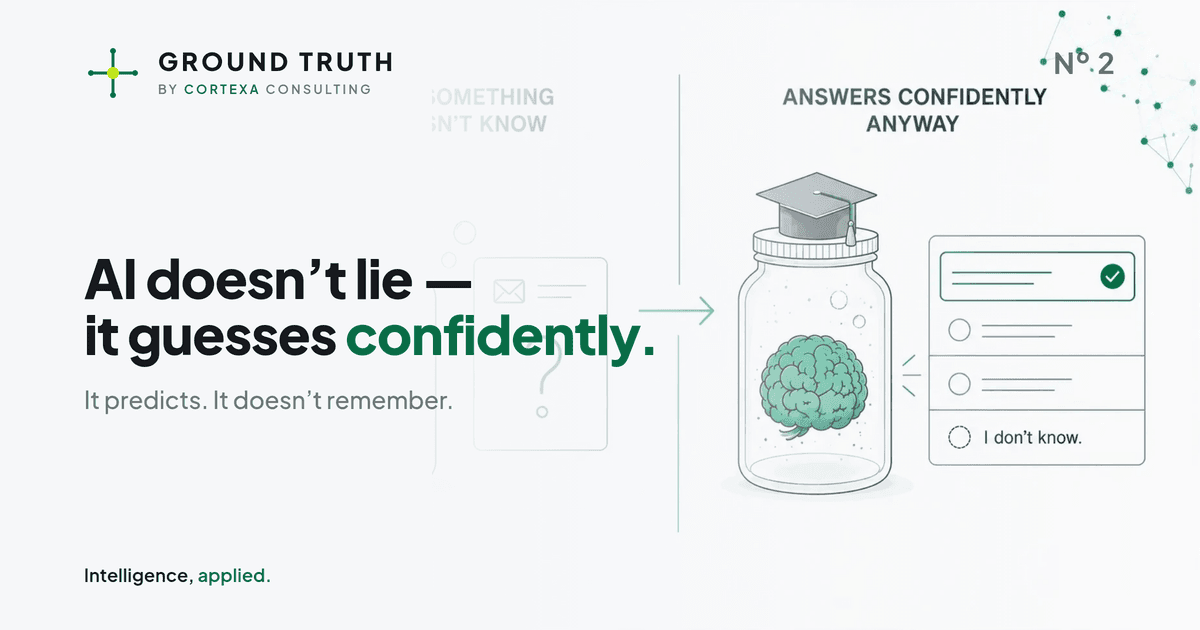
AI doesn’t lie — it guesses confidently.
Why Artificial Intelligence (AI) “hallucinates,” in plain English: it isn’t lying — it predicts likely words, and a confident guess can still be wrong.
- Explainer5 min read
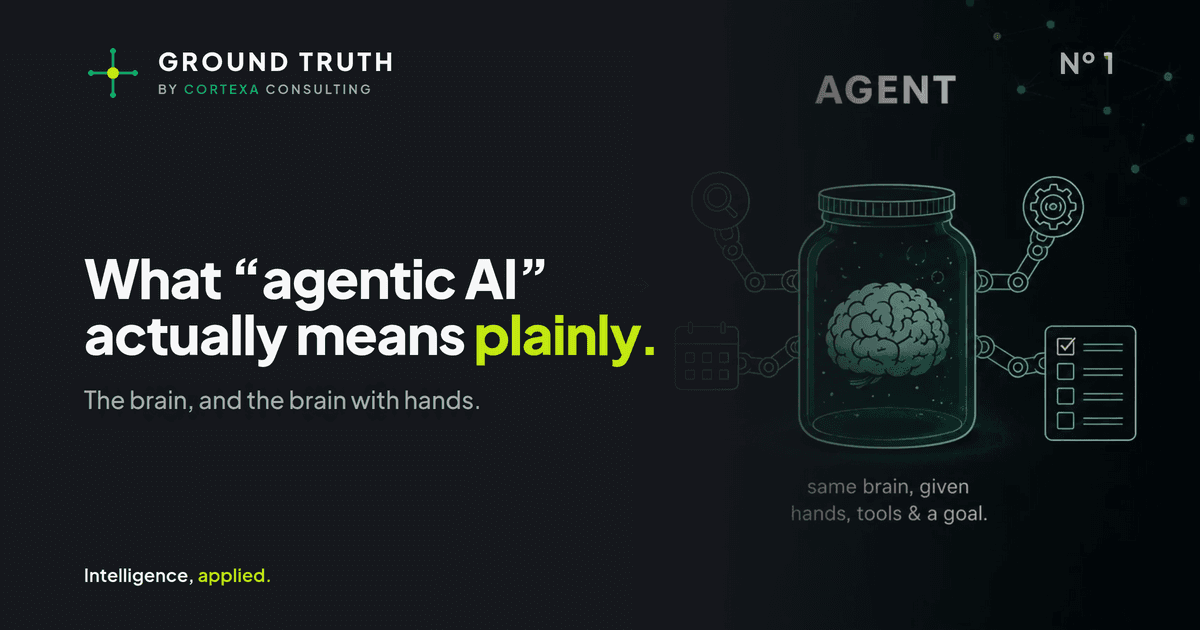
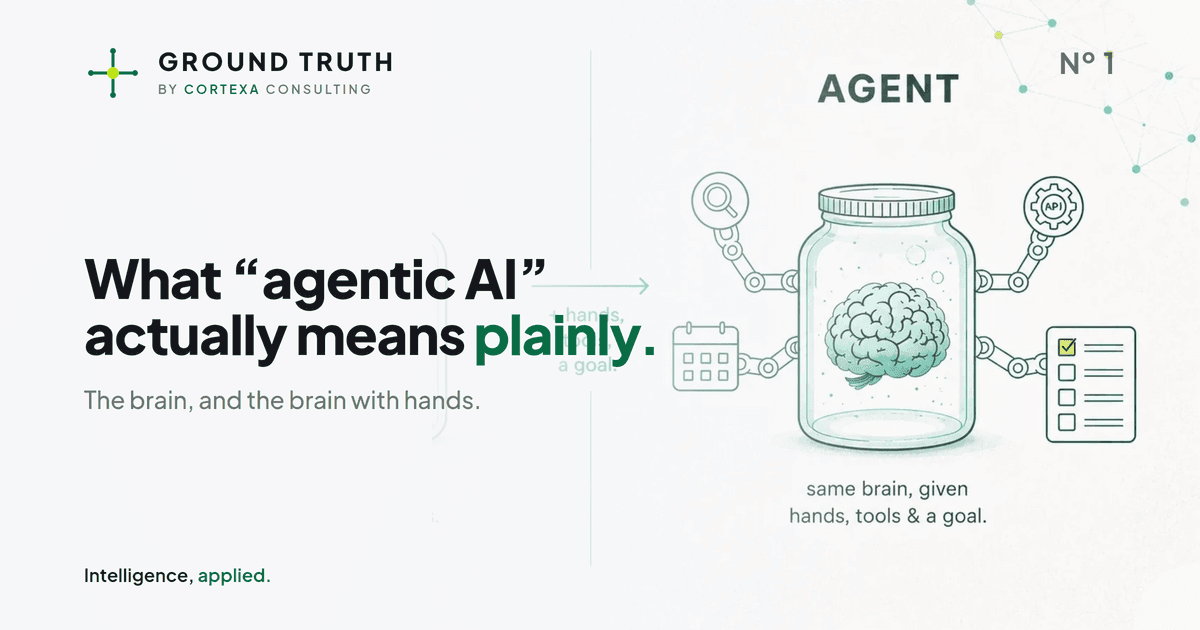
What “agentic AI” actually means plainly.
Agentic AI isn't smarter answers — it's software that takes actions toward a goal. Here's what's real, and why it still needs a human in the loop.