Cortexa Ground Truth
Nº 1 · Explainer · · 5 min read

Tip: once it’s playing, tap any line to jump the audio there.
What “agentic AI” actually means plainly.
Agentic AI isn't smarter answers — it's software that takes actions toward a goal. Here's what's real, and why it still needs a human in the loop.
“Agentic AI” and “agents” are the buzz words of 2026 and almost everyone means something different by it. If you have to sound fluent about this to a client next week, here's the version that actually helps — no jargon, no hype.
Start with a brain in a jar
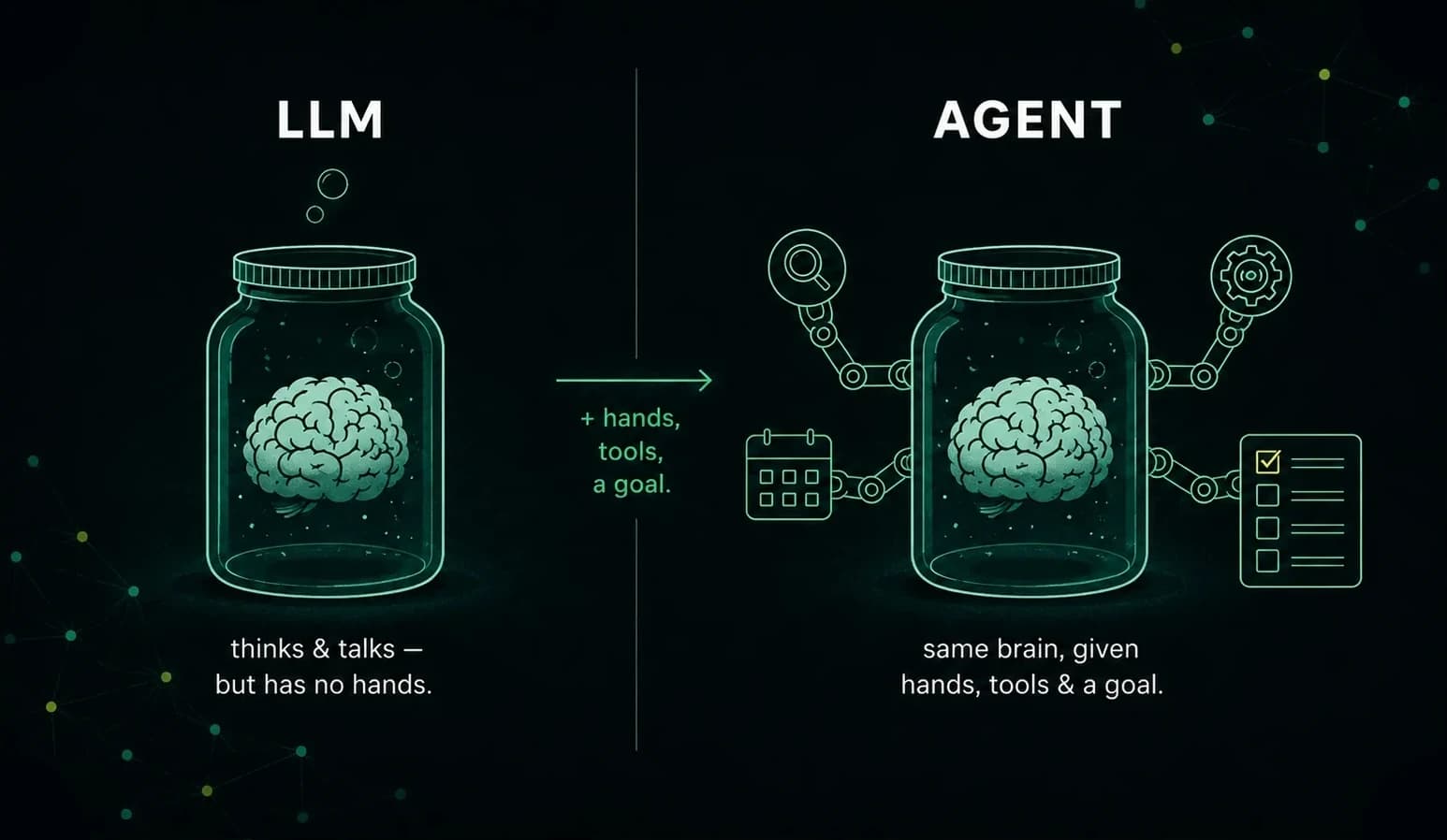
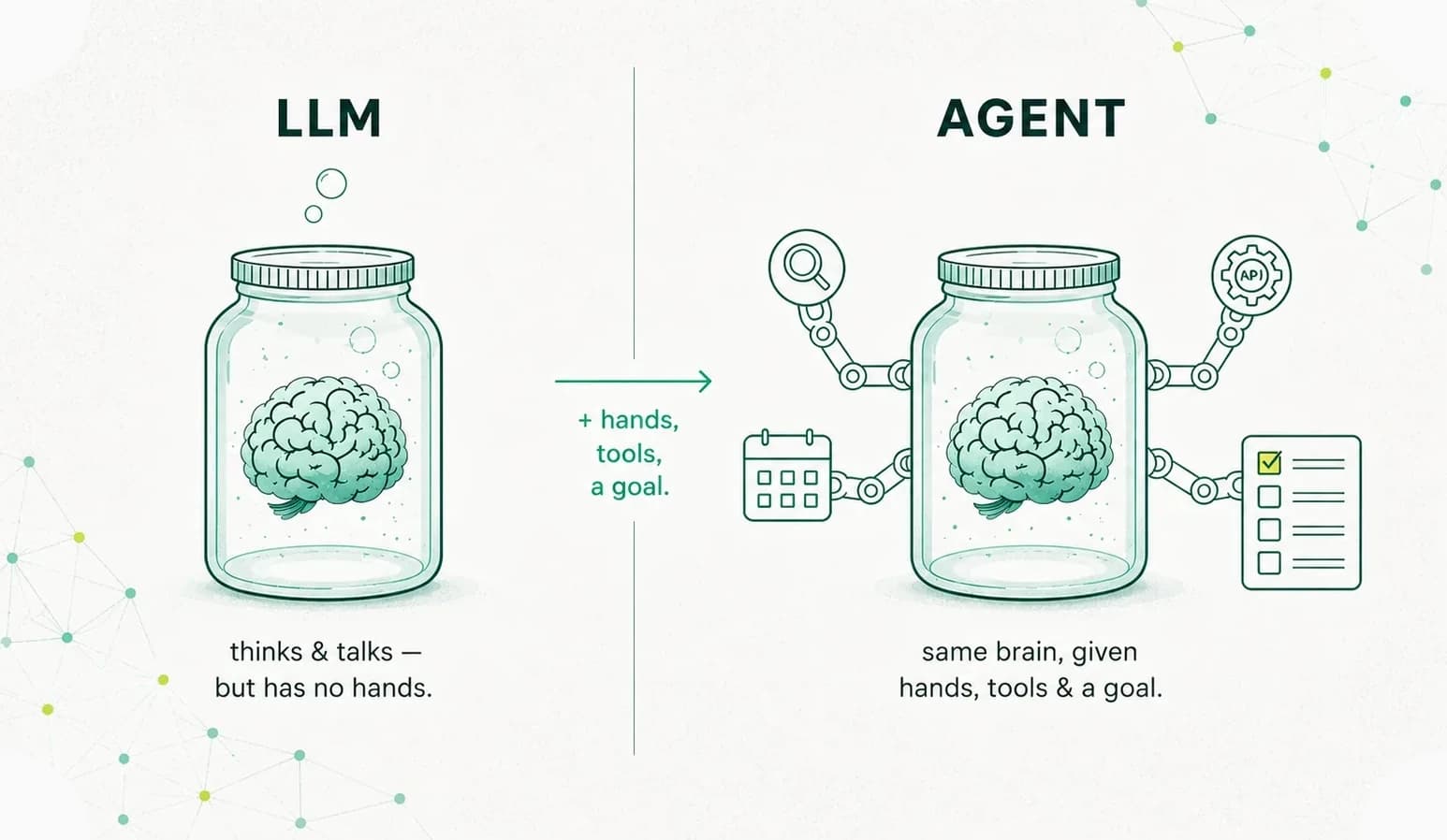
A Large Language Model (LLM) — the engine behind ChatGPT or Claude — is like a brilliant brain in a jar. Ask it almost anything and it answers. But that's all it can do: it thinks and talks. It has no hands. It can't open your calendar, pull a report, or send an email — it can only tell you about them.
An agent is that same brain given hands, tools, and a checklist. Now it can actually do multi-step work toward a goal: hand it “book the venue for the offsite” and it checks dates, compares options, drafts the email, and comes back with it done. The revolutionary (or evolutionary) leap forward isn't a smarter answer — it's the ability to take real actions, in sequence, toward an outcome.
But it's an intern, not an autopilot
Here's the part the hype skips. That capable new hire is still a new hire — fast, tireless, and occasionally confidently wrong. So you keep a human in the loop (HITL): a manager who sets the goal, sanity-checks the plan, and reviews the work before it ships. Take the human out of the loop on anything that matters and small errors quietly compound into big ones. An agent is something you supervise, not something you switch on and walk away from.
Goal
an outcome, not a question
Plan
break it into steps
Act
use tools: search, code, send
Check
did it work? a human reviews
Adjust
fix, then repeat
The loop repeats until the goal is met — with a human in the loop.
What's actually real?
- It genuinely works for bounded, checkable tasks — where success is easy to verify and a wrong step is cheap to catch.
- The patterns that actually ship today are still fairly simple and orchestrated: Anthropic's own guidance argues for the simplest thing that works1 over elaborate autonomy, and the canonical primers describe the same plan → act → review2 loop.
- It is not a hands-off employee. Left unsupervised on open-ended, high-stakes work, agents drift and fail confidently — which is why serious governance guidance, like NIST's Artificial Intelligence (AI) Risk Management Framework3, treats human oversight as a control, not a nice-to-have.
The “so what” — for anyone serving tech clients
- When a client asks for “an AI agent or Agentic AI,” translate it into a specific, checkable task before quoting scope — most “agent” asks are really one or two automatable steps with a human checking the result.
- Position your team on judgment and verification, not just build. Deciding what's worth automating — and being the human in the loop who catches the confident mistakes — is exactly what the agent can't do for itself.
Next Reads
- Explainer
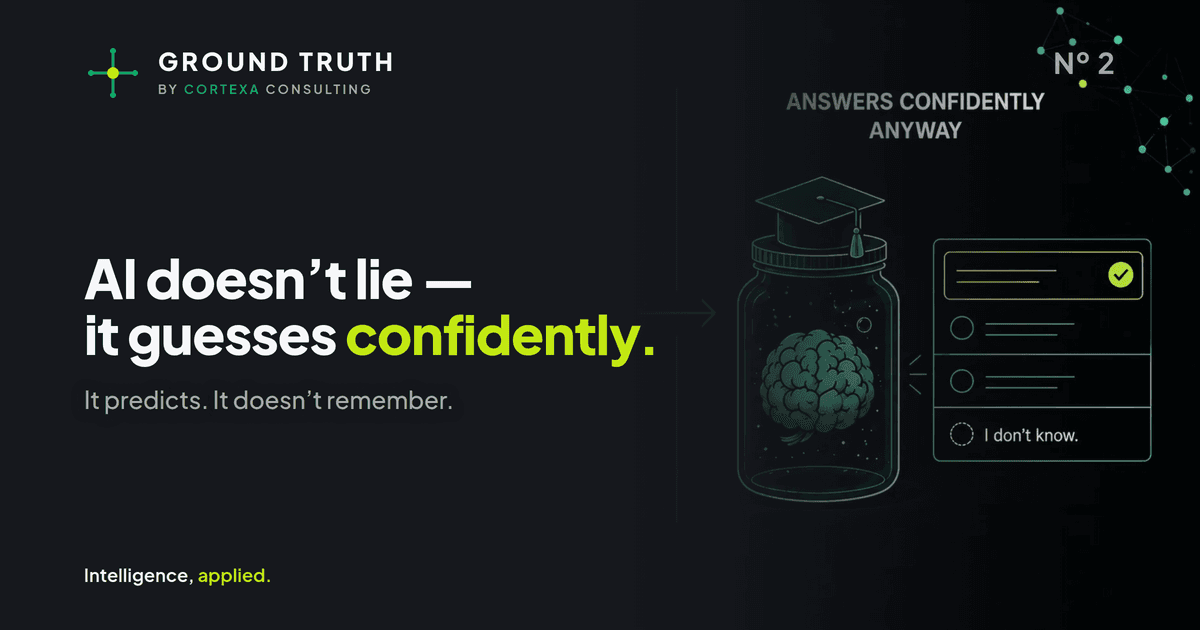
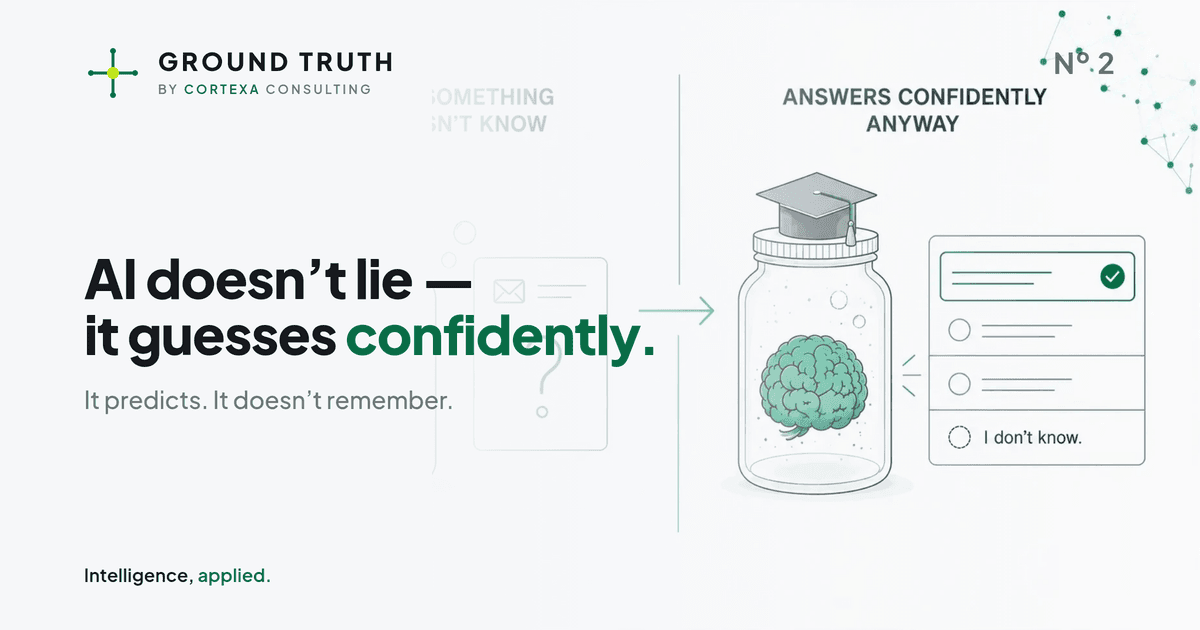
AI doesn’t lie — it guesses
Why Artificial Intelligence (AI) “hallucinates,” in plain English: it isn’t lying — it predicts likely words, and a confident guess can still be wrong.
- Explainer
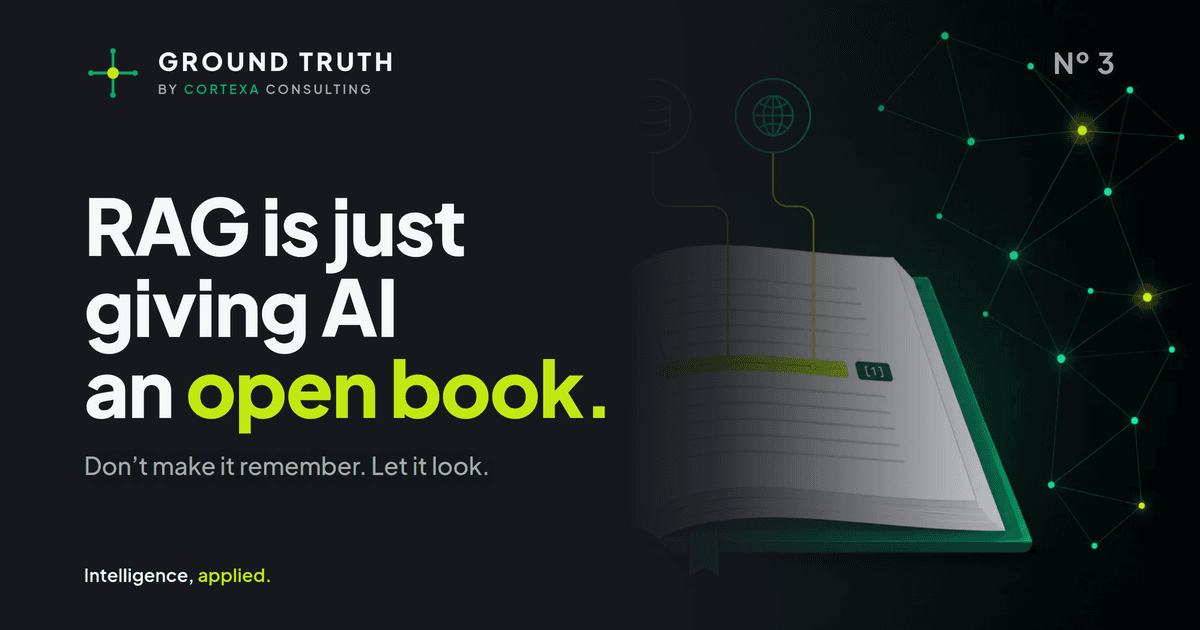
RAG is just giving AI an
RAG in simple terms: don't hope the AI remembers — hand it the right documents and let it answer from the source, open-book style.