Cortexa Ground Truth

Tip: once it’s playing, tap any line to jump the audio there.
A content credential is a nutrition label for your media.
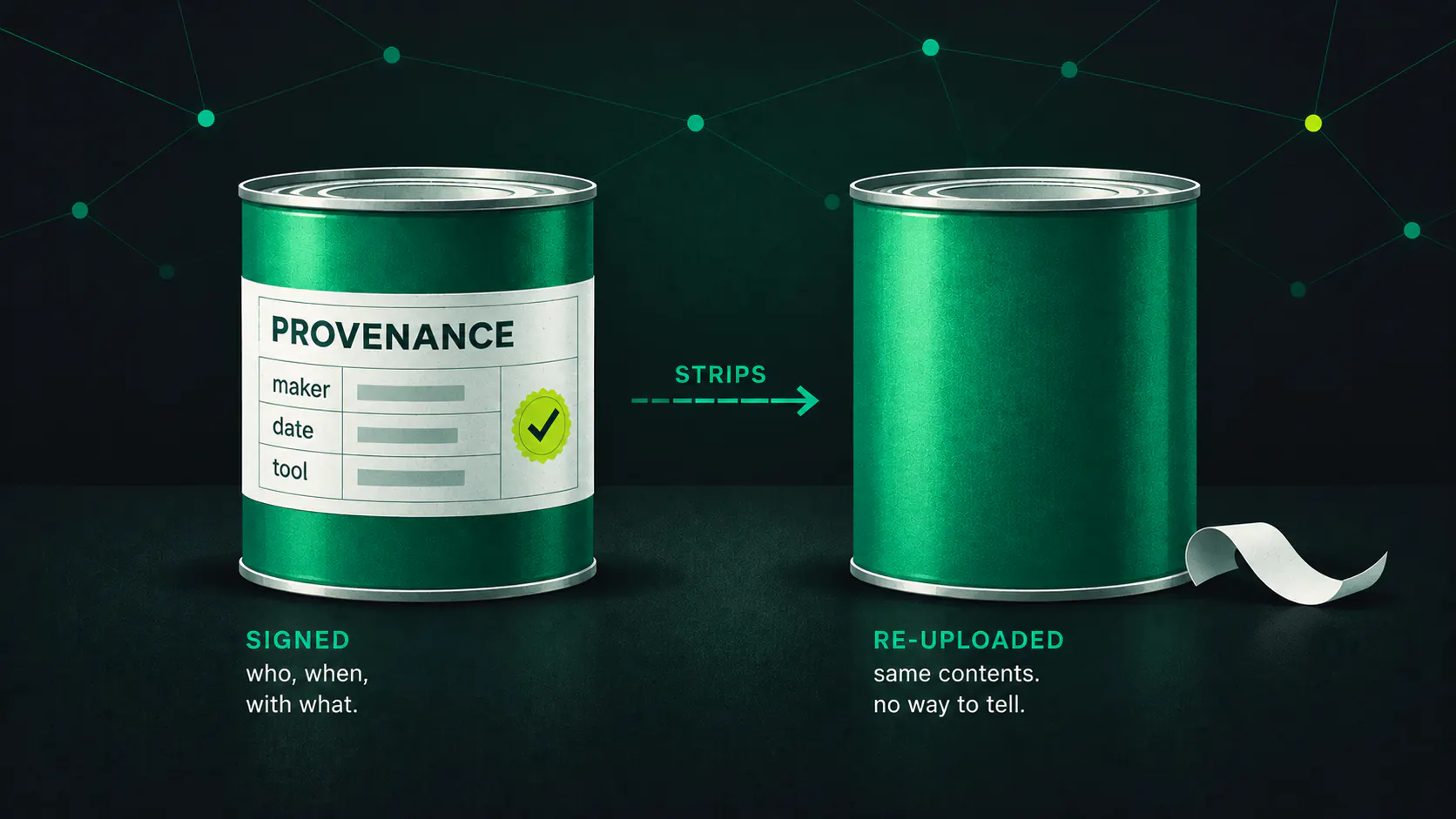
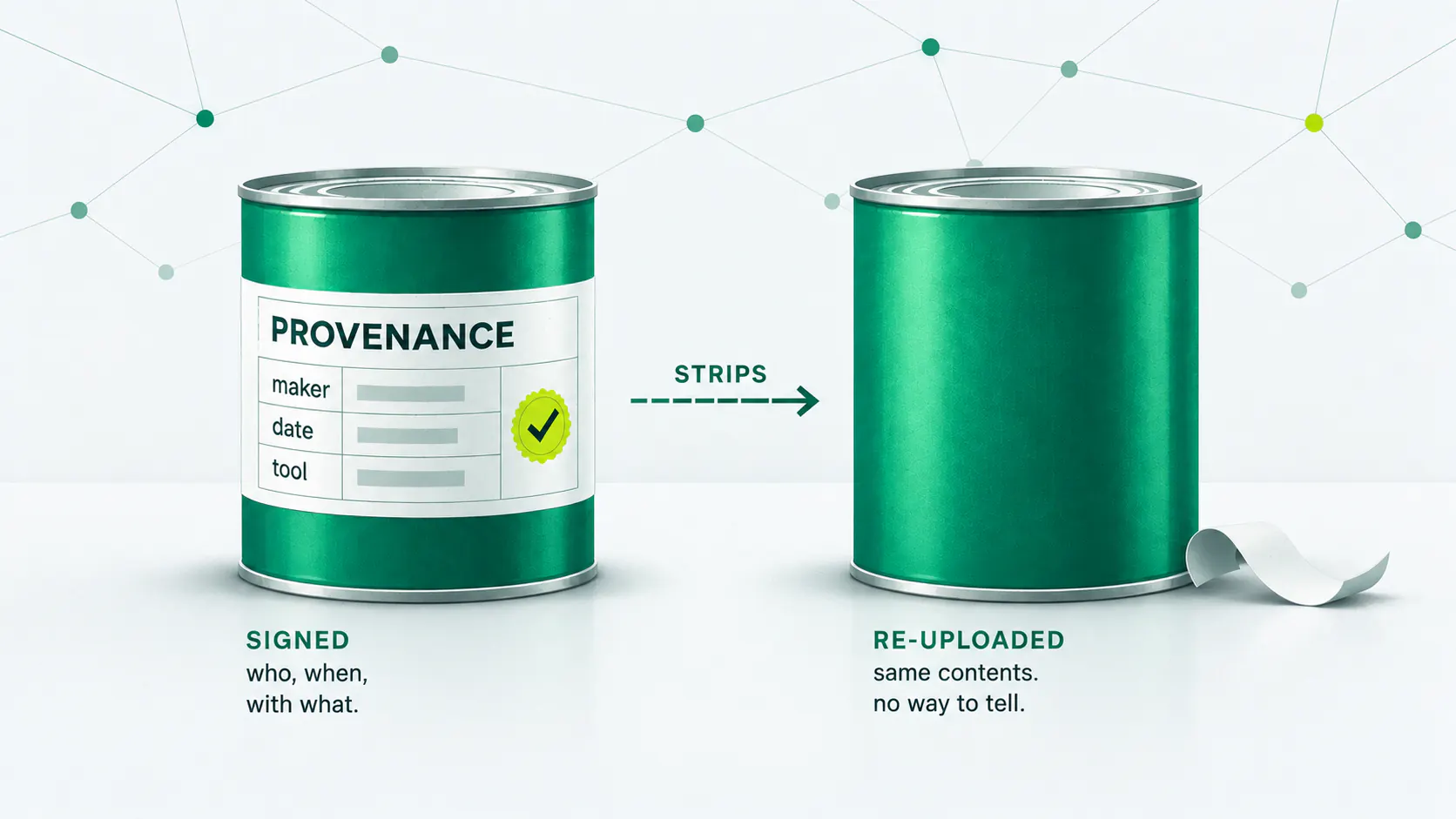
A content credential is signed metadata that rides with a file: who made it, when, and whether AI had a hand. Useful for as long as it survives.
A client points at the Artificial Intelligence (AI) image in the deck and asks the question everyone is asking this year: does this need a label now, and who checks it? The answer the industry has landed on is a content credential: a small, tamper-evident record tucked into the file that says where the file came from. The open standard behind it is the Coalition for Content Provenance and Authenticity (C2PA); the consumer-facing name, and the little “cr” pin you may have seen on an image, is Content Credentials. Think of it as a nutrition label for media.
What is a content credential?
A content credential is provenance data: a signed record of how a file was made and changed. It can log the source, the tool, the time, the edits, and whether AI generated or altered the content. The National Institute of Standards and Technology (NIST) puts this in the same family as watermarking and detection, listing authenticating content and tracking its provenance1 among the ways to make synthetic media transparent. A nutrition label does not tell you the food is good or bad; it tells you what went in. A content credential is the same move for a photo, a video, or a paragraph.
Signed at creation
the tool writes a signed record of source and edits
Updated on each edit
every change appends to the history
Stripped in transit
a screenshot or re-upload can drop it
Verified when present
a viewer reads the label and checks the signature
Present and signed, it proves origin. Absent, it proves nothing.
What's Real?
- The big tools already do it. OpenAI attaches C2PA Content Credentials to the images its models generate2, and Google embeds its own SynthID watermark3 in the images, audio, and video its models make. Provenance is moving from a pledge to a default.
- A signature makes tampering evident. The record is cryptographically signed, so altering the file breaks the match and a checker can flag it. The guarantee is simple: change the file and the change shows.
- The label comes off easily. A content credential rides in the file's metadata, outside the pixels, so a screenshot or a social upload that re-encodes the image can strip it, and the picture looks identical. This is why watermarking is the paired approach: SynthID is written into the pixels themselves and is built to survive cropping, filters, and compression3.
- No single method is enough. NIST frames provenance, watermarking, and detection as complementary approaches to content transparency1, because each fails in a different place. Layered, they cover for one another. Alone, each leaves a gap.
- The law is starting to require a label. The European Union (EU) AI Act says providers must mark synthetic outputs in a machine-readable format and detectable as artificially generated or manipulated4. Content credentials and watermarks are two of the few practical ways to meet that.
- Absence is not proof. A missing credential does not mean a person made the file; the label may have been stripped, or the tool may never have written one. Present and valid is a strong signal. Absent is no signal at all.
The “so what” — for anyone serving tech clients
- Turn credentials on where you already work, and preserve them on export. When you deliver AI-assisted assets, keep the credential intact and tell the client it's there. It is cheap provenance you can prove months later.
- Assume the open internet will strip it. Once an asset hits social, expect the label to fall off; if provenance has to survive, pair it with a watermark and keep your own signed original on file as the source of truth.
- Get ahead of the disclosure rules. The EU marking requirement4 is live for synthetic media, so building credentials into the workflow now is how you're ready when a client's legal team asks how the AI content is labeled.
Next Reads
- Field Guide
A new site gets cited on its name, and almost nothing
Instrumented measurement on a site that didn't exist in June. Asked by name, it's cited 97% of the time. Asked about its topics: zero of 1,664.
- Explainer
What “agentic AI” actually means
Agentic AI isn't smarter answers — it's software that takes actions toward a goal. Here's what's real, and why it still needs a human in the loop.