Cortexa Ground Truth
Nº 40 · Field Guide · · 20 min read
 By Joe Coffman, Founder of Cortexa Consulting
Tip: once it’s playing, tap any line to jump the audio there.
Relying on AI, Without the Worry.
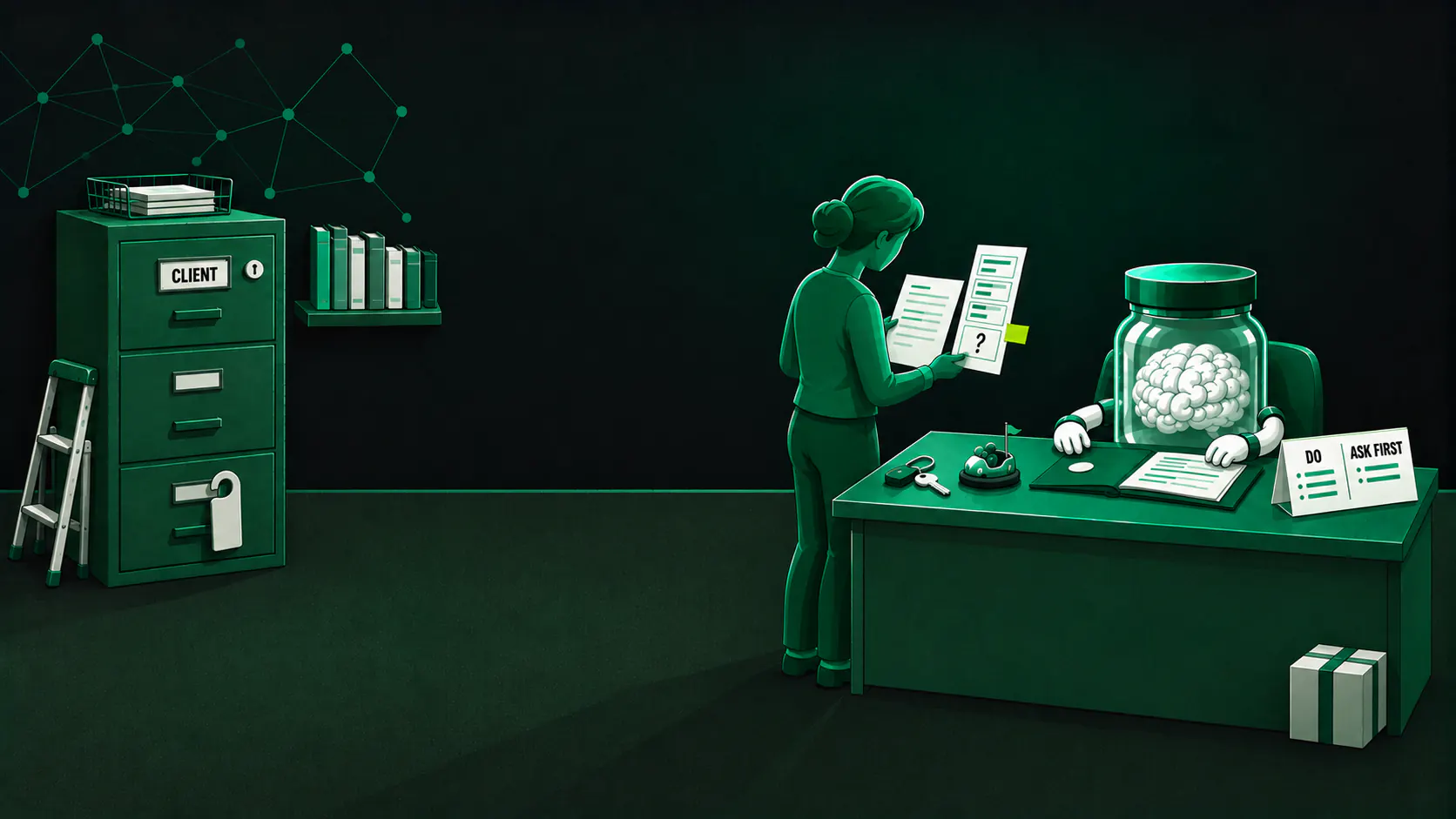
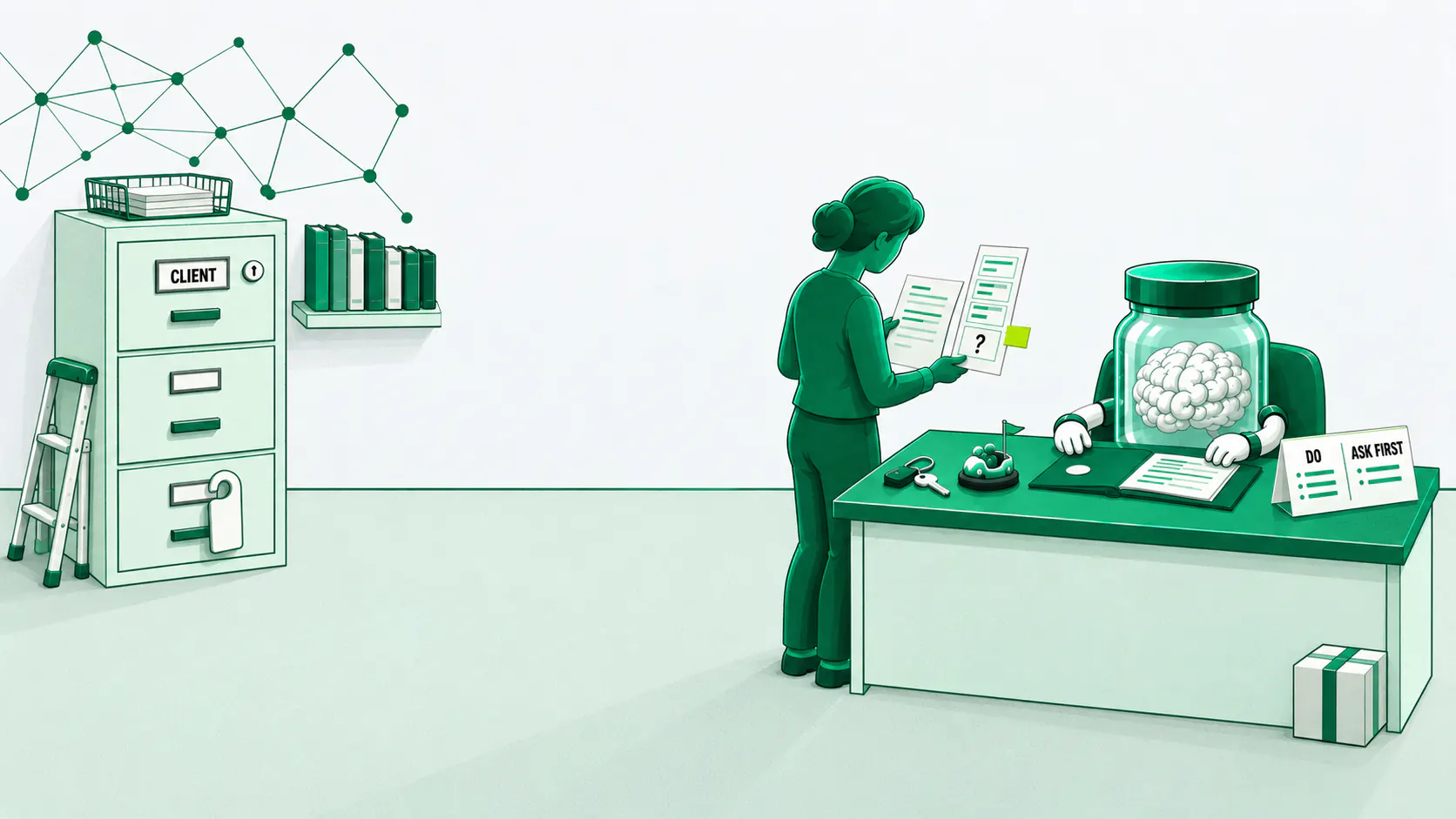
Before a team relies on AI, run four checks. Look at the inputs and the outputs, who decides the next step, and who approves the work before it goes out.
The first three Field Guides covered what Artificial Intelligence (AI) is (AI, Without the Hype1), how to build with it (Building With AI, Without the Guesswork2) and what happens once the work ships (Shipping AI, Without the Surprises3). This fourth one covers a step most teams have already taken without announcing it: relying on AI every day, for real client work. Nine explainers sit behind these chapters. Each started as a question someone asked out loud, and nearly all of them come down to four checks to run before a team relies on the results. First, the inputs: what you give the AI (documents, data and prompts) and which account it goes into. Second, the outputs: what the AI produces, and whether it is correct and yours to use. Third, the next step: who decides what happens next, whether that is a person, a fixed script or the AI itself. Last, approval: who checks the work and approves it before it reaches a client or the public. Each chapter names its check, shows what the evidence supports, and links to the explainer with the detail.
1. What it can see
Every check starts with what the model is looking at. Its context window4 is all the text a language model can reference when generating a response, including the response itself13. That window has grown fast. Anthropic's Opus and Sonnet models now carry a 1M-token context window14, enough for a long brief, a full style guide and a stack of old correspondence in one call. The size invites a shortcut: paste in everything and let the model sort it out.
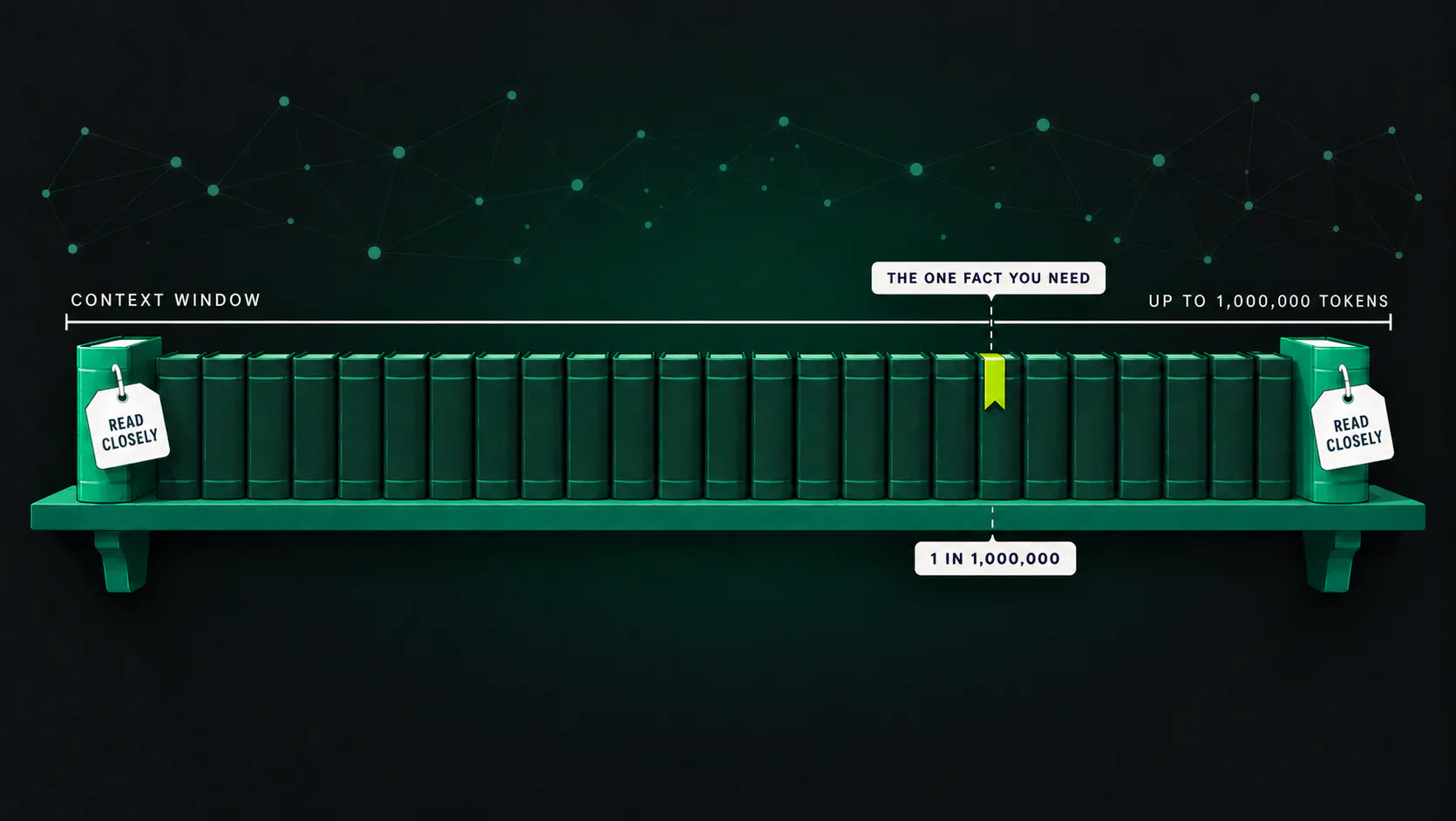
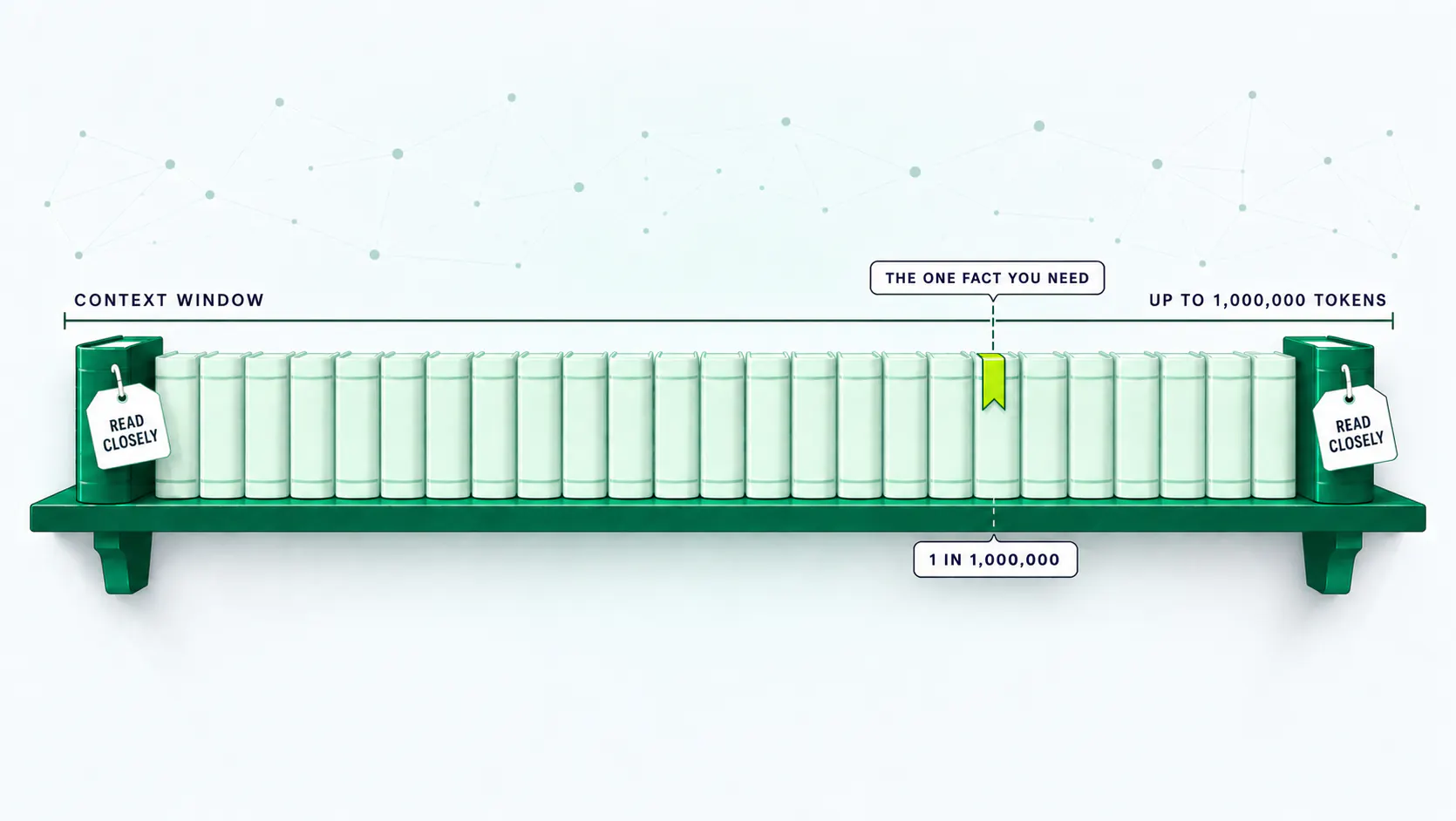
- A model can hold more than it reads closely. Anthropic's engineers write that as the number of tokens in the context window increases, the model's ability to accurately recall information from that context decreases15.
- Position matters. Researchers found that performance is often highest when relevant information occurs at the beginning or end of the input context16, and that it drops when the fact sits in the middle.
- The advertised number is a ceiling. NVIDIA's RULER benchmark tested seventeen models that all claimed at least 32,000 tokens and found only half of them can maintain satisfactory performance at the length of 32K17.
2. Where the data goes
The next question is where a prompt ends up once it leaves the screen, and the answer depends on the account more than the brand. On the free ChatGPT app, what you type can help train the model until someone switches that off in Data Controls18. On ChatGPT Business and Enterprise the default flips: OpenAI does not use business customer content from ChatGPT Enterprise and ChatGPT Business to train its models19. Kept out of training is a different fact from deleted. Enterprise retention has a minimum of 90 days19, and the API keeps abuse-monitoring logs retained for up to 30 days20 unless a Zero Data Retention agreement removes them. The client data explainer5 walks through each tier.
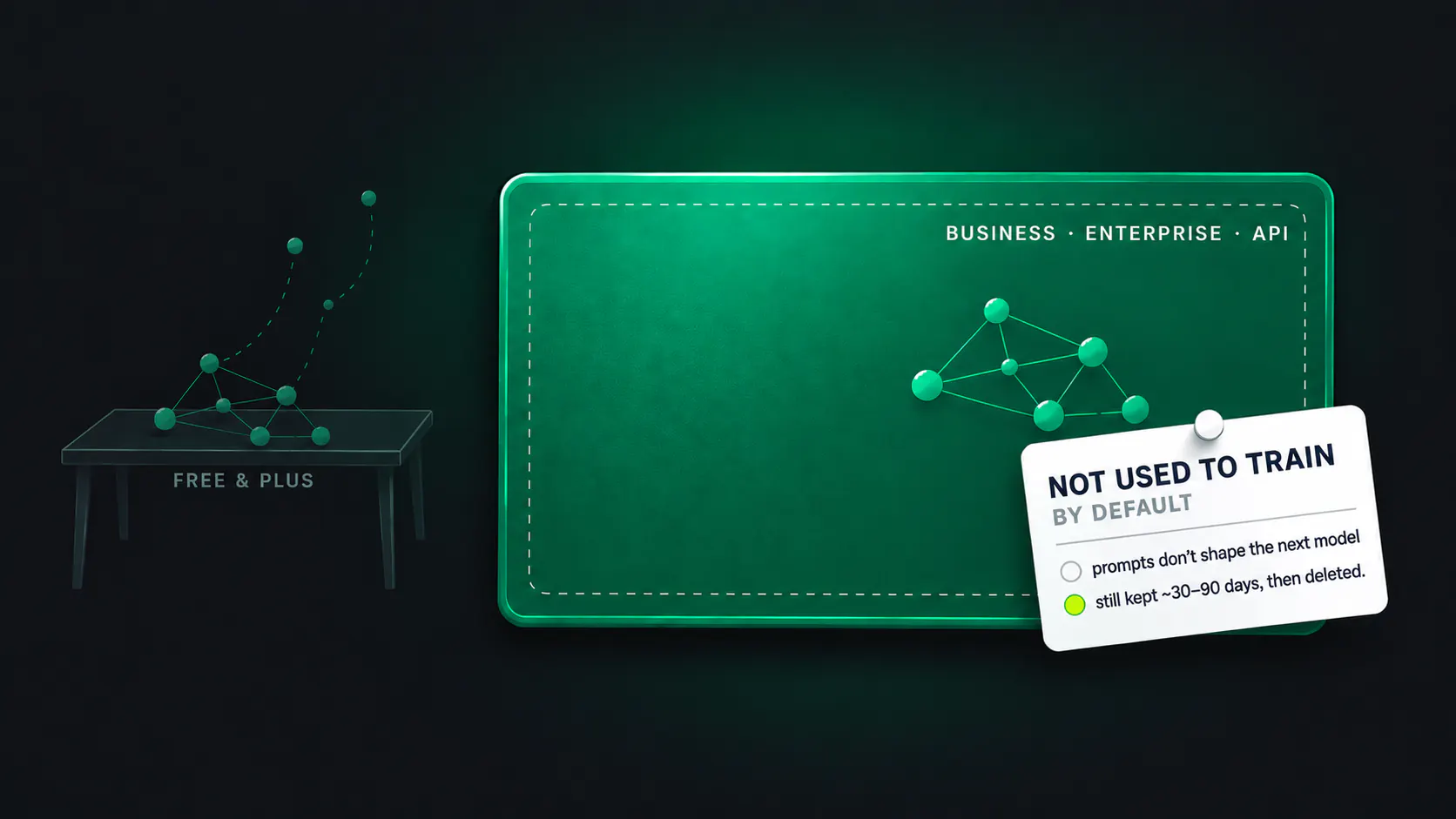
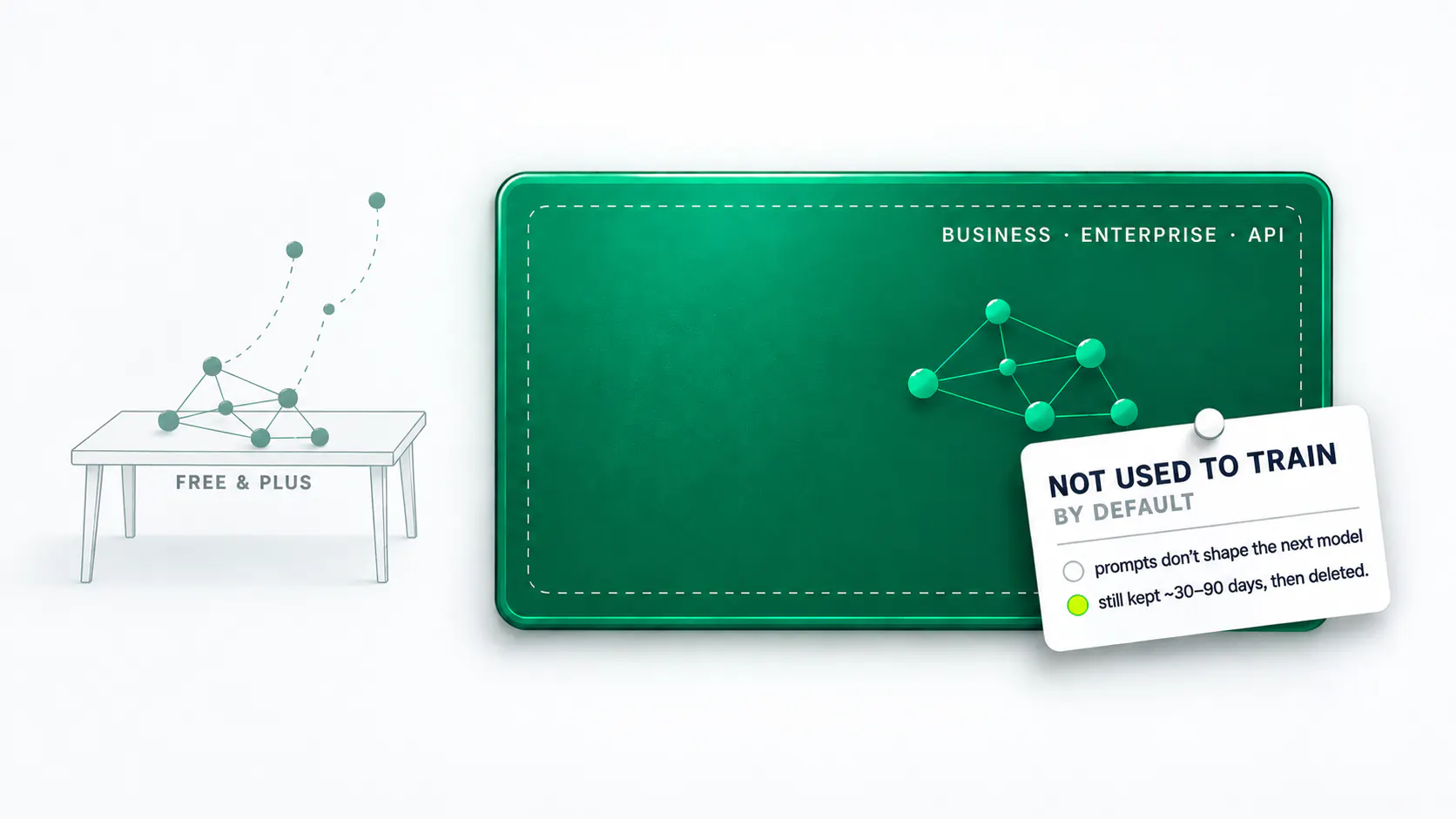
But the harder question is which account people are using at all. Shadow AI6 is staff using AI tools nobody approved, and it is common. Microsoft and LinkedIn reported that 78% of AI users are bringing their own AI tools to work23. It is a self-reported vendor survey, so read the number loosely. Still, the direction is hard to argue with.
- The risk sits in the input. The Open Worldwide Application Security Project (OWASP) lists sensitive information that includes financial data, credentials and trade secrets24, which is exactly what lands in a rushed prompt.
- Other vendors draw the same line. Anthropic keeps its commercial products out of training by default21 and says it will automatically delete inputs and outputs within 30 days of receipt or generation22.
- A ban tends to hide the habit. When most people who use AI already bring their own tools, banning them moves the use out of sight, where nobody can ask what data goes into those tools.
3. Whose machine runs it
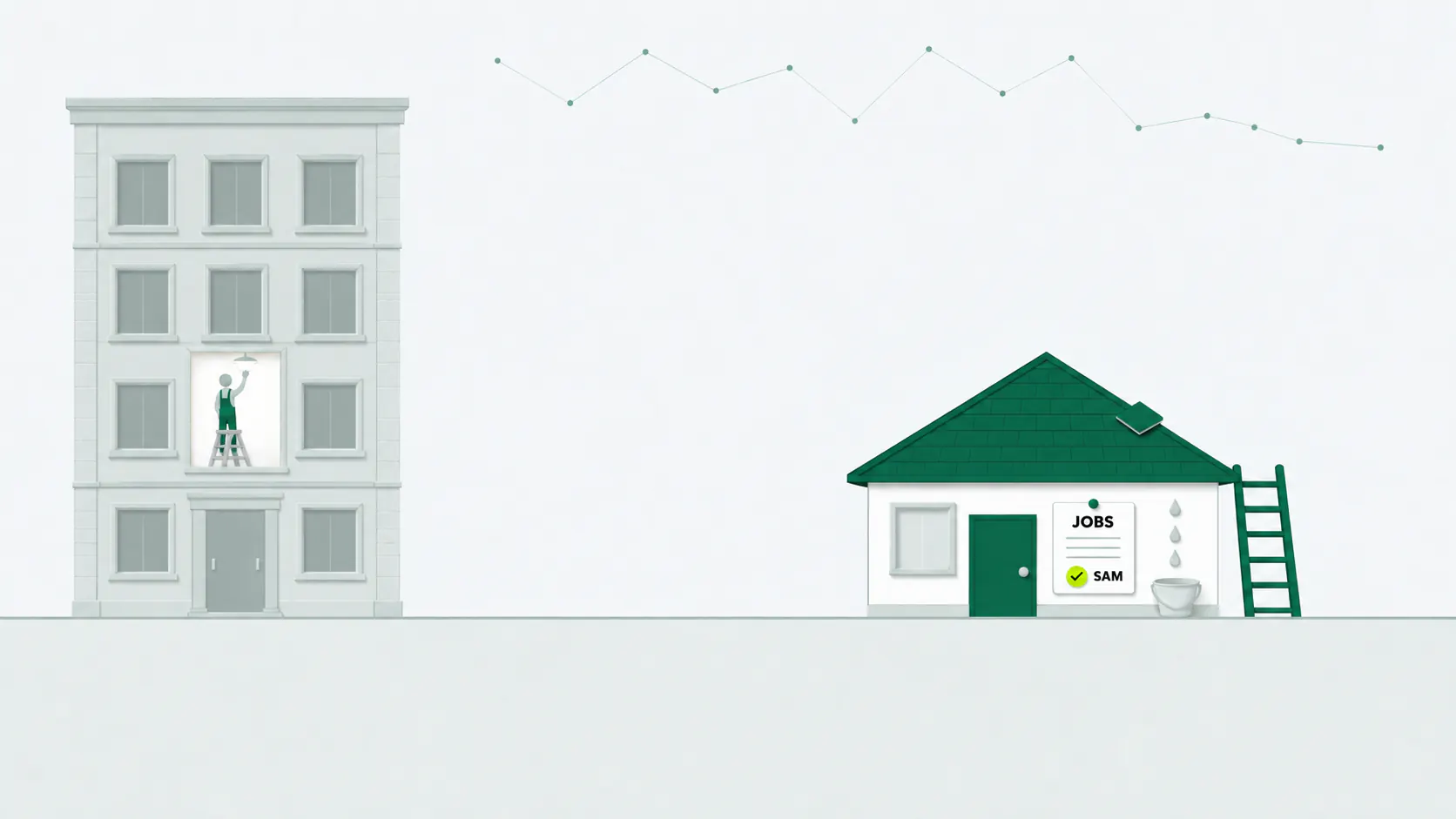
Some clients ask whether to skip the vendors and run an open-weight model8 themselves. Open weight means you get the learned numbers that make up the finished model and can run it on hardware you control, so prompts never leave your environment. The quality gap has shrunk on one public measure. In January 2024 the leading closed model outperformed the top open-weight model by 8.04%25 on the Chatbot Arena leaderboard, and by February 2025 this gap had narrowed to 1.70%25. So the real change is who does the work a vendor's API quietly did for you: hosting, updates, and the layers that keep output safe and on brand.

- Read the license before the benchmarks. OpenAI's gpt-oss models ship under the Apache 2.0 license, with a minimal usage policy26, while Meta's Llama license asks products past 700 million monthly active users in the preceding calendar month27 to request a license.
- The hardware bar is lower than many assume. The smaller gpt-oss model runs within 16GB of memory26.
- Open does not mean exempt. The EU AI Act's open-source carve-out covers only some provider duties, and it shall not apply to general-purpose AI models with systemic risks28.
4. The shape of the answer
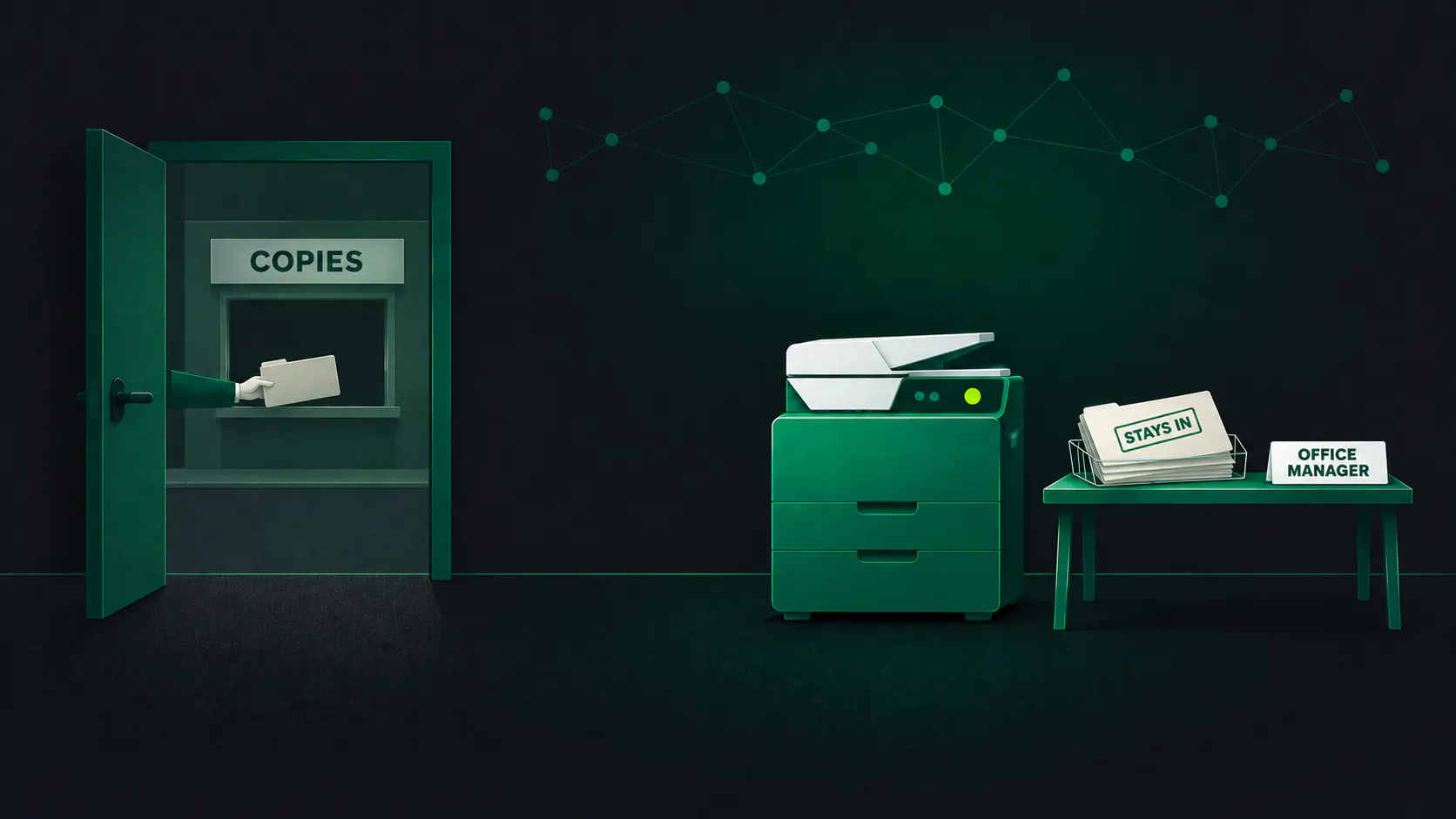
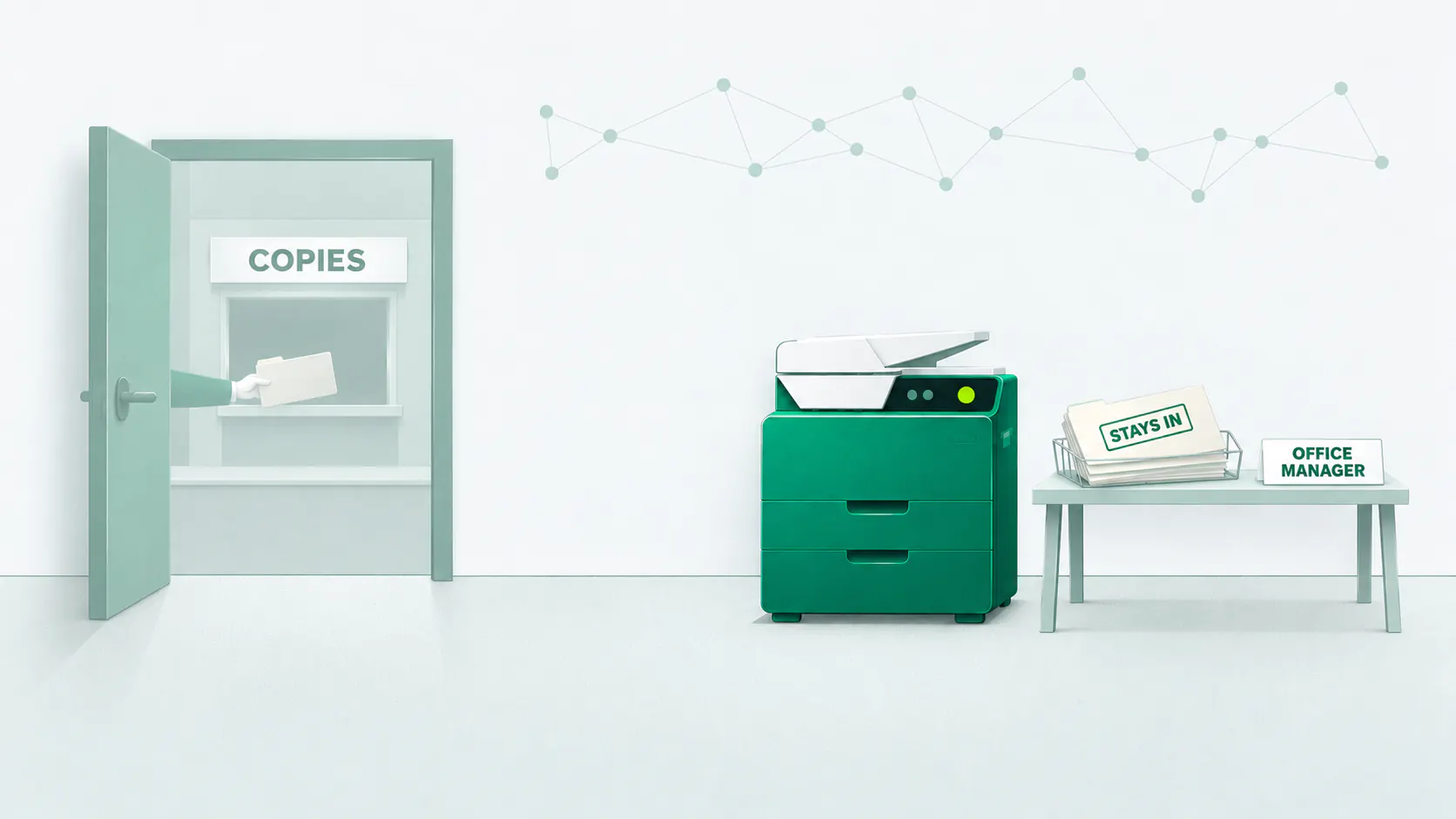
Once work comes back, software often has to read it. Structured output9 makes a model answer in a fixed format, usually JavaScript Object Notation (JSON), against a schema that names every field. Function calling applies the same idea to actions: the model fills in a request for a tool, and your application executes each call30. The format problem is largely solved. OpenAI says its feature means you don't need to worry about the model omitting a required key29.
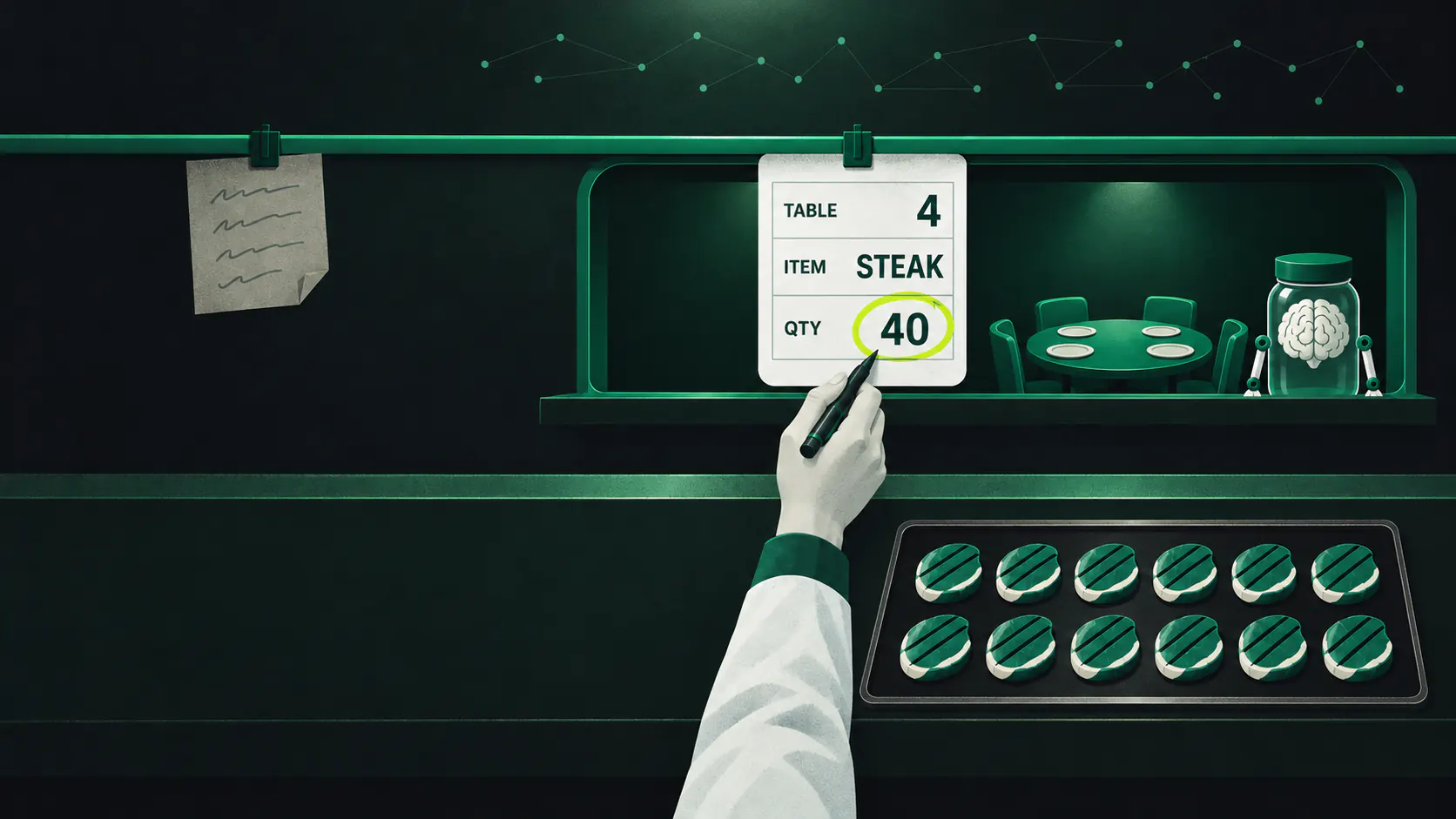
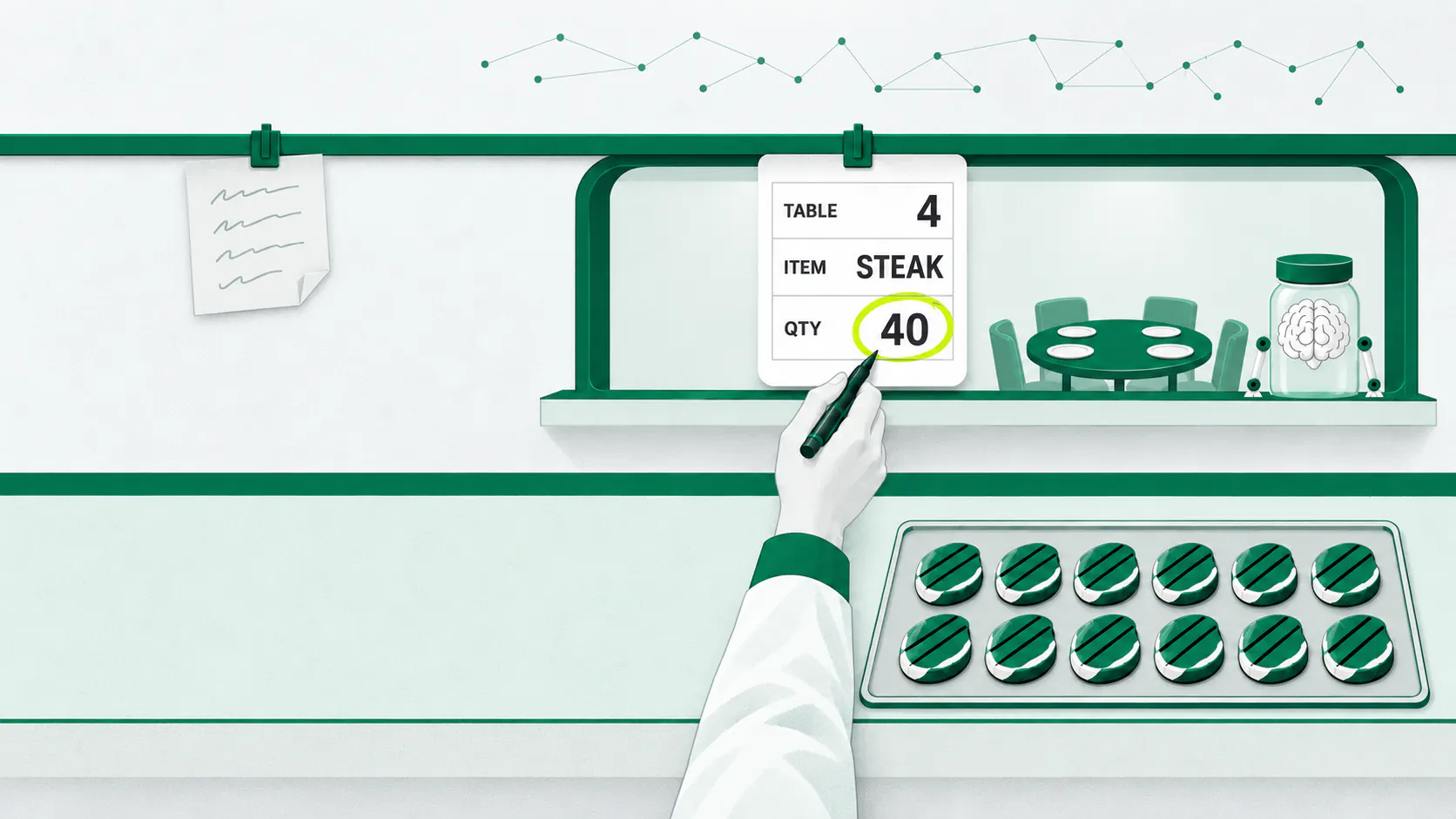
- The shape is guaranteed; the content is not. OpenAI's own guide says Structured Outputs can still contain mistakes29. A tidy record with the wrong budget in it is still wrong.
- A form with no honest empty answer invites invention. The model tries to fit the schema even when the input doesn't, which can result in hallucinations29. Give it a way to say “unknown.”
- Whatever reads the output next should check it. OWASP names insufficient validation, sanitization, and handling31 of model output before it reaches other systems as a risk.
5. Who picks the next step
Vendors now call almost everything an agent, and one question sorts the labels12: who decides the next step? With a chatbot or a copilot, a person does. With a workflow, a route someone wrote in advance does. Anthropic defines workflows as systems where LLMs and tools are orchestrated through predefined code paths32. With an agent, the model decides. In Anthropic's words, LLMs dynamically direct their own processes and tool usage32.
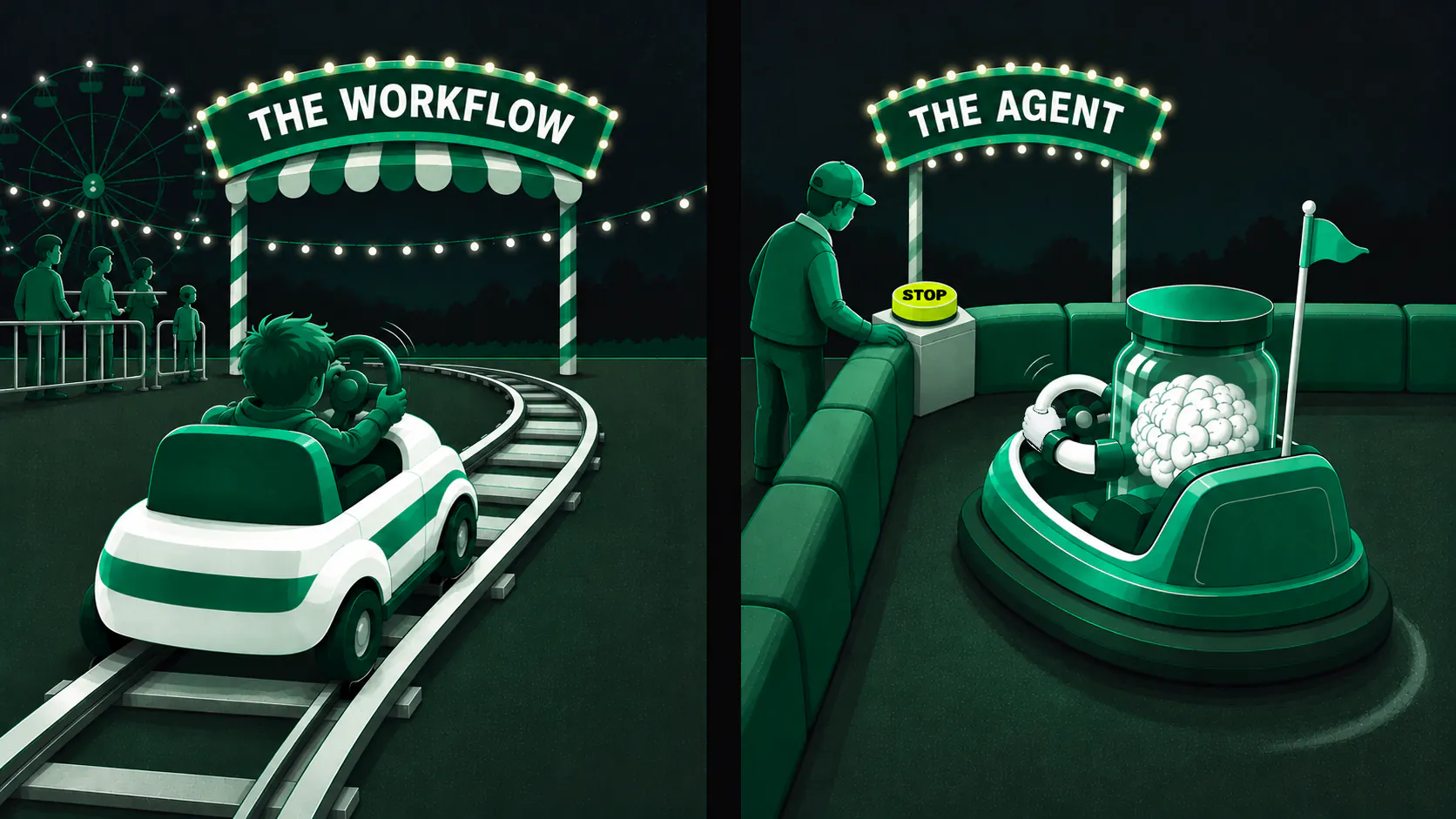
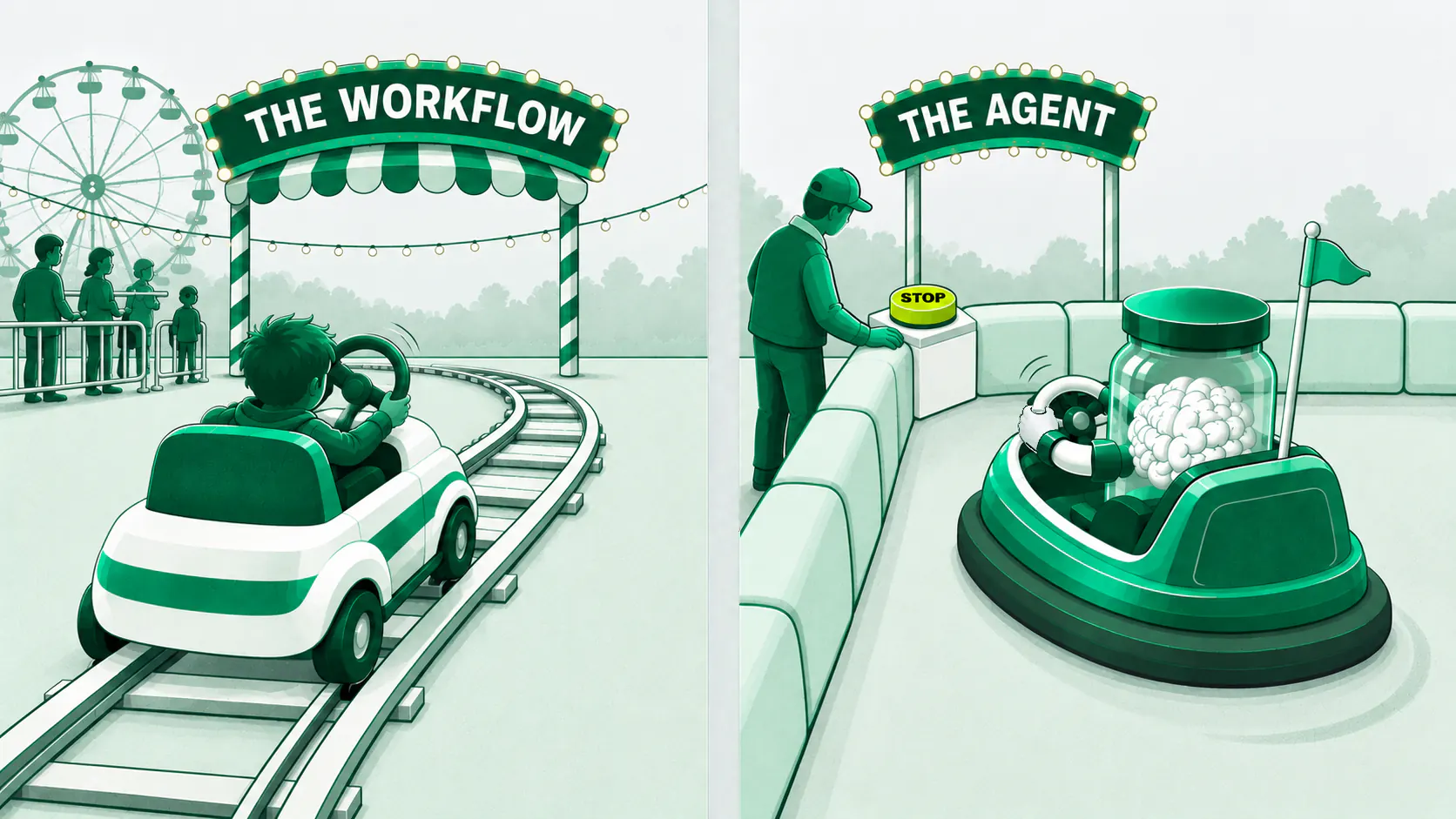
- Autonomy comes with brakes by design. Anthropic recommends stopping conditions (such as a maximum number of iterations)32, and OpenAI's guide says that on failure an agent can halt execution and transfer control back to the user33.
- Whether a person looks first is a setting someone chose. Microsoft says its agents can be configured to react to events or triggers without human input34.
- Simpler is often enough. Anthropic advises finding the simplest solution possible, and only increasing complexity when needed32.
6. Who checks the work
“A person reviews everything before it goes out” is the promise most agencies make about AI-assisted work, and the review explainer10 is about keeping it true. The failure has a name, overreliance. A Microsoft Research review of about 60 papers describes it as users accepting incorrect AI outputs35. Asking the AI to explain itself helps less than you would hope. In one preprint, explanations increased the chance that humans will accept the AI’s recommendation, regardless of its correctness36.
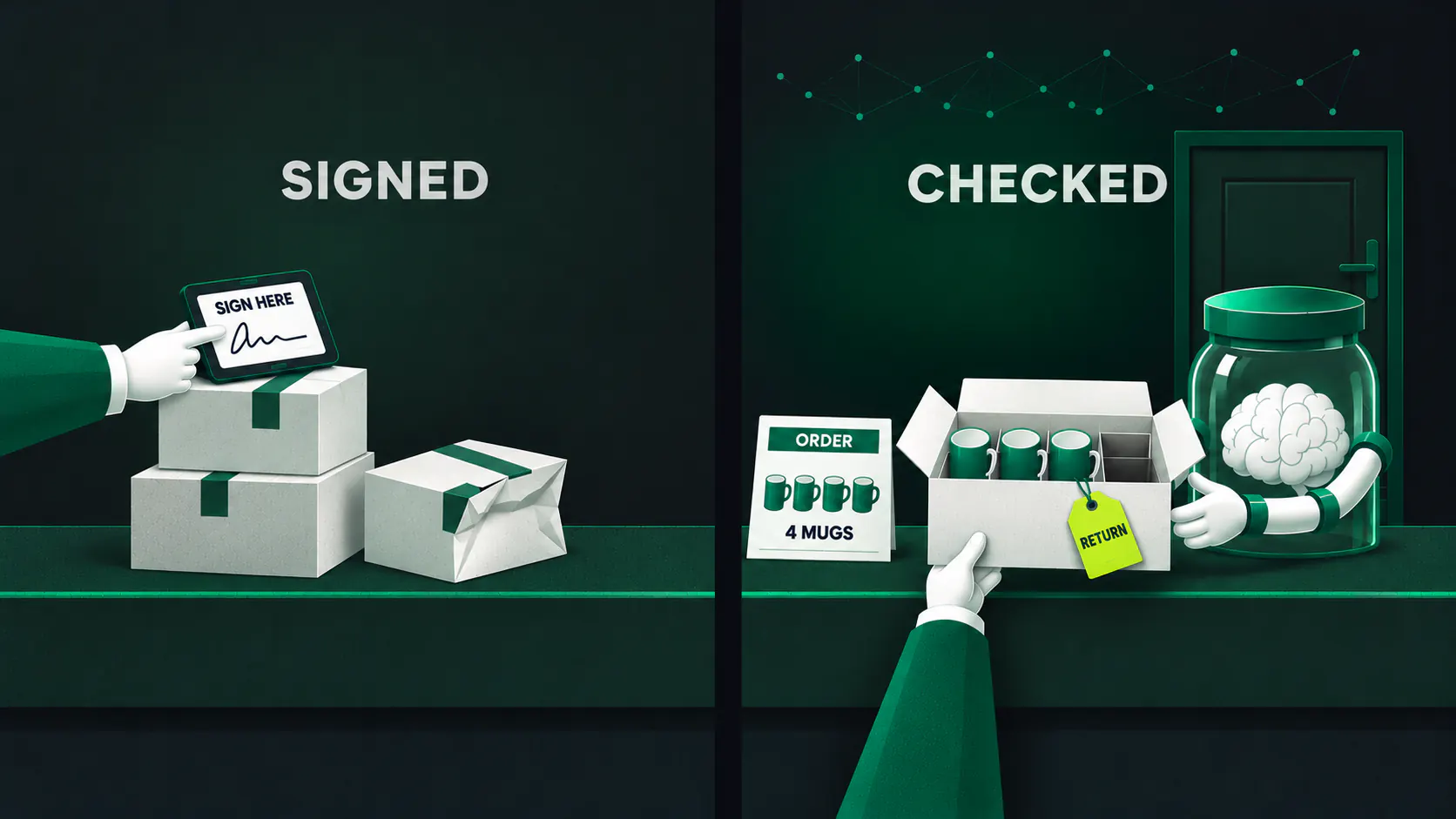
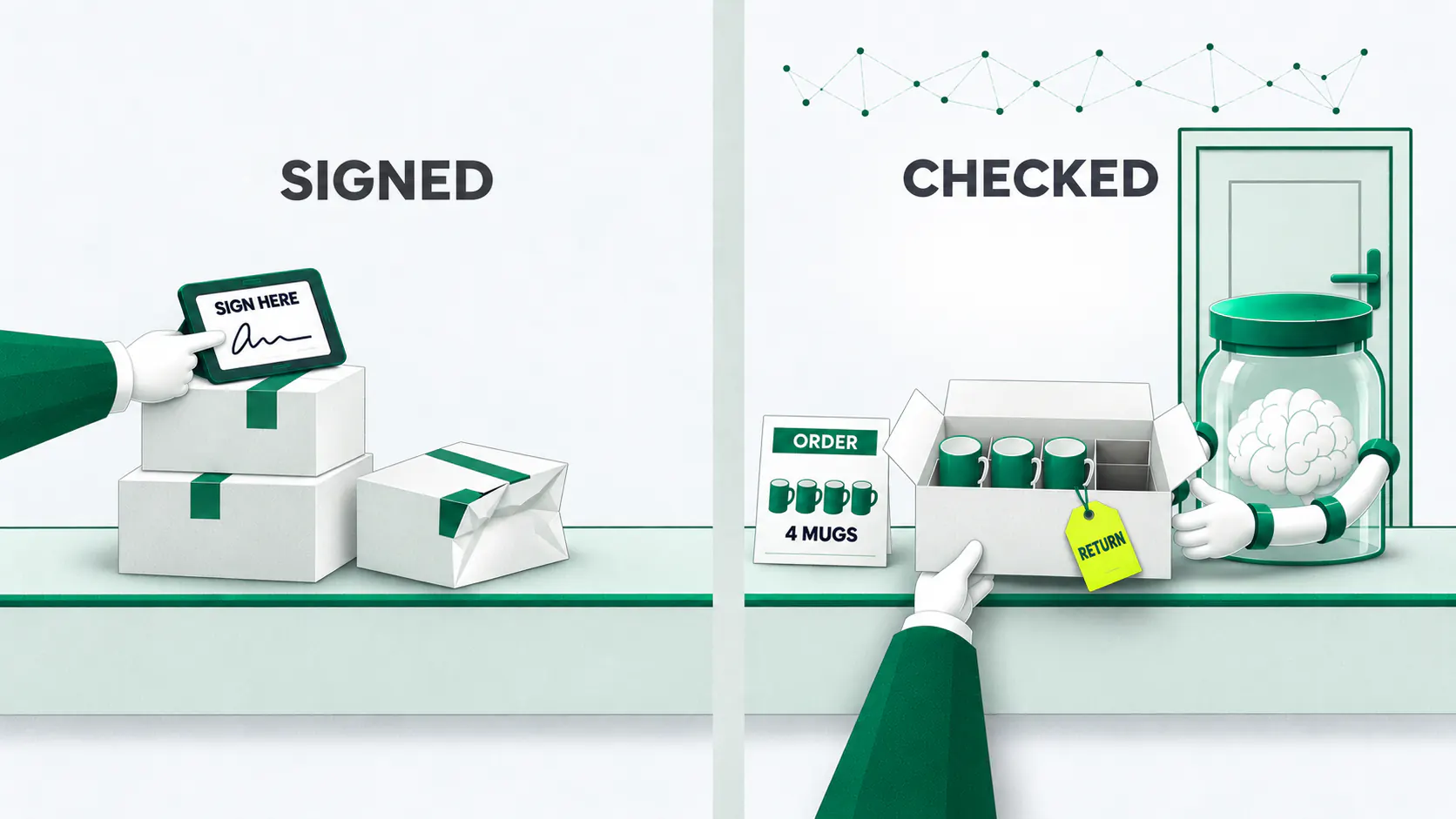
- Authority matters as much as attention. The EU AI Act's Article 14 says people overseeing a high-risk system must be able to decide not to use37 it, and to stop it. A reviewer who cannot reject the work is only watching it.
- Put approval on the actions with consequences. OWASP advises human-in-the-loop control to require a human to approve high-impact actions38.
- None of these sources says how much review is enough. That depends on the stakes and the error rate, so treat a vendor's fixed sampling number as theirs.
7. Who owns what it made
Generated images are where relying on AI turns into paperwork. An AI-made picture can usually run in a paid ad, and the images explainer7 splits the question into who owns it, who pays if someone objects, and where it came from. On ownership, the U.S. Copyright Office concluded that prompts alone do not provide sufficient human control to make users of an AI system the authors of the output39. A federal appeals court held that the Copyright Act requires all eligible work to be authored in the first instance by a human being40. What people add still counts: protection reaches a human author's original expression even if the work also includes AI-generated material39.
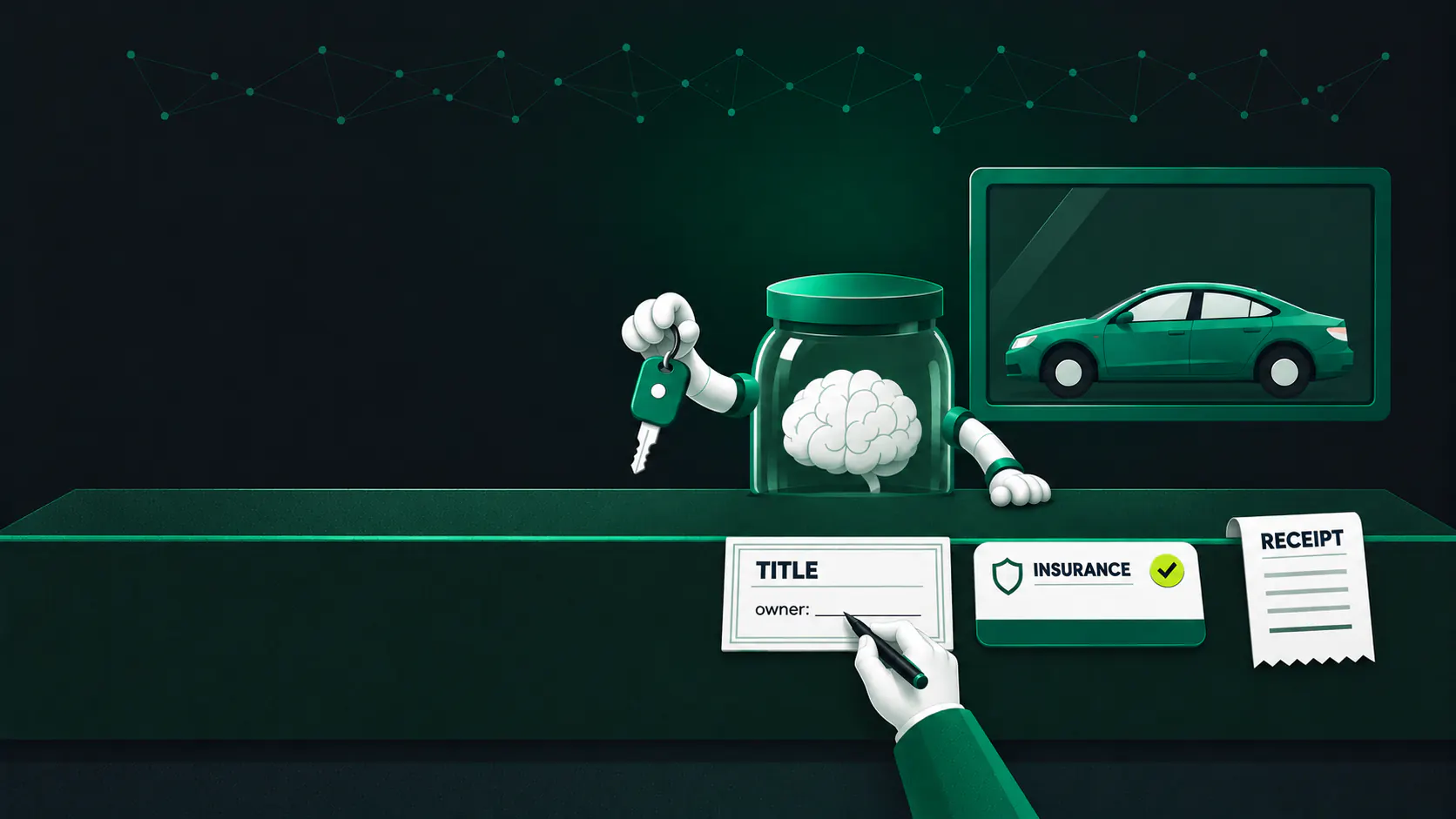
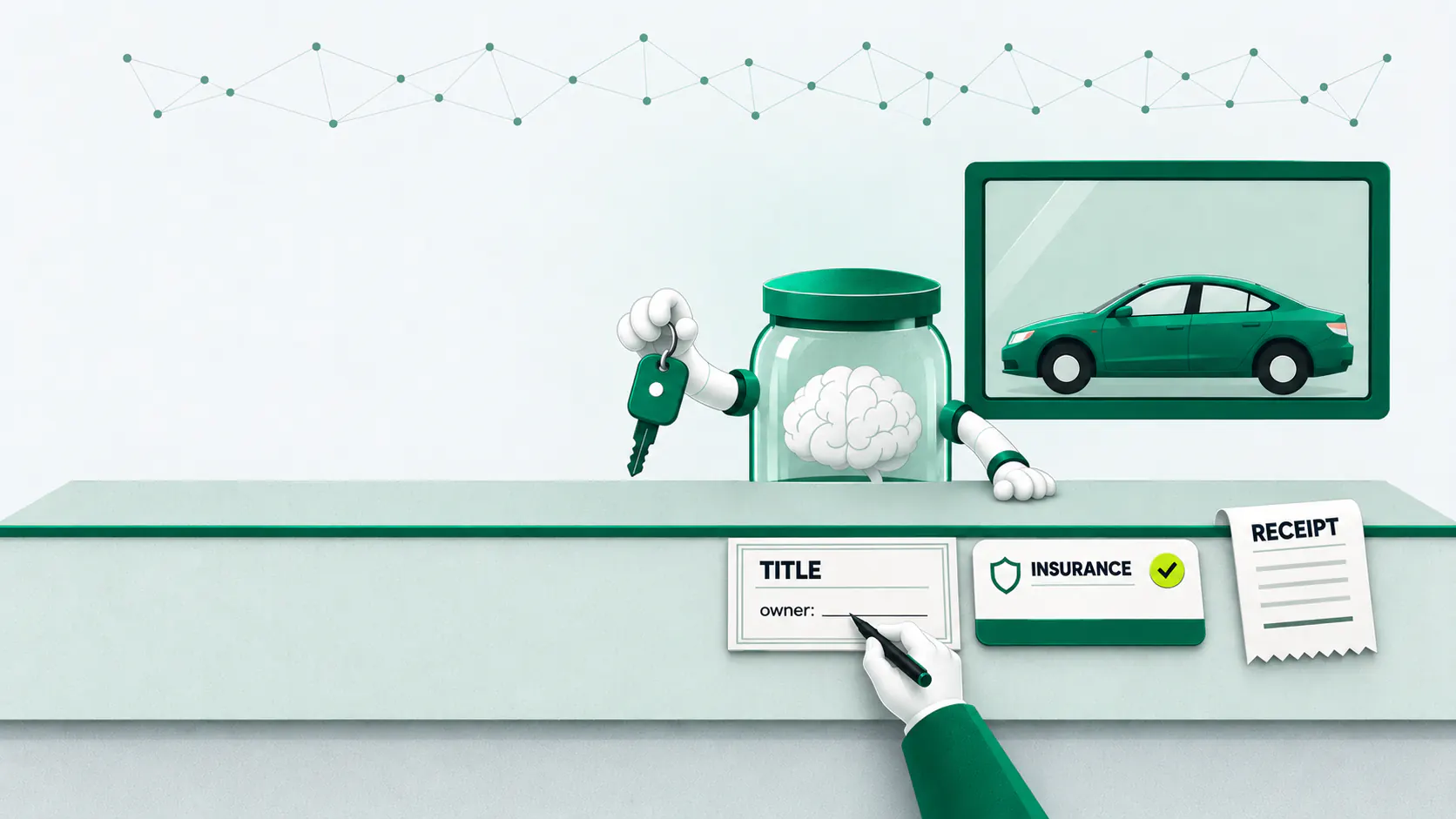
- Indemnity exists, with strings. Microsoft ties its commitment to the customer using the content filters and other safety systems41 built into the product, and Google Cloud's only applies if you didn’t try to intentionally create or use generated output to infringe the rights of others42.
- Platforms label what they can detect. Meta applies an “AI info” label to ads created or edited using third-party AI tools43 when it finds the industry signals, so a quiet AI image may not stay quiet.
8. The person on the other end
Some AI work reaches a customer directly, as a message tailored to them. Personalization11 helps until it feels like spying, and a peer-reviewed study shows where that line sits. When a firm collected data openly, more personalized ads drew higher click-through intentions44. When it gathered the same data covertly, the pattern flipped, and in the field study click-through rates dropped sharply once people realized their information had been collected without their consent44. It is a 2015 study of Facebook ads, so treat it as a pattern to test in your own audience.
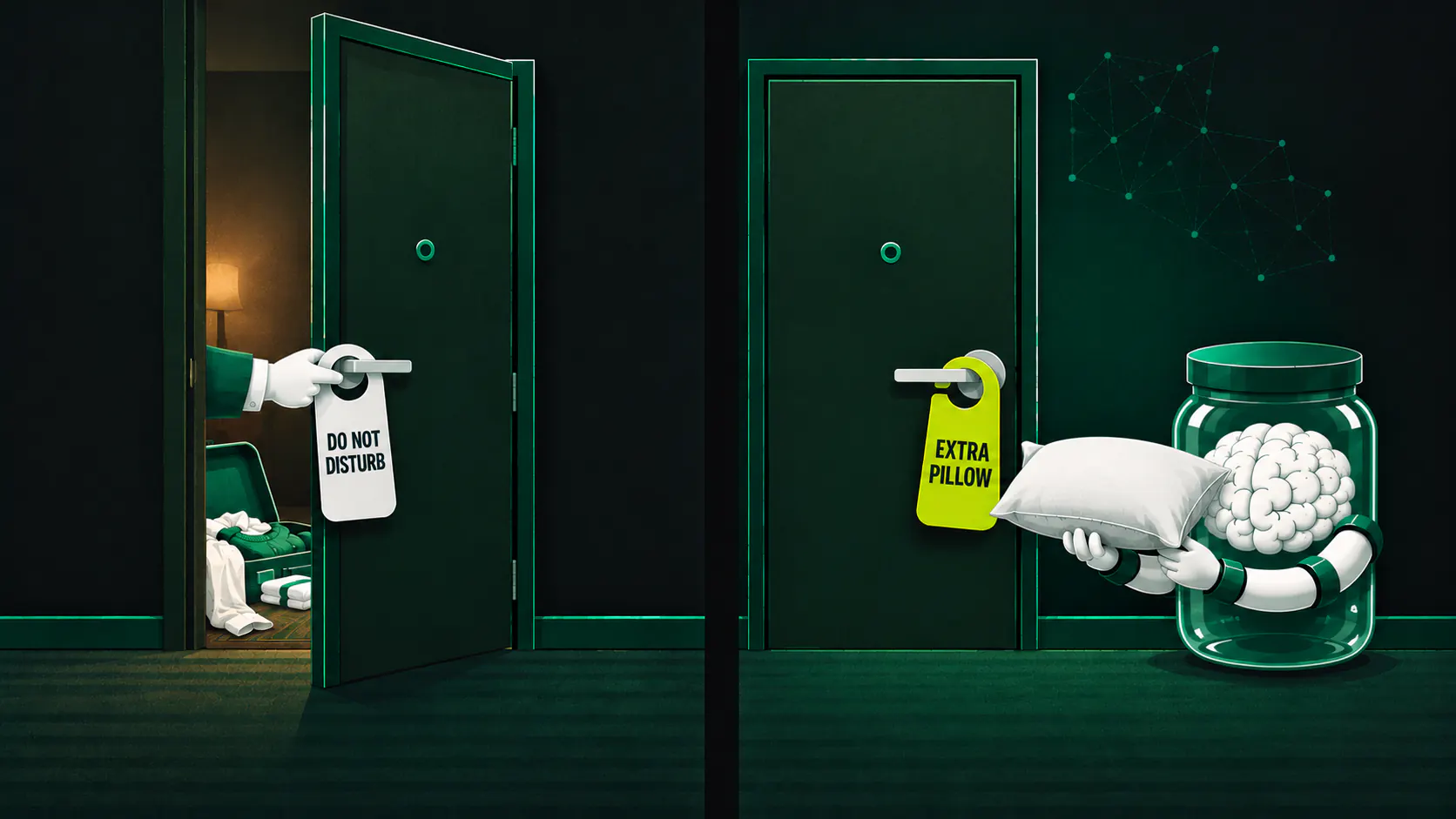

- AI raises the stakes by making more data usable. A model can guess things a customer never typed in11, and a guess about someone is information they never handed over.
- The ad platforms already fence off sensitive ground. Google says audiences an advertiser builds from its own data cannot be used if promoting in sensitive interest categories45.
- In the European Union (EU), people can say stop. The General Data Protection Regulation (GDPR) gives them the right to object at any time46 to direct marketing, profiling included.
9. The agency playbook
The same four checks come up across the eight chapters, in the order a piece of work moves through a team. Inputs: give the AI only the material the job needs, on an approved account. Outputs: ask for a format software can read, check the values in it, and know who owns any image it made. Next steps: know whether a person, a fixed script or the AI decides what happens next, and where the AI has to stop. Approval: the reviewer sees the source next to the draft and has the authority to reject it. Run the checks before the team starts relying on a tool, because each one costs more to fix after something has gone wrong.
01
Inputs
what you give the AI, on an approved account
02
Outputs
what it produces, with values a person checks
03
Next steps
a person, a script or the AI chooses what happens next
04
Approval
someone who checks it against the source and can say no
A new tool or a new job starts the four checks again.
- Write the four answers into the statement of work (SOW): the approved tools and plans, the output format, which steps run on their own, and who approves the work.
- Ask every vendor the same short list. Which tier and retention apply? Is it a chatbot, a copilot, a workflow or an agent? What happens when it gets stuck? Who owns what it makes?
- Run the amnesty before the policy. Ask the team what they use, with no blame attached, then approve a few tools they will want to use.
- Test the process as well as the model. Slip a known error into a small review sample and see whether anyone catches it.
Sources
- Cortexa Ground Truth Nº 10 — “AI, Without the Hype — The Cortexa Field Guide”
- Cortexa Ground Truth Nº 20 — “Building With AI, Without the Guesswork.”
- Cortexa Ground Truth Nº 30 — “Shipping AI, Without the Surprises.”
- Cortexa Ground Truth Nº 31 — “A context window is just a very long shelf.”
- Cortexa Ground Truth Nº 32 — “Client data in ChatGPT depends on the tier.”
- Cortexa Ground Truth Nº 33 — “Your team already uses AI. Make that use safe.”
- Cortexa Ground Truth Nº 34 — “AI images can run in ads. Keep the receipts.”
- Cortexa Ground Truth Nº 35 — “Open-weight AI models are yours to run and to maintain.”
- Cortexa Ground Truth Nº 36 — “Make the AI answer in a shape your system can read.”
- Cortexa Ground Truth Nº 37 — “Human review of AI work has to be able to say no.”
- Cortexa Ground Truth Nº 38 — “AI personalization works until it feels like spying.”
- Cortexa Ground Truth Nº 39 — “Is it an agent? Ask who decides the next step.”
- Anthropic — “Context windows” (Claude Docs)
- Anthropic — “Models overview” (Claude Docs, model comparison table)
- Anthropic — “Effective context engineering for AI agents”
- Liu et al. — “Lost in the Middle: How Language Models Use Long Contexts” (preprint)
- Hsieh et al. — “RULER: What's the Real Context Size of Your Long-Context Language Models?” (preprint)
- OpenAI Help Center — “Data controls FAQ”
- OpenAI — “Data governance and compliance” (OpenAI Academy)
- OpenAI — “Data controls in the OpenAI platform” (developer docs)
- Anthropic — “Is my data used for model training?”
- Anthropic — “How long do you store my organization's data?”
- Microsoft and LinkedIn — “AI at Work Is Here. Now Comes the Hard Part” (2024 Work Trend Index)Vendor-run survey of 31,000 knowledge workers, February to March 2024; self-reported.
- OWASP — LLM02:2026 Sensitive Information Disclosure (Top 10 for LLM Applications 2026)
- Stanford HAI — 2025 AI Index Report, Technical Performance
- Hugging Face — “Welcome GPT OSS, the new open-source model family from OpenAI”
- Meta — Llama 3.1 Community License Agreement (llama-models repository)
- EU Artificial Intelligence Act (Regulation 2024/1689), Article 53(2)
- OpenAI — Structured Outputs (API guide)
- Anthropic — Tool use with Claude (Claude Platform docs)
- OWASP — LLM10:2026 Improper Output Handling (Top 10 for LLM Applications 2026)
- Anthropic — “Building effective agents”
- OpenAI — “A practical guide to building agents” (PDF)
- Microsoft — “Unlocking autonomous agent capabilities with Microsoft Copilot Studio”
- Microsoft Research — Overreliance on AI: Literature Review
- Bansal et al. — Does the Whole Exceed its Parts? The Effect of AI Explanations on Complementary Team Performance (arXiv preprint)
- European Union — AI Act, Article 14 (human oversight)
- OWASP — LLM03:2026 Excessive Agency (Top 10 for LLM Applications 2026)
- U.S. Copyright Office — “Copyright and Artificial Intelligence, Part 2: Copyrightability” (January 2025)
- U.S. Court of Appeals, D.C. Circuit — Thaler v. Perlmutter, No. 23-5233 (March 18, 2025)
- Microsoft — “Microsoft announces new Copilot Copyright Commitment for customers”
- Google Cloud — “Protecting customers with generative AI indemnification”
- Meta — “Expanding GenAI Transparency for Meta’s Ads Products”
- Aguirre, Mahr, Grewal, de Ruyter and Wetzels — “Unraveling the personalization paradox” (Journal of Retailing, 2015)Peer-reviewed. Facebook field study plus three experiments, so the pattern predates generative AI.
- Google Ads Policy — Personalized advertisingVendor-stated policy; it changes, so check the live page.
- General Data Protection Regulation — Article 21, Right to objectAn unofficial reproduction of the regulation's text; the official text is on EUR-Lex.
Up next · 1 of 4 in Field Guide


More in Ground Truth
- Explainer5 min read
What “agentic AI” actually means plainly.
Agentic AI isn't smarter answers — it's software that takes actions toward a goal. Here's what's real, and why it still needs a human in the loop.
- Explainer5 min read
AI doesn’t lie — it guesses confidently.
Why Artificial Intelligence (AI) “hallucinates,” in plain English: it isn’t lying — it predicts likely words, and a confident guess can still be wrong.


