Cortexa Ground Truth
Nº 34 · Explainer · · 5 min read
 By Joe Coffman, Founder of Cortexa Consulting
Tip: once it’s playing, tap any line to jump the audio there.
AI images can run in ads. Keep the receipts.
Yes, an AI-made image can run in a paid ad. Whether it is safe turns on who owns it, who covers a claim, and where it came from.
“Can we run this AI-made image in the client’s paid campaign?” The Artificial Intelligence (AI) tool made the picture in seconds, so this is the question left over. Three smaller ones answer it: who owns the image, who pays if someone objects, and where it came from.
Can an AI image run in a paid ad at all?
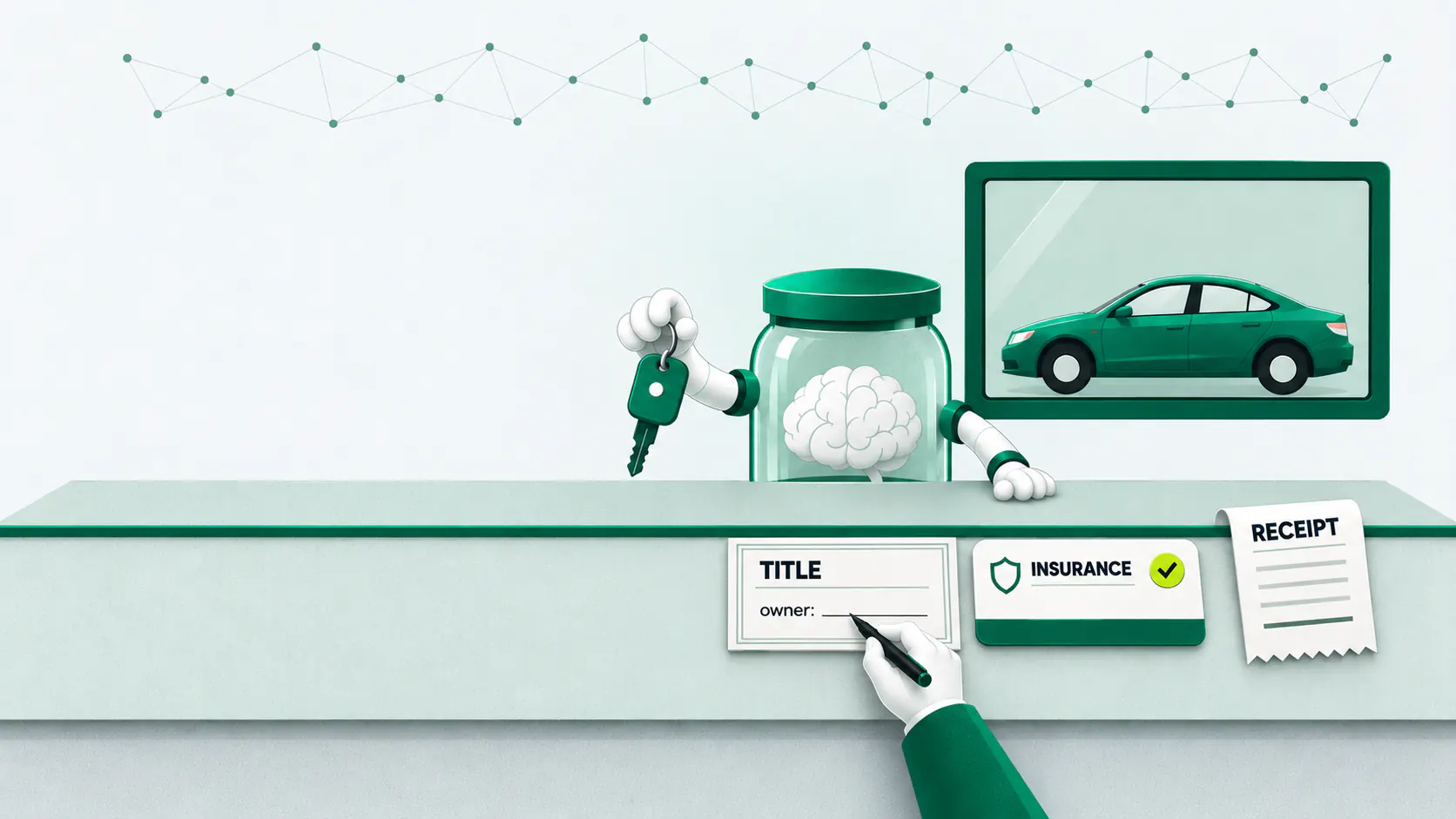
Often, yes. But “can we” is three questions wearing one coat. A useful picture is the rental counter. You can usually drive off with the car. Whether you hold the title, whether the insurance pays out, and what the receipt says are separate matters, and each lives in different paperwork.

Who owns an AI image?
Possibly nobody, which matters the day a competitor copies the ad. In its January 2025 report on copyrightability, the U.S. Copyright Office concluded that prompts alone do not provide sufficient human control to make users of an AI system the authors of the output1. Its wider finding is that copyright does not extend to purely AI-generated material, or material where there is insufficient human control over the expressive elements1. A federal appeals court reached the same place in March 2025. In Thaler v. Perlmutter, the D.C. Circuit held that the Copyright Act requires all eligible work to be authored in the first instance by a human being2.
People still own what they add. The Office says copyright protects the original expression of a human author even if the work also includes AI-generated material1, and the court noted that the rule still rewards people who pursue rights in works that they make with the assistance of artificial intelligence2. Retouching an image, or building it into a layout your designers made, is the kind of human contribution that can count. Whether a given edit is enough is a question the Office says depend[s] on a case-by-case determination1. That is the U.S. view. The same report surveys other countries, and a global client’s campaign runs in many of them.
Who pays if someone says it copies their work?
Ownership covers your claim on the image. Cover answers the other side: a third party says the output copies theirs. Some vendors now put that risk in the contract. Microsoft says it will defend the customer and pay the amount of any adverse judgments or settlements that result from the lawsuit3 when a commercial customer is sued for copyright infringement over its Copilots or their output, provided the customer used the content filters and other safety systems built into the product. Google Cloud offers a generated output indemnity too, and it only applies if you didn’t try to intentionally create or use generated output to infringe the rights of others4. Both are conditional, and both are contract terms, so they follow the plan you bought and the settings you used. Read the clause in your own agreement before you rely on a vendor’s blog post.
Will the ad platform label it?
Then the platform weighs in. Meta says that when its in-house generative tools make a significant edit to the image or video5, it applies an AI label. It also detects ads created or edited using third-party AI tools through industry-standard signals5 and labels those “AI info”. If the tool put a photorealistic human in the ad, the label sits beside the Sponsored tag instead of behind the three-dot menu. How labeling rules differ by law and by platform is in our brief on labeling AI content6, and the provenance data a platform can read is the subject of our brief on content credentials7.
01
Own it
your edits are the part you can protect
02
Cover it
get the indemnity clause in writing
03
Trace it
keep the record of how it was made
04
Label it
know what the platform will show
Four short checks, each with its own paperwork.
What's Real?
- Pure AI output may carry no copyright. The Copyright Office says protection does not extend to purely AI-generated material1, and the D.C. Circuit has held that the Copyright Act requires a human author in the first instance2.
- Human work on top still counts. Protection reaches the original expression of a human author, even if the work also includes AI-generated material1. How much human input is enough is undecided, and the Office calls it a case-by-case question.
- Indemnity exists, with strings. Microsoft ties its commitment to using the content filters and other safety systems3 in the product, and Google’s applies only if you did not try to infringe on purpose.
- Platforms are building labels in. Meta applies an “AI info” label to ads created or edited using third-party AI tools5 when it detects the signals, so a quiet AI image may not stay quiet.
The “so what” — for anyone serving tech clients
- Put the rights check in the brief. Before anyone generates anything, record which tool and which plan will make the image, and whether its terms cover commercial use and indemnity.
- Add human work you can point to. Retouch it, composite it, set it in a layout your designers built. That is the part the law can protect, and it keeps the final asset yours.
- Keep a receipt file. Save the tool, the version, the prompt and the date with the final image, plus any content credentials, so “where did this come from?” has a one-minute answer. Brand fit is a separate check; the layered approach to brand safety8 applies here too.
- Tell the client what is covered. Say plainly which parts of the asset are protected, which are indemnified by the vendor, and which depend on a person’s edits.
Sources
- U.S. Copyright Office — “Copyright and Artificial Intelligence, Part 2: Copyrightability” (January 2025)
- U.S. Court of Appeals, D.C. Circuit — Thaler v. Perlmutter, No. 23-5233 (March 18, 2025)
- Microsoft — “Microsoft announces new Copilot Copyright Commitment for customers”
- Google Cloud — “Protecting customers with generative AI indemnification”
- Meta — “Expanding GenAI Transparency for Meta’s Ads Products”
- Cortexa Ground Truth Nº 21 — “Labeling AI content just became law”
- Cortexa Ground Truth Nº 23 — “A content credential is a nutrition label for your media”
- Cortexa Ground Truth Nº 17 — “Guardrails work in layers”
Up next · 1 of 2 in AI & the law


More in Ground Truth
- Explainer6 min read
Open-weight AI models are yours to run and to maintain.
An open-weight model runs on your own hardware and can be tuned to your work. In return, you take on the hosting, the safety checks and the upkeep.
- Explainer5 min read
What “agentic AI” actually means plainly.
Agentic AI isn't smarter answers — it's software that takes actions toward a goal. Here's what's real, and why it still needs a human in the loop.


