Cortexa Ground Truth
Nº 3 · Explainer · · 5 min read

Tip: once it’s playing, tap any line to jump the audio there.
RAG is just giving AI an open book.
RAG in simple terms: don't hope the AI remembers — hand it the right documents and let it answer from the source, open-book style.
Every team serving tech clients eventually hears the same request: “can we train the AI on our own data?” Usually you don't need to train anything — you need to let the AI look things up. That's Retrieval-Augmented Generation (RAG), and it's the single biggest lever for getting accurate, on-brand answers out of AI.
Closed-book exam vs. open-book exam
Picture two students taking the same test. The first has to take a closed-book exam: no notes, everything from memory. Confident and fast — and when memory runs short, they can always guess. (That's the confident-guessing problem from last time.) The second student takes an open-book test: the reference material is right there on the desk, so the answer comes from the source/text, not from whatever they happen to remember.
A plain Large Language Model (LLM) is the closed-book student. RAG turns it into the open-book one: before the model answers, a retrieval step finds the passages in your documents that are actually relevant and pastes them into the prompt. The model then answers from that material — and can point to exactly where each claim came from.
![An open book with a jade cover; one line on the right page is highlighted in chartreuse and tagged “[1]”, while three source icons above — a document, a database, and a globe — feed lines down into it. The model answers from a retrieved, cited passage rather than from memory.](/_next/image?url=%2Finsights%2Fwhat-is-rag%2Fanalogy-dark.webp&w=3840&q=75&dpl=dpl_FVZyQqrdBWhaoqfwWV3oxxN9uBhy)
![An open book with a jade cover; one line on the right page is highlighted in chartreuse and tagged “[1]”, while three source icons above — a document, a database, and a globe — feed lines down into it. The model answers from a retrieved, cited passage rather than from memory.](/_next/image?url=%2Finsights%2Fwhat-is-rag%2Fanalogy-light.webp&w=3840&q=75&dpl=dpl_FVZyQqrdBWhaoqfwWV3oxxN9uBhy)
Ask
the question comes in
Retrieve
find the relevant passages
Answer
respond from those pages
Cite
show which source said it
The answer is built from your sources — not the model's memory.
What's actually real?
- Grounding is the biggest, cheapest accuracy win. The foundational research on retrieval-augmented models1 showed that letting a model pull from an external source beats leaning on what it memorized — especially for facts that change, and model-builders now put grounding at the top of the practical fix list2.
- It attacks hallucination at the root. Because the model answers from supplied text instead of reconstructing from memory, there's far less room to invent — the failure mode a major hallucination survey3 traces to predicting rather than remembering.
- It is not magic. RAG is only as good as the documents you give it and the passage it actually retrieves: feed it the wrong page and you get a confident answer grounded in the wrong place. Retrieval quality is the whole game.
The “so what” — for anyone serving tech clients
- When a client asks to “train AI on our brand or products,” translate it into a grounding project first: which documents should it answer from? You'll scope something cheaper, faster, and more accurate than a training effort — and you'll sound like the person who actually knows how this works.
- Grounding plus citations is your trust story. An answer that links back to the source document is one a client can verify — exactly what you want the moment AI gets anywhere near facts that carry risk.
Next Reads
- Explainer
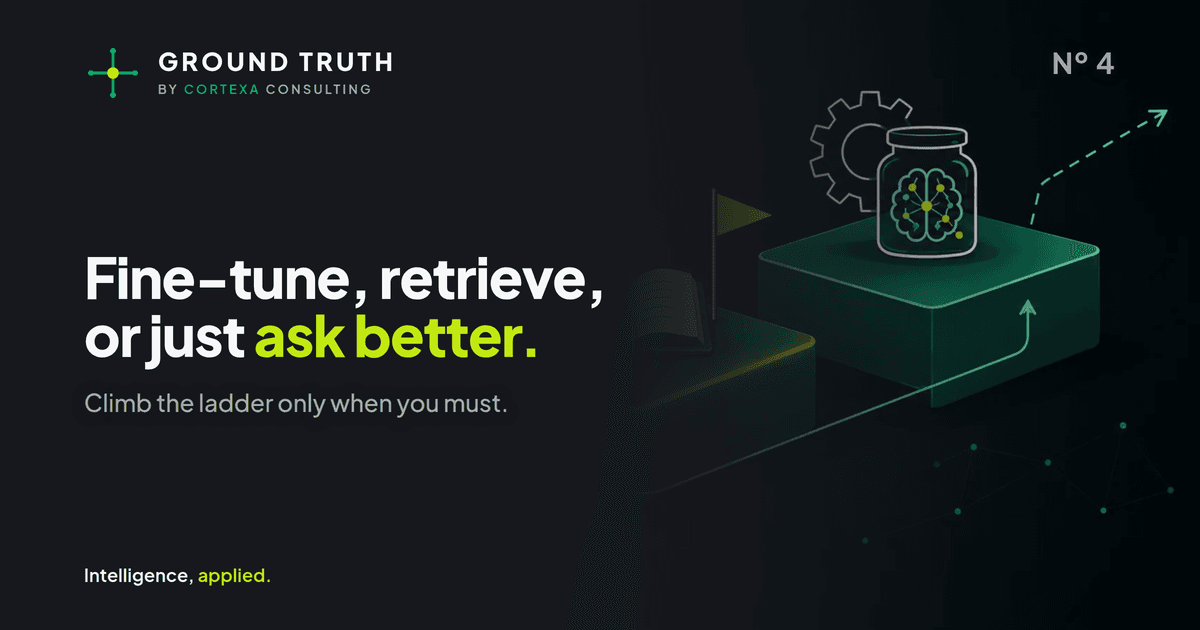
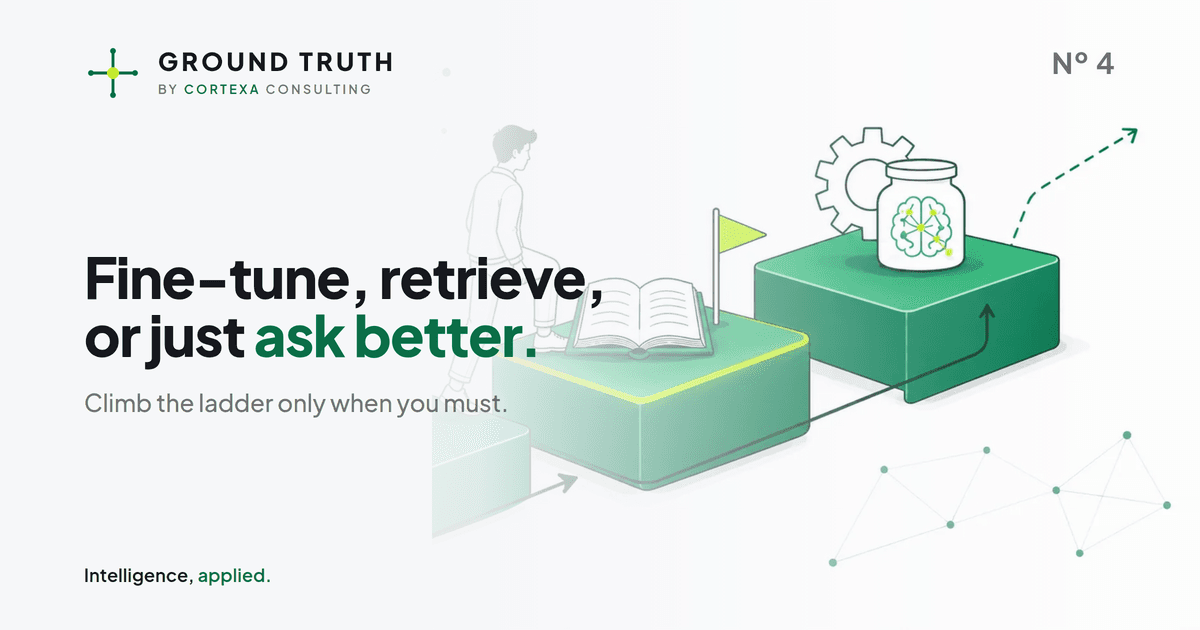
Fine-tune, retrieve, or just
Most “train it on our data” asks don't need training. A simple ladder — prompt, then ground (RAG), then fine-tune — tells you which one you actually need.
- Signal
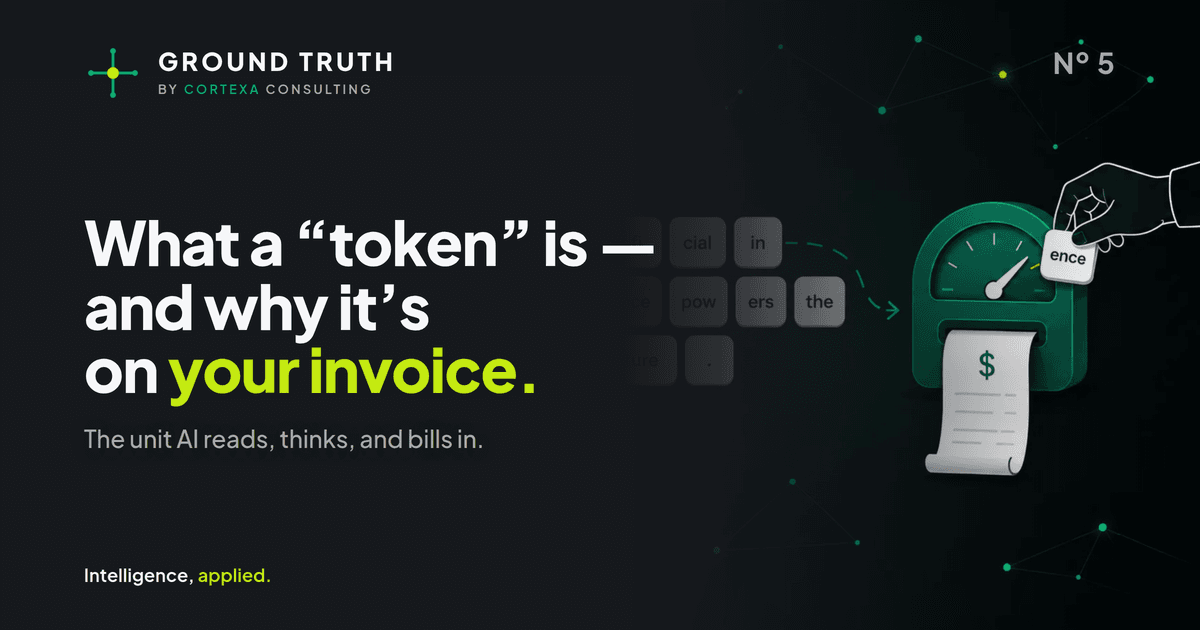
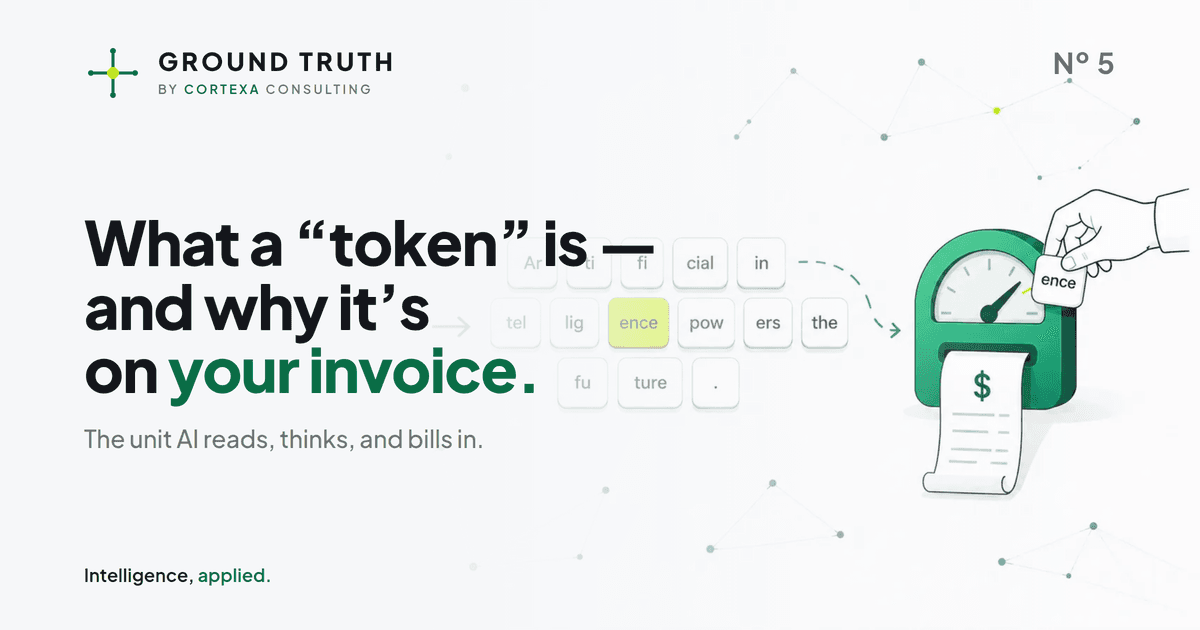
What a “token” is, and why
A “token” is the small chunk of text AI reads and writes — about ¾ of a word. It's what the model's memory is measured in, and what you're billed for.