Tip: once it’s playing, tap any line to jump the audio there.
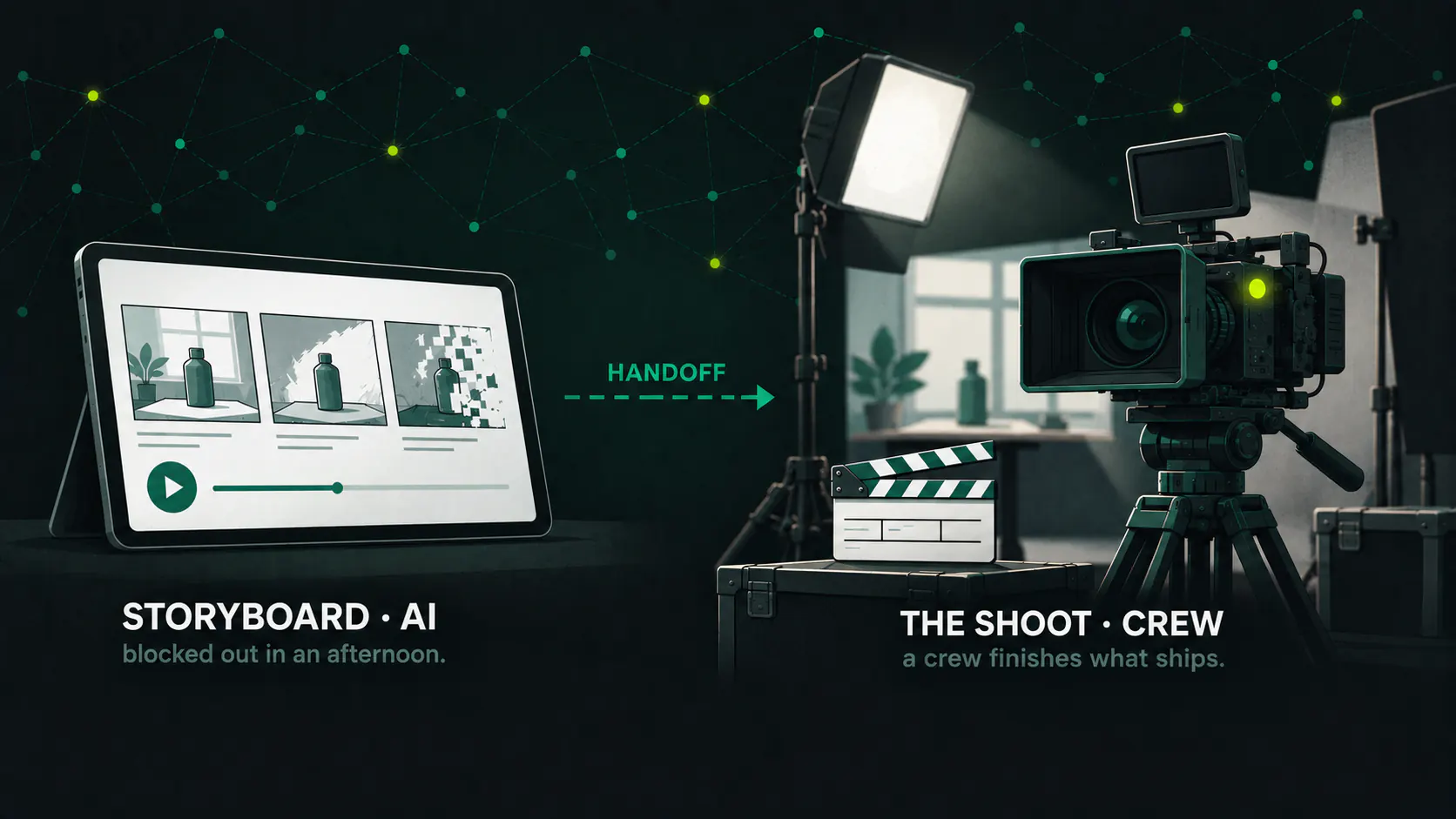
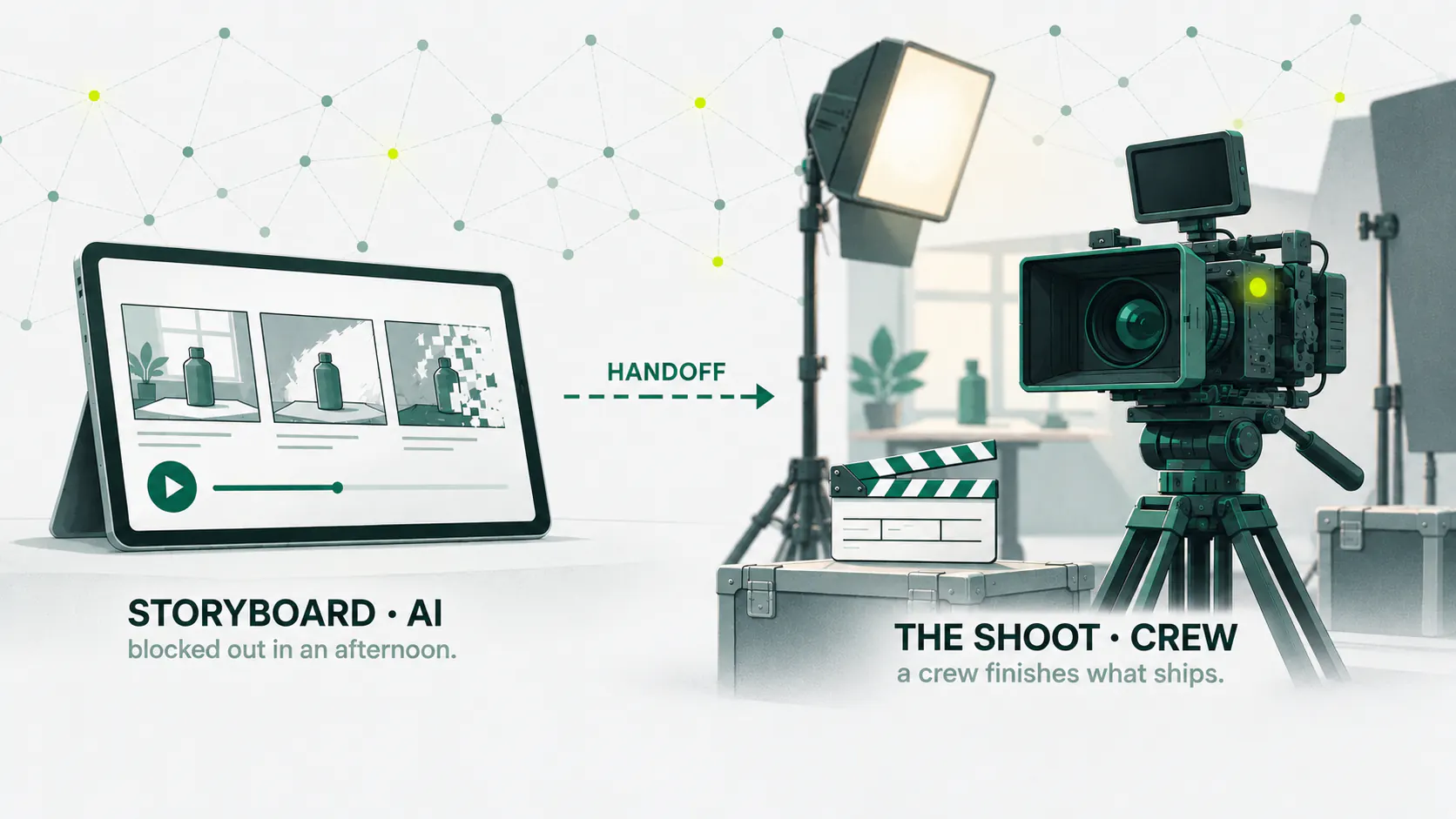
AI video is ready for the storyboard, not the shoot.
AI can generate a cinematic clip with sound in minutes. That's a fast way to show an idea, and a risky way to ship a finished ad.
“Can we just make the ad with AI now?” Every agency serving a tech brand is fielding that question this year. The tools are real, and they are fast. Whether the result can carry a client's name depends almost entirely on where in the process you point them.
What can AI video do today?
A handful of models (Google's Veo, ByteDance's Seedance, Alibaba's Wan, Runway, Kling and a few others) now turn a written prompt into moving footage. Google says Veo can generate cinematic video with audio1 and generate outputs in 1080p and 4K1. The clips are still short, but less short than they were: ByteDance now advertises a native 30-second single shot2, where a few seconds was the ceiling a year ago. Some ship as open weights rather than as a rented API. Alibaba made its video models free to download3, which puts rights and procurement on a different footing from the quality question. The jump in the last year is easy to see: motion is smoother, light reads like film, and the picture now arrives with sound. It is the same leap the multimodal brief4 described, landing in video.
Pitch the idea
generate a look in an afternoon to win the room
Storyboard, test shots
block a scene and try a hook before booking a crew
Paid-social cuts
quick variants for the feed, where clips are short and stakes low
The hero film
the scrutinised broadcast spot, where the tells still cost you
A person finishes anything that carries the client's name.
What's Real?
- The speed is the real prize. A model can turn a prompt into a cinematic clip with sound in 1080p and 4K1 in minutes. For pitching a look or testing a hook, a week of work collapses into an afternoon.
- Consistency is the hard ceiling. Generating video demands not only high-quality individual frames but also strong temporal coherence to ensure consistency throughout the spatiotemporal sequence5. That is why the clips stay short, and why the same character can shift between shots.
- The tells cluster where the eye lingers. Coca-Cola's holiday spot, made entirely with generative AI6, drew notice for an uncanny gloss, diffuse lighting, rubbery facial features, frequent cuts, and a lack of spoken dialogue6, and the campaign was a source of controversy7. A feed scroll forgives what a thirty-second broadcast spot does not.
- The makers say so plainly. Google notes that on Veo, natural spoken audio remains an area of active development1. Trust the caveat in the release notes over the sizzle reel.
The “so what” — for anyone serving tech clients
- Sell it as pre-production, not the final cut. Put AI video in the pitch and the test shots, where a fast, cheap look wins the room and nobody airs the rough version. That is where a client feels the speed without wearing the risk.
- Keep a person on every frame that ships. The pattern that works is AI for the concept and the variants, a human crew for the finished spot. Budget the human finish in from the start; the savings are still real, and so is the backlash when you skip it. It is the same gap the demo-to-production brief8 named: a great sample is not a shipped campaign.
- Settle disclosure up front. Agree who labels the AI, and how, before the work starts. That expectation is only getting firmer, and “we'll sort it later” is how a brand ends up explaining itself in public.
Sources
- Google DeepMind — Veo (model overview)
- TechNode — “ByteDance launches Seedance 2.5 video-generation model”
- Alibaba Group — “Alibaba Cloud Open Sources its AI Models for Video Generation”
- Cortexa Ground Truth Nº 9 — “What ‘multimodal’ really means for a campaign”
- A Survey: Spatiotemporal Consistency in Video Generation (preprint)
- eMarketer — Coca-Cola used AI to generate its holiday ad campaign
- Marketing Dive — Coca-Cola doubles down on AI in new holiday campaign
- Cortexa Ground Truth Nº 7 — “A great demo isn’t a shipped product”
Next Reads
- Explainer
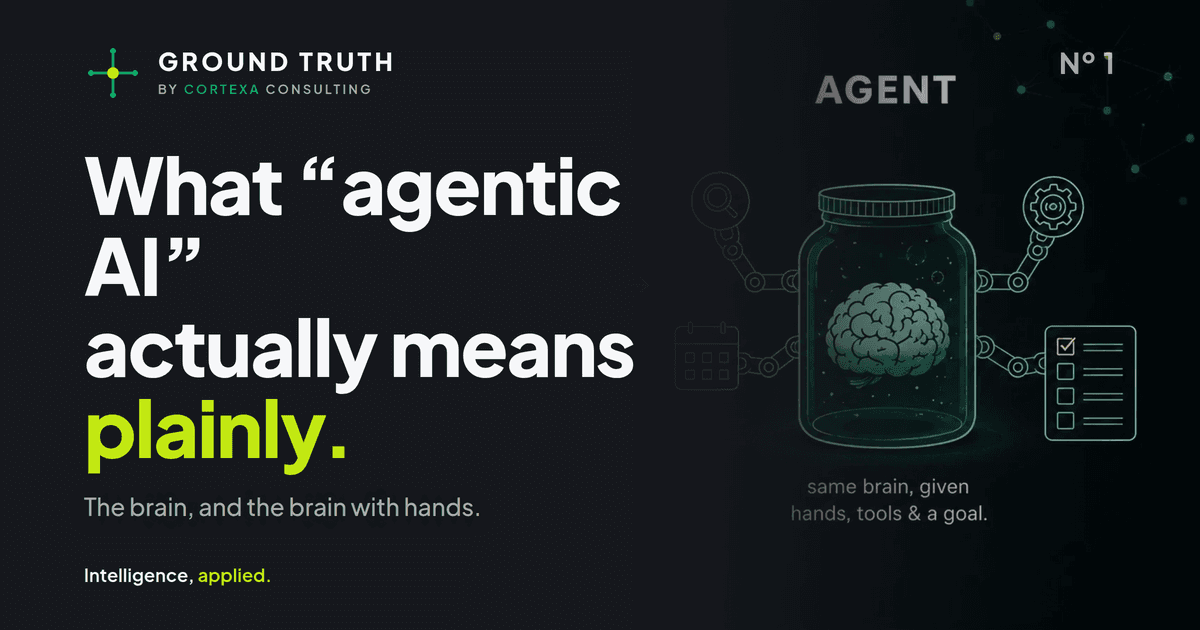
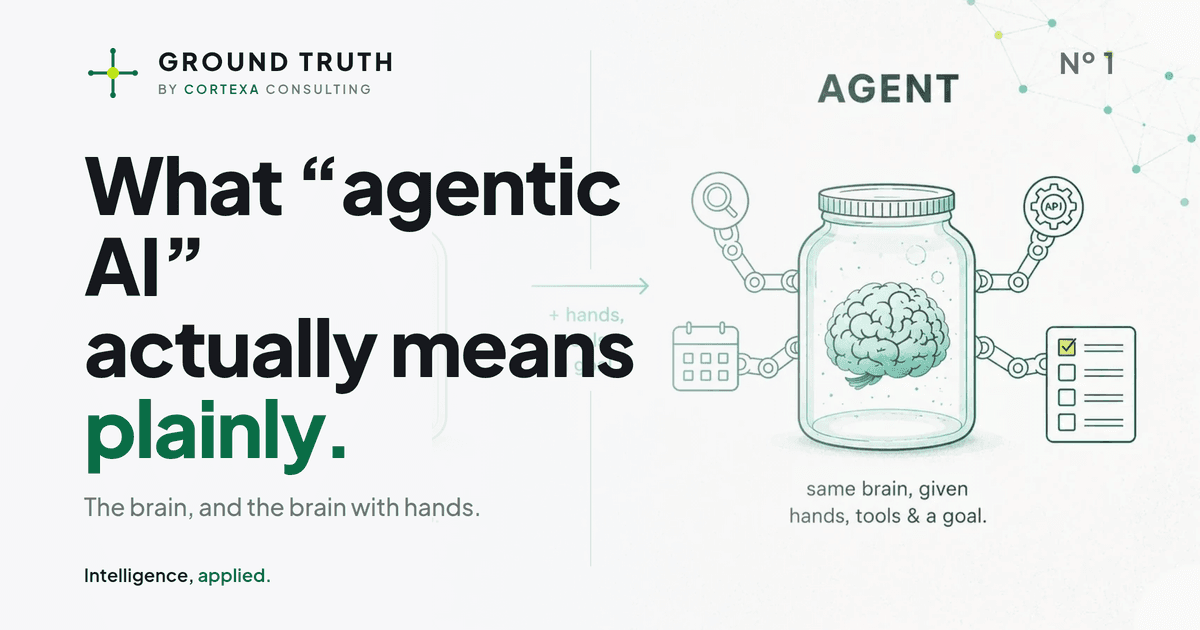
What “agentic AI” actually means
Agentic AI isn't smarter answers — it's software that takes actions toward a goal. Here's what's real, and why it still needs a human in the loop.
- Explainer
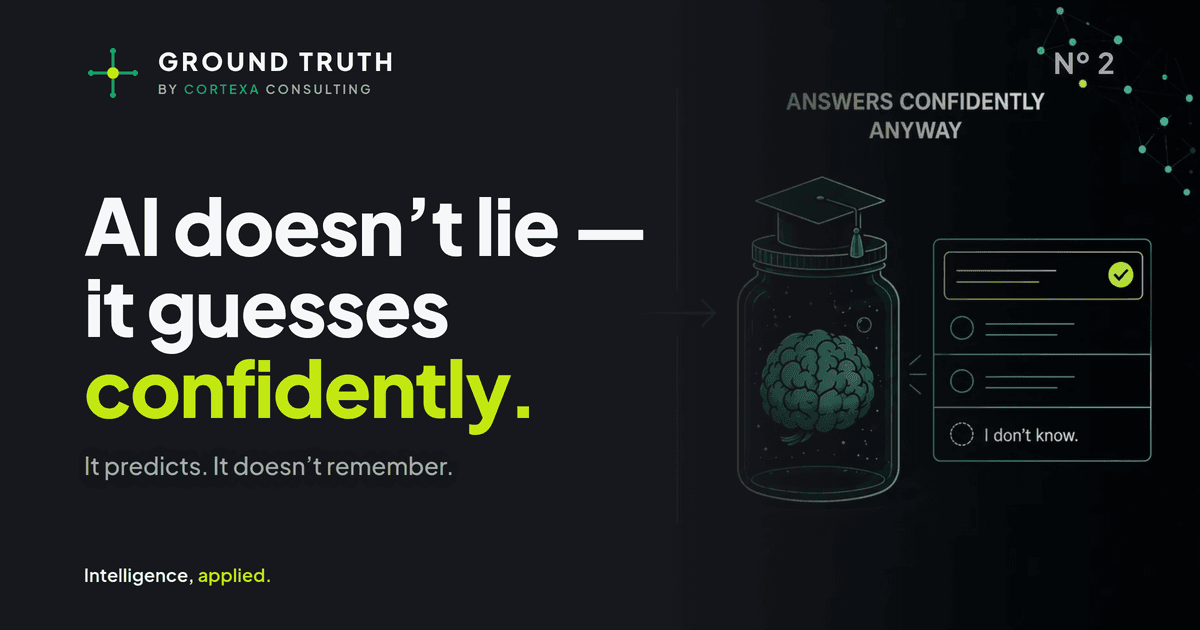
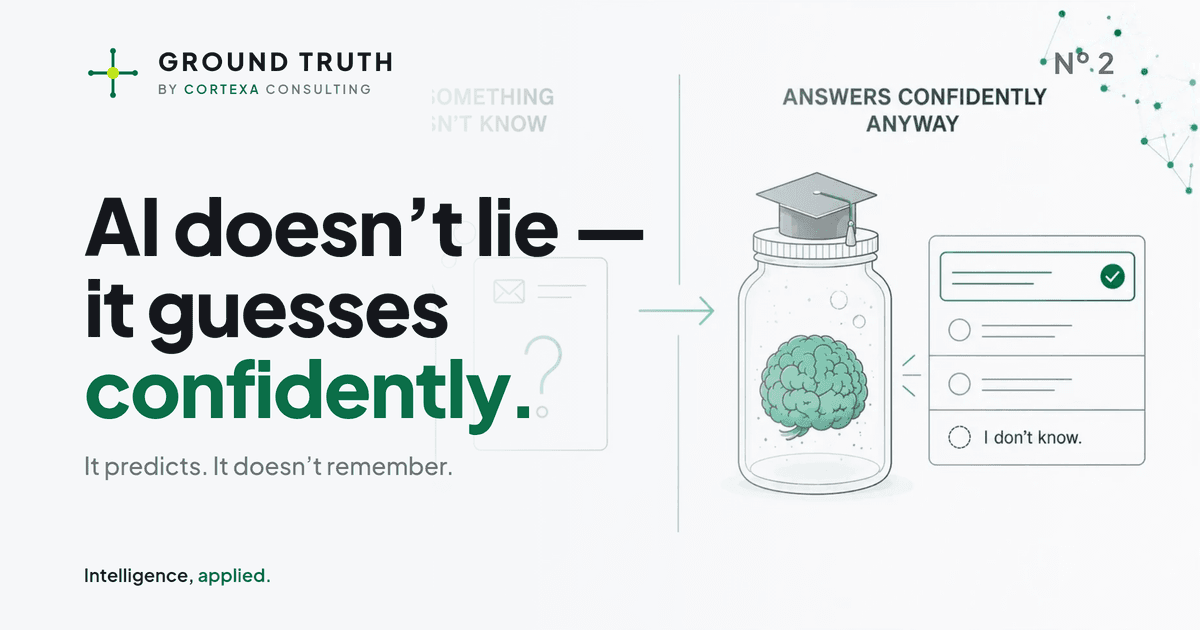
AI doesn’t lie — it guesses
Why Artificial Intelligence (AI) “hallucinates,” in plain English: it isn’t lying — it predicts likely words, and a confident guess can still be wrong.